Bali
Five islands wearing one name — and how to pick the one you came for
The Destination
The Ayung river gorge above Ubud is jungle, cold water and temple bells, 200 metres up and cooler than the coast. The Bukit, at the island's southern tip, is a dry limestone peninsula of ancient uplifted coral standing over the surf. Jimbaran is a working fishing bay. Nusa Dua is a gated resort estate laid out in the 1970s. East Bali is black sand beneath a volcano. They share a name and very little else.
What shapes the trip is not which of them is best, but that they sit between one and three hours apart by road. The regency containing almost every resort area counts 1,046,547 registered vehicles against 568,550 residents, and a 15-minute run on clear roads can take an hour and a half at the wrong time of day. Two areas in a week is a holiday. Three is a driving tour.
What follows is ordered the way the decision gets made — the areas, the houses inside each one, then the roads, the ceremonies and the days.
Where to Stay
Ubud and the Ayung gorge
River and temple country, about 200 metres up and noticeably cooler than the coast. No beach.
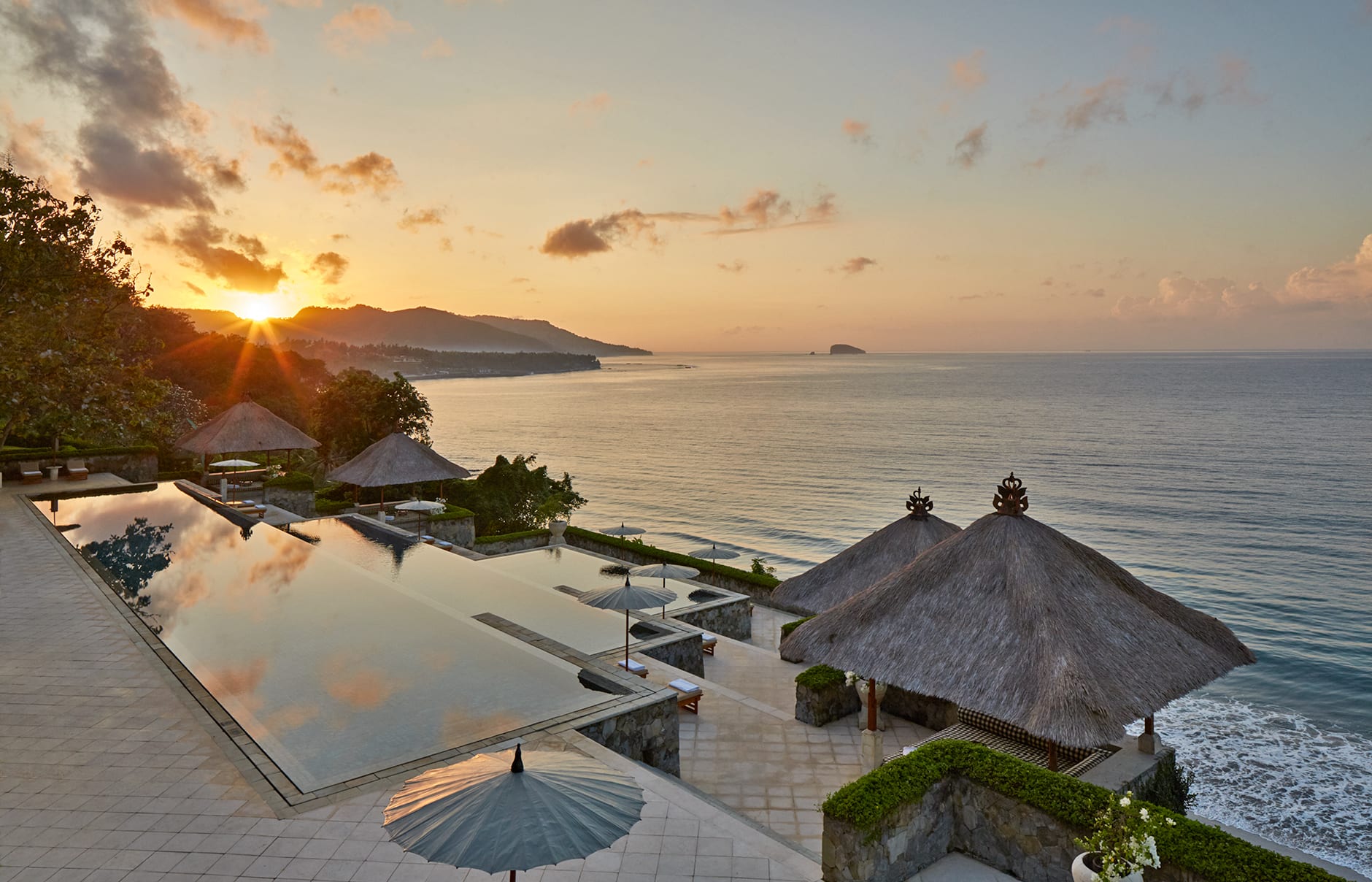
Amandari
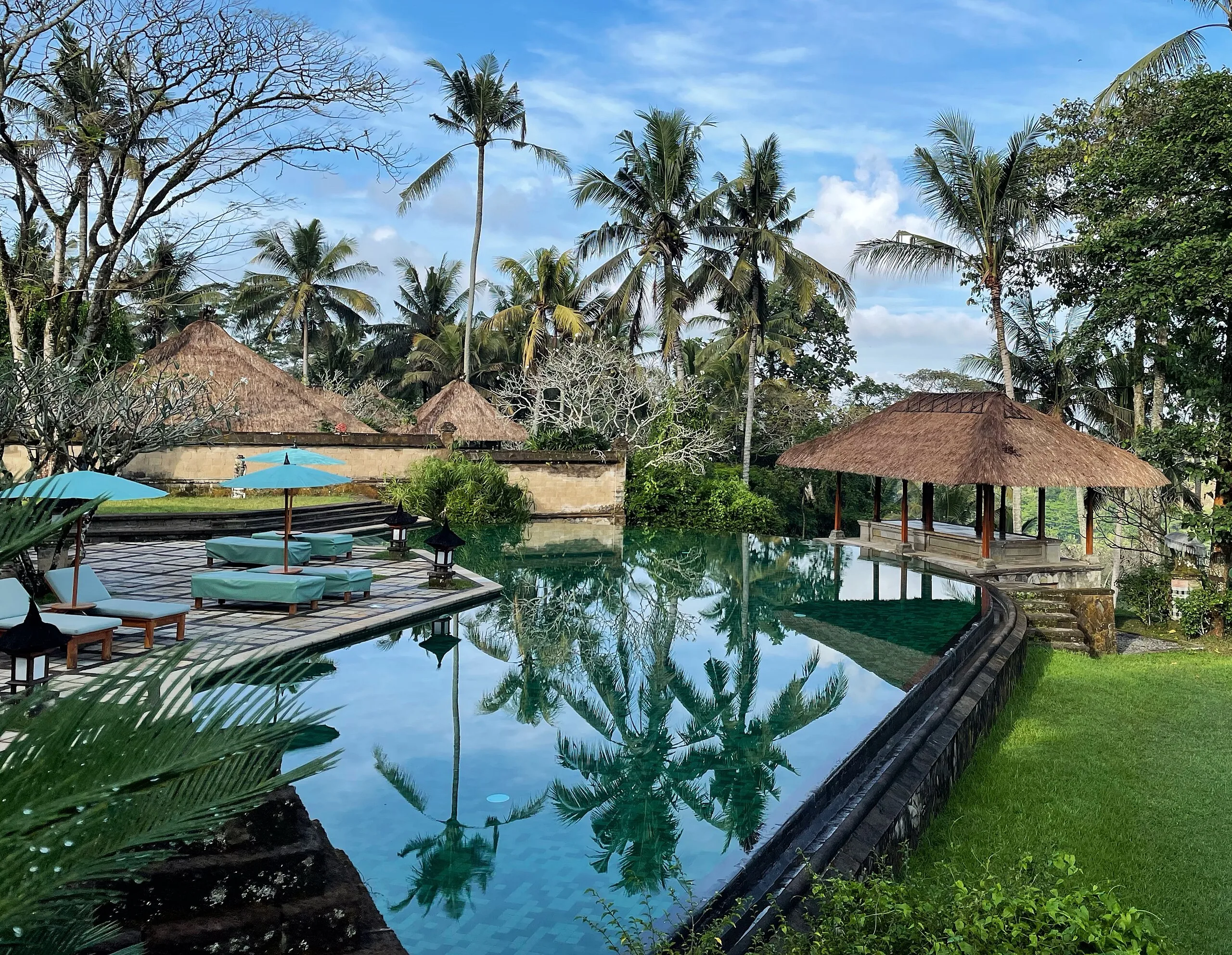
Kedewatan — on the lip of the Ayung river gorge, 90 minutes from the airport on clear roads
A walled Balinese village built inside the working village of Kedewatan, on the lip of the Ayung River gorge
Four Seasons Resort Bali at Sayan
Sayan — above the same gorge, entered across a bridge into the valley
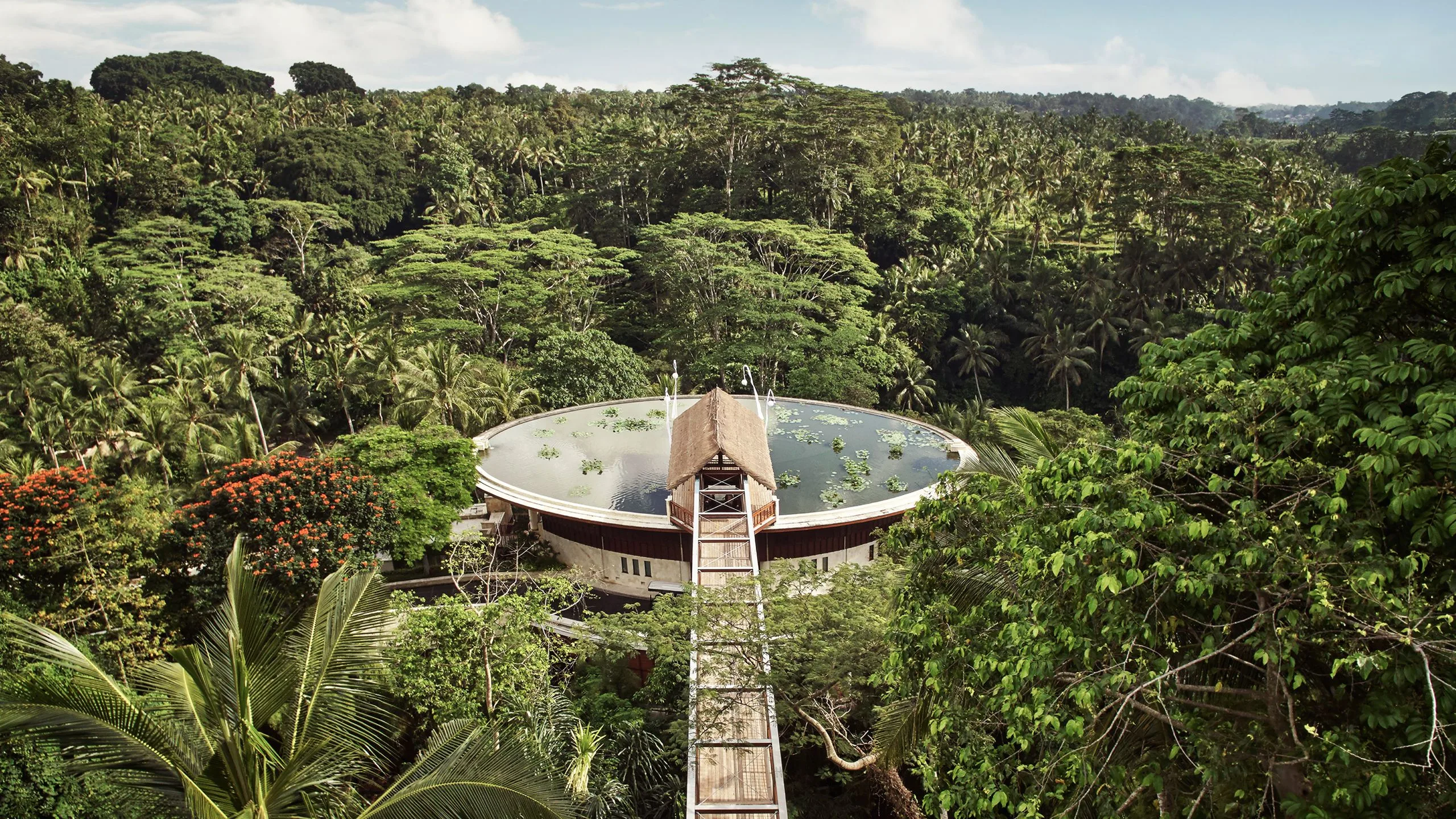
A resort stepped down into the Ayung River Valley above Ubud, entered across a walkway to a rooftop lotus pond
Mandapa, A Ritz-Carlton Reserve
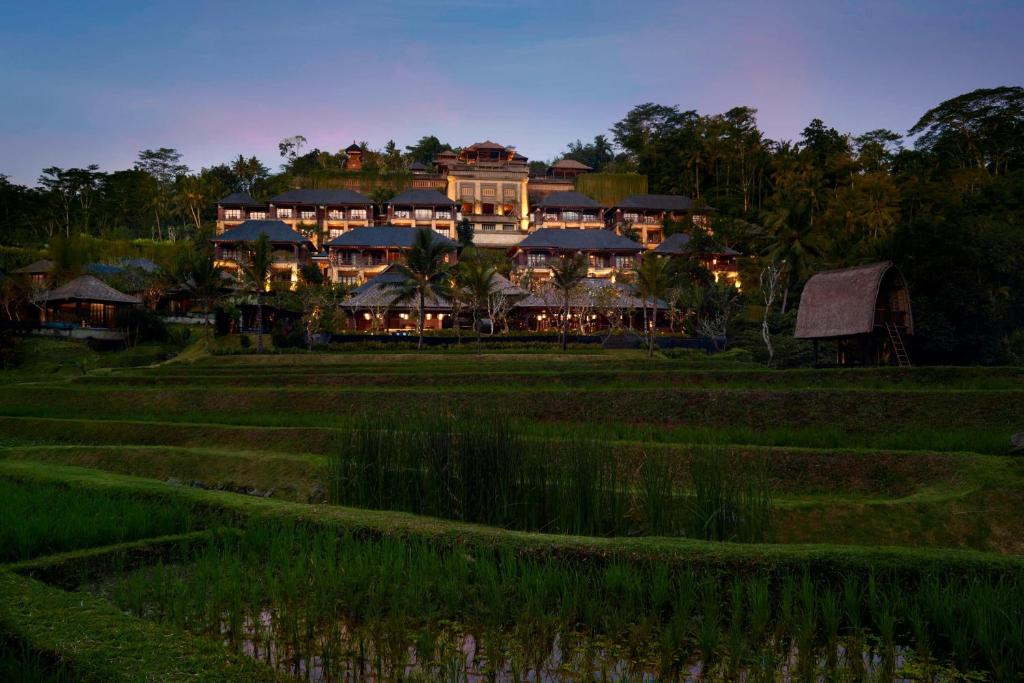
Kedewatan — working rice fields inside the grounds and its own pier on the Ayung
Ayung River valley sanctuary in Ubud with the most exclusive Ritz-Carlton Reserve designation
Capella Ubud, Bali
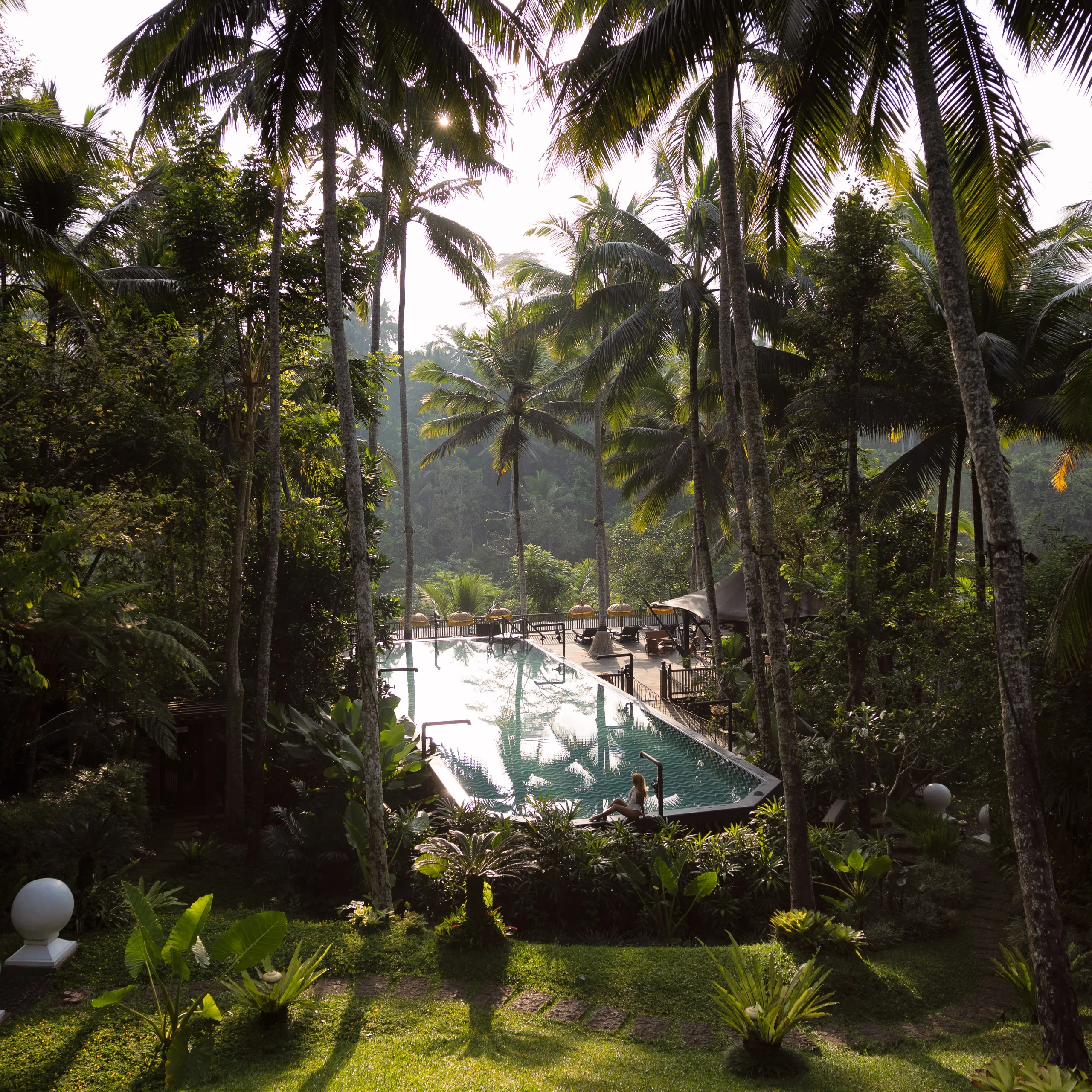
Keliki, Gianyar — a tented camp on the Wos river terraces, north of Ubud town
Twenty-two one-bedroom tents and a two-bedroom lodge on the rice terraces above the Wos River, built without felling a tree
Uluwatu and the Bukit
A dry limestone peninsula of uplifted coral, standing over the island's best surf.
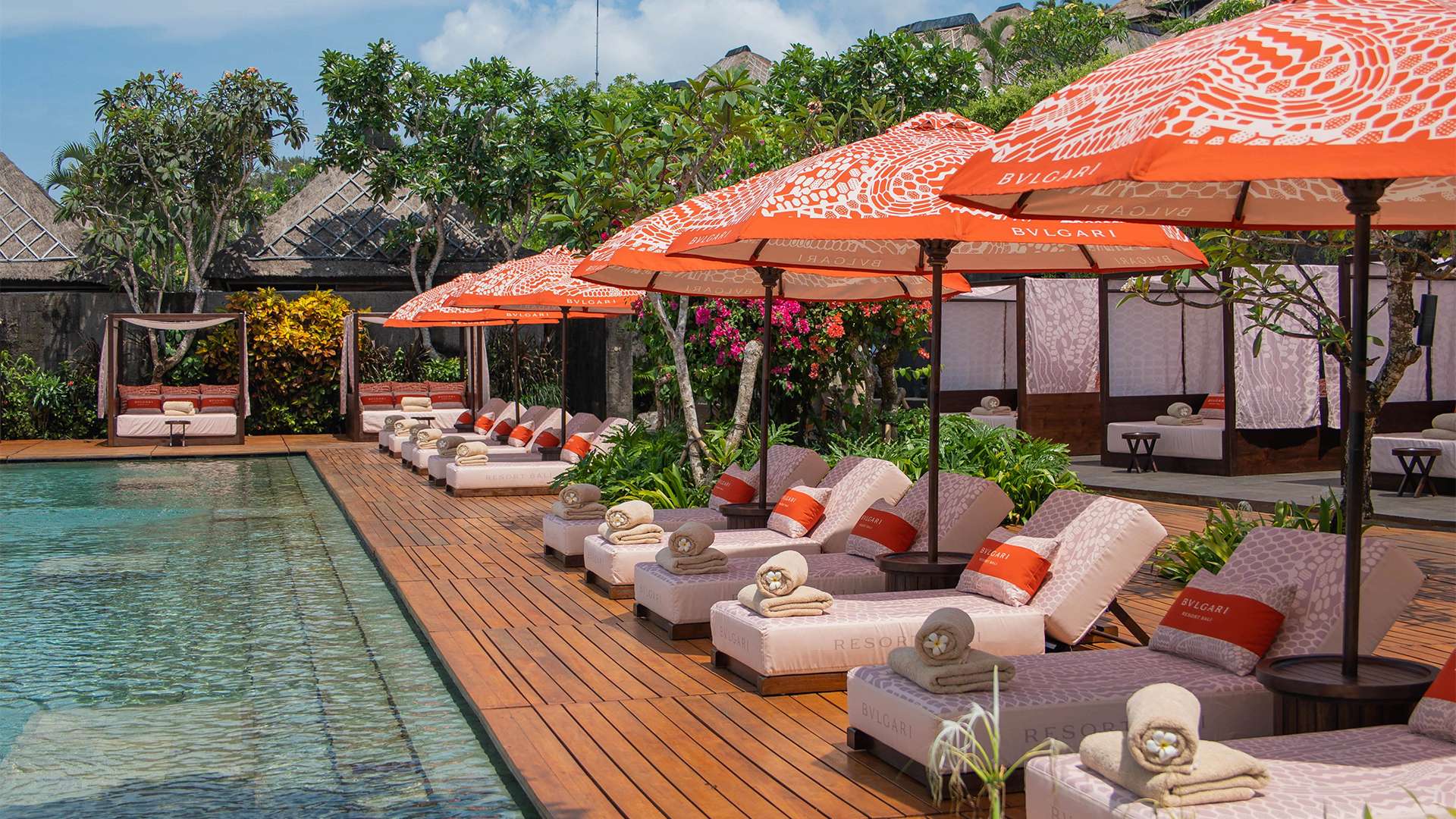
Bulgari Resort Bali
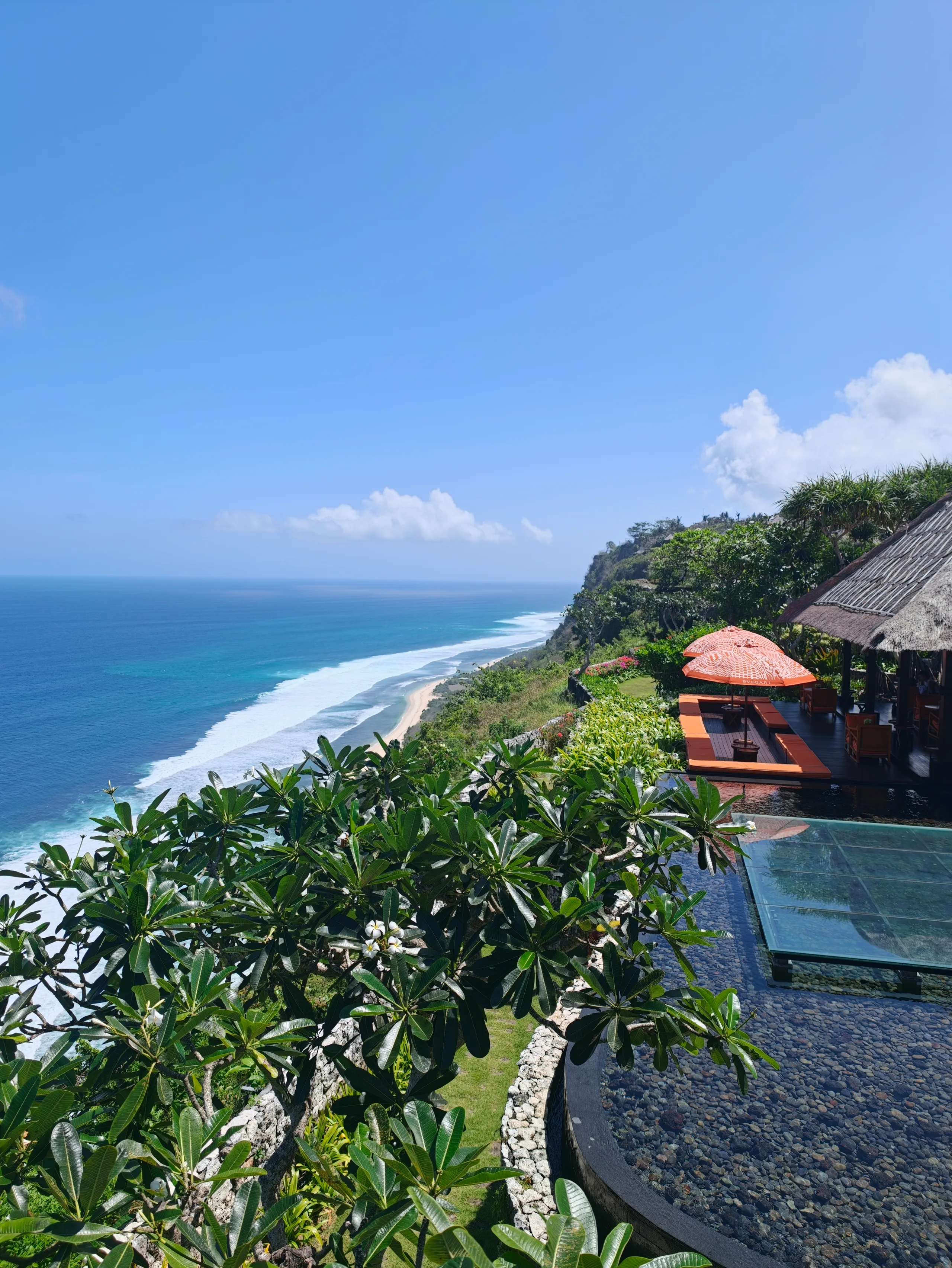
Uluwatu — on the 160-metre limestone clifftop above the southern coast
A cliff-top villa resort 150 metres above the Indian Ocean on Bali's Bukit Peninsula at Uluwatu
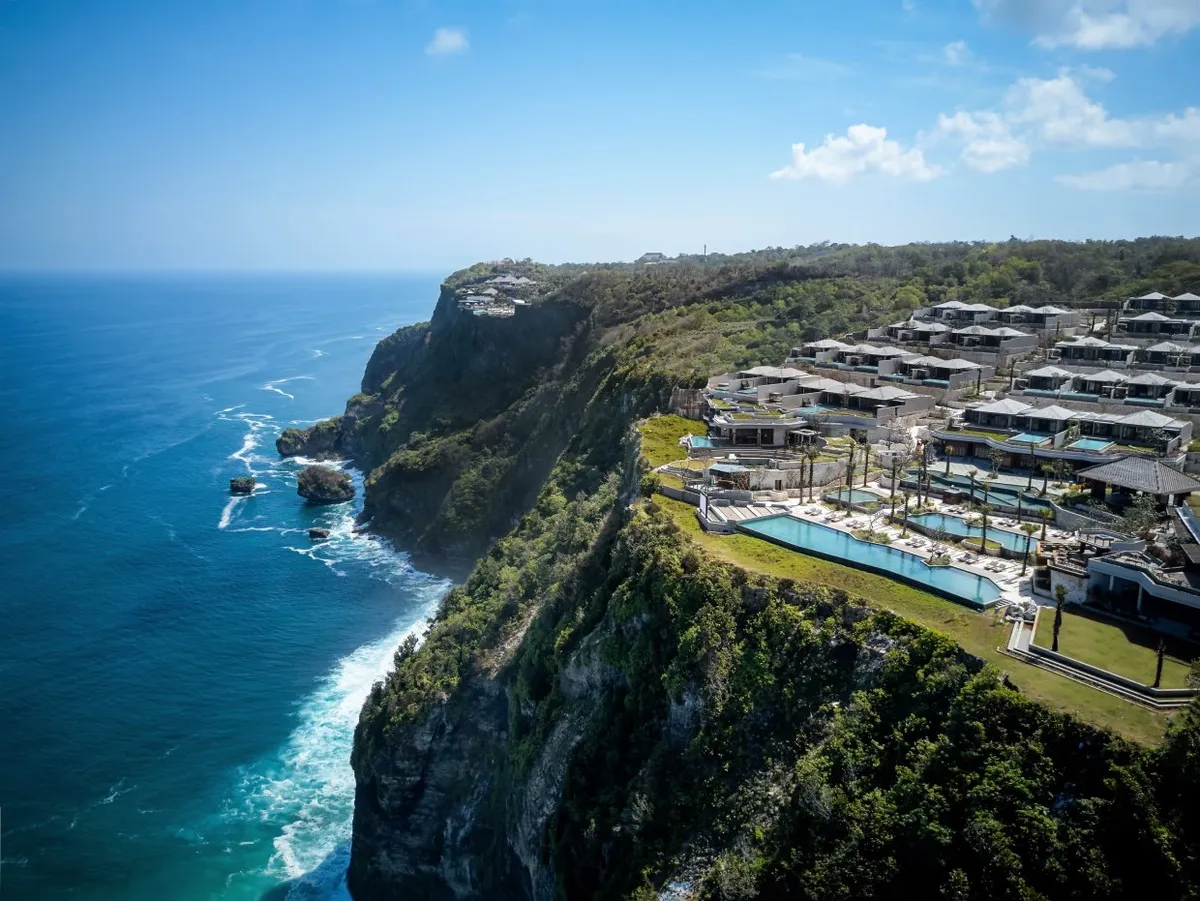
Six Senses Uluwatu
Uluwatu — above the surf breaks, about 45 minutes from the airport on clear roads
Clifftop above Bali's legendary Uluwatu surf break with dramatic Indian Ocean views
Jimbaran
A working fishing bay that faces away from the prevailing swell, which is why the water is calm.
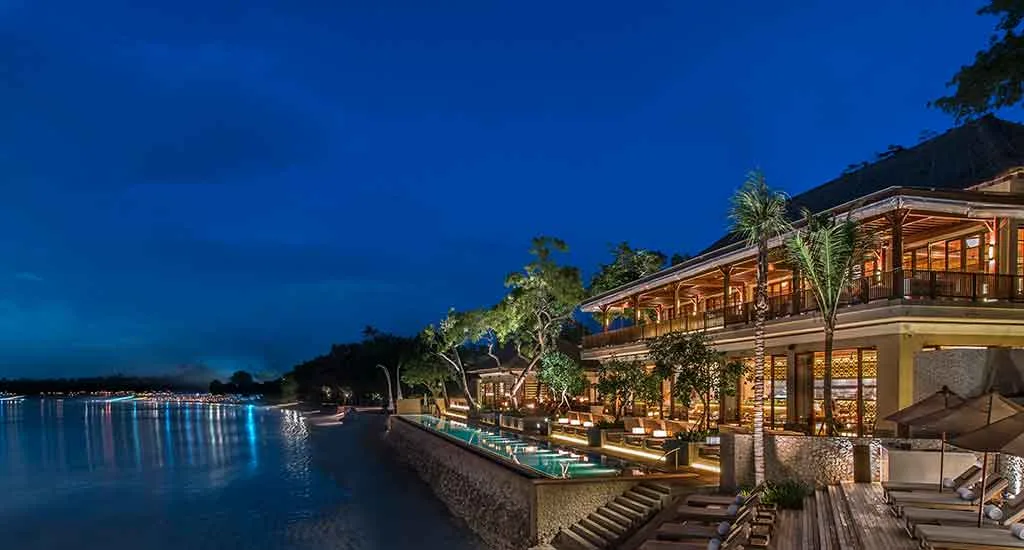
Nusa Dua
A gated resort estate laid out in the 1970s — shallow water, white sand, everything inside the gates.
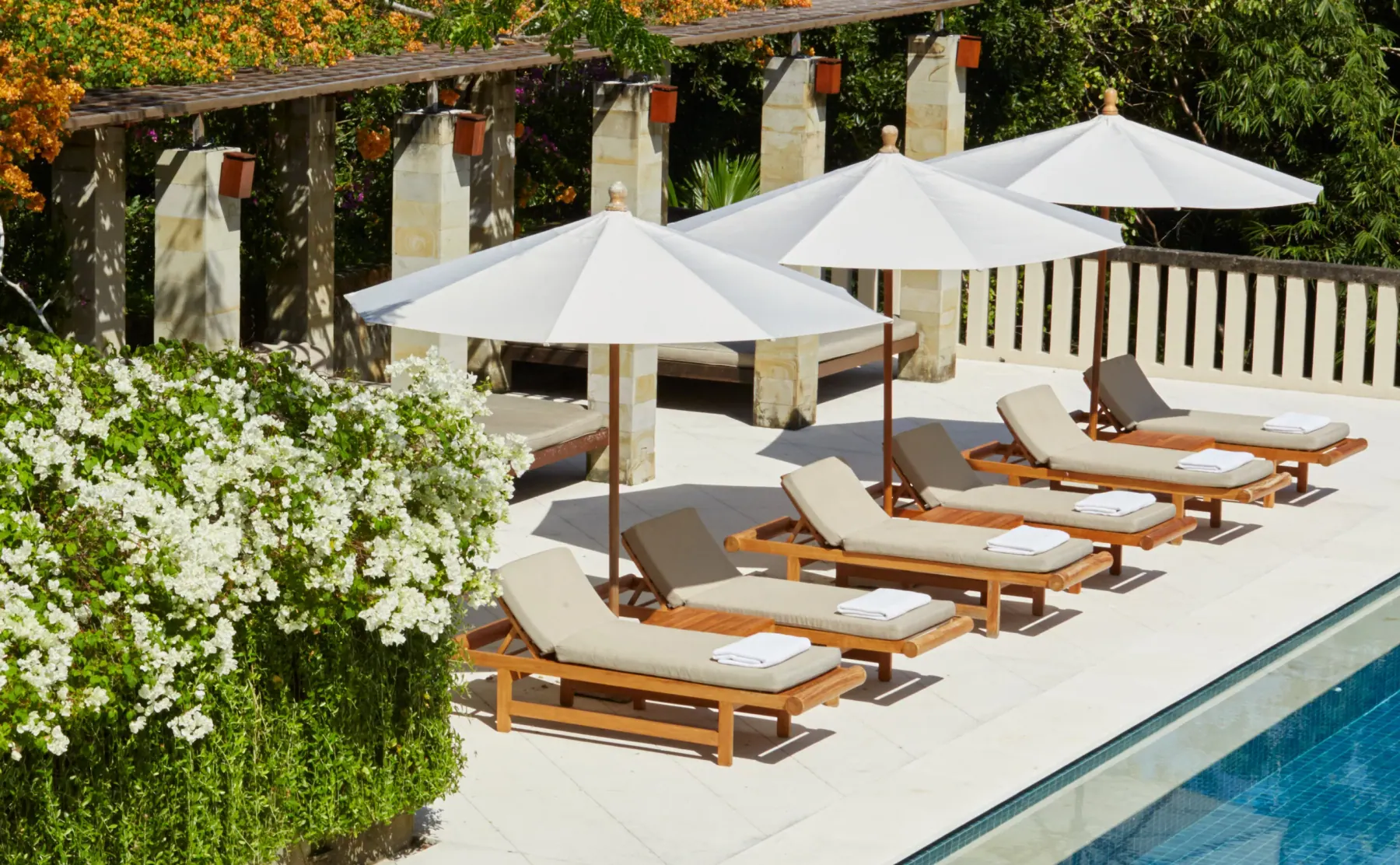
Aman Villas at Nusa Dua
Nusa Dua — along the fairways, a 20-minute drive from the airport, transfers included
Eight walled private villas above the fairways at Nusa Dua, with a private beach club — Bali's most secluded Aman address
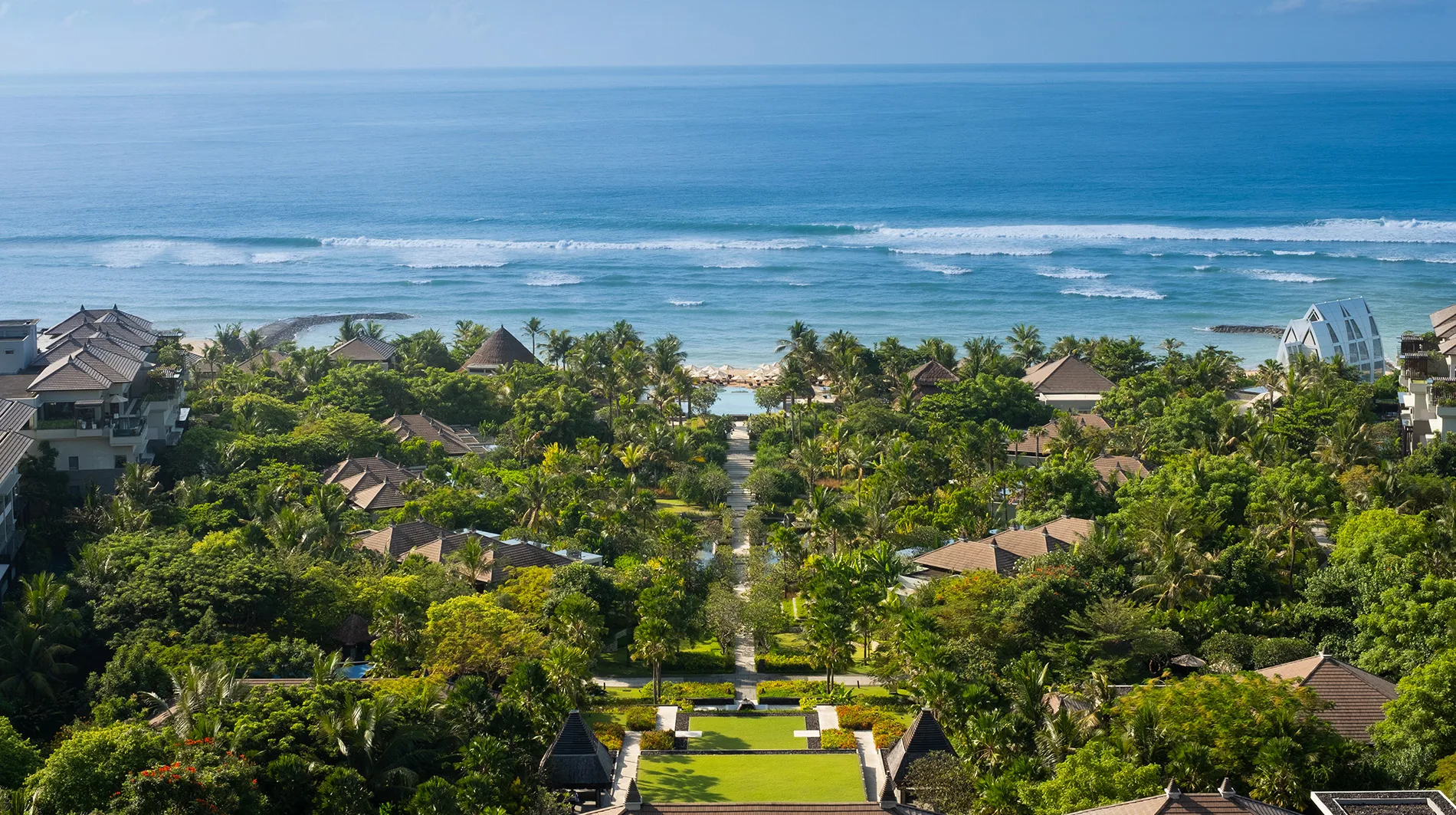
The Ritz-Carlton Bali
Sawangan, southern Nusa Dua — split between a clifftop and its own beach below
Clifftop resort above Nusa Dua with the island's most dramatic wedding chapel
East Bali
Black sand under Mount Agung, with Amed and Tulamben 90 minutes to 2 hours further up the coast.
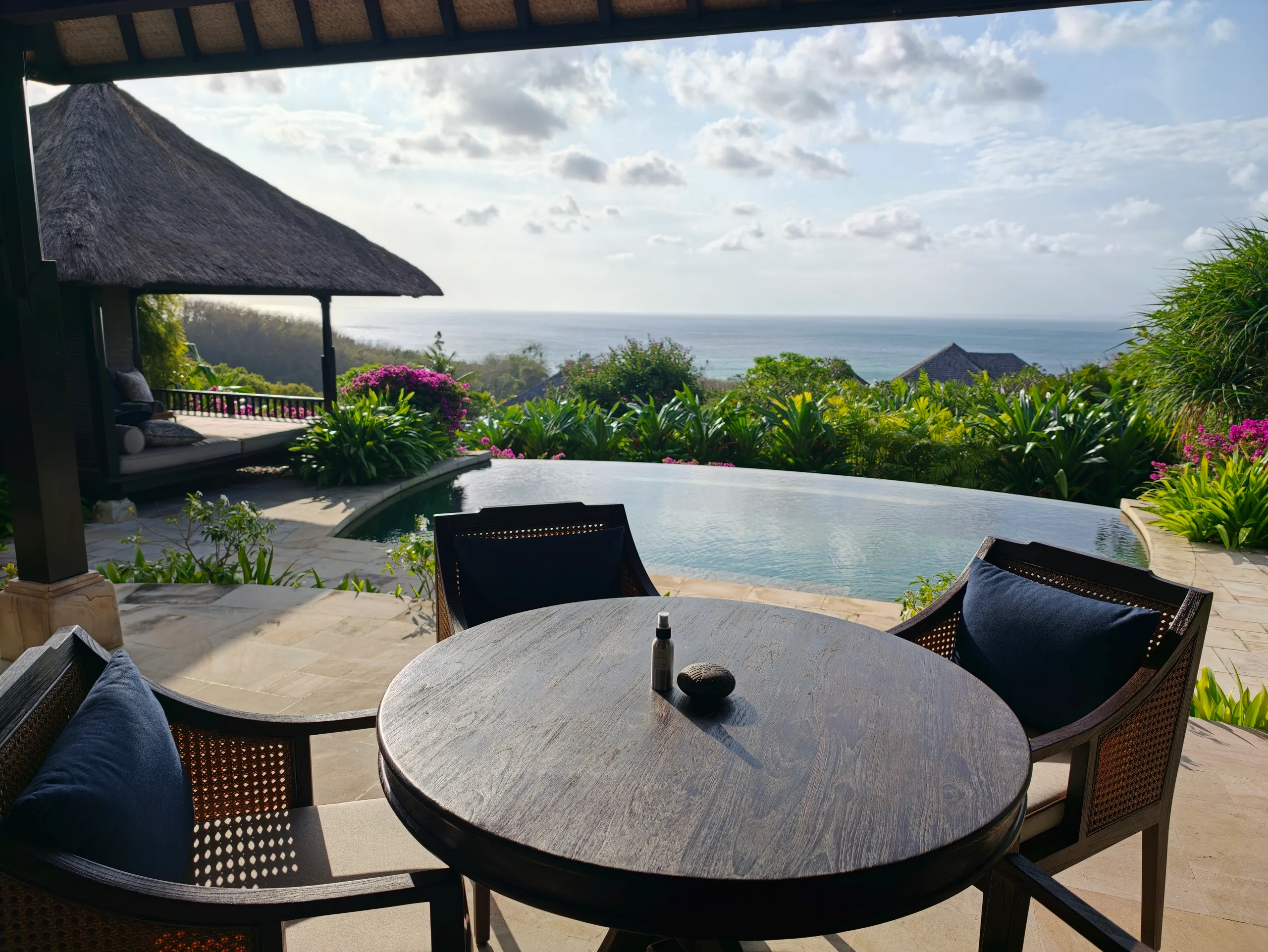
From Our Stays
Hotels we have checked into ourselves, photographed and written up in full.
Reading the Island
Almost everything visitors come for sits in the southern third. The airport is at Tuban, 13 kilometres south of Denpasar, and the Bukit peninsula hangs below it, joined to the rest of the island by a narrow neck of land. Jimbaran sits on that neck, Nusa Dua on the Bukit's eastern shoulder, Uluwatu on its southern cliffs. Ubud is inland and north, 90 minutes up from the airport on a good run.
The geology explains the holiday. The Bukit is uplifted coral — rugged, dry and cliff-edged, with the temple at Uluwatu standing about 70 metres above the water and Bulgari's villas on a limestone clifftop at 160. Swimming there is not the point; the surf breaks are. Jimbaran, around the corner, faces northwest into the lee of the Bukit and is shielded from the prevailing southwest swell, with reef sitting offshore — which is why the water inside is flat enough for children and the fish market still lands its catch on the beach. Nusa Dua was laid out as a project from the 1970s across 350 hectares, a gated estate of more than 20 resorts with security checks at the gates, shallow warm water and white sand. Entry itself is free; you pay only to park.
Inland the geology turns over. The Ayung and the Wos have cut their gorges not through coral but through the soft volcanic rock laid down across this part of the island — the same tuff the Balinese carve as paras — around Kedewatan and Campuan, which is where the Ubud hotels are and why so many are built down a slope rather than along a beach. The Ayung is Bali's longest river at 68.5 kilometres and carries family-grade class II–III rafting. East, past Klungkung, the coast turns to black sand and the beaches narrow. Candidasa is worth knowing about as a caution: its beach has gone and the shoreline is now walled with breakwaters. The reason to go east is underwater — the wreck at Tulamben and the reefs off Amed and Padang Bai are among the best diving in Bali, alongside Nusa Penida and Menjangan.
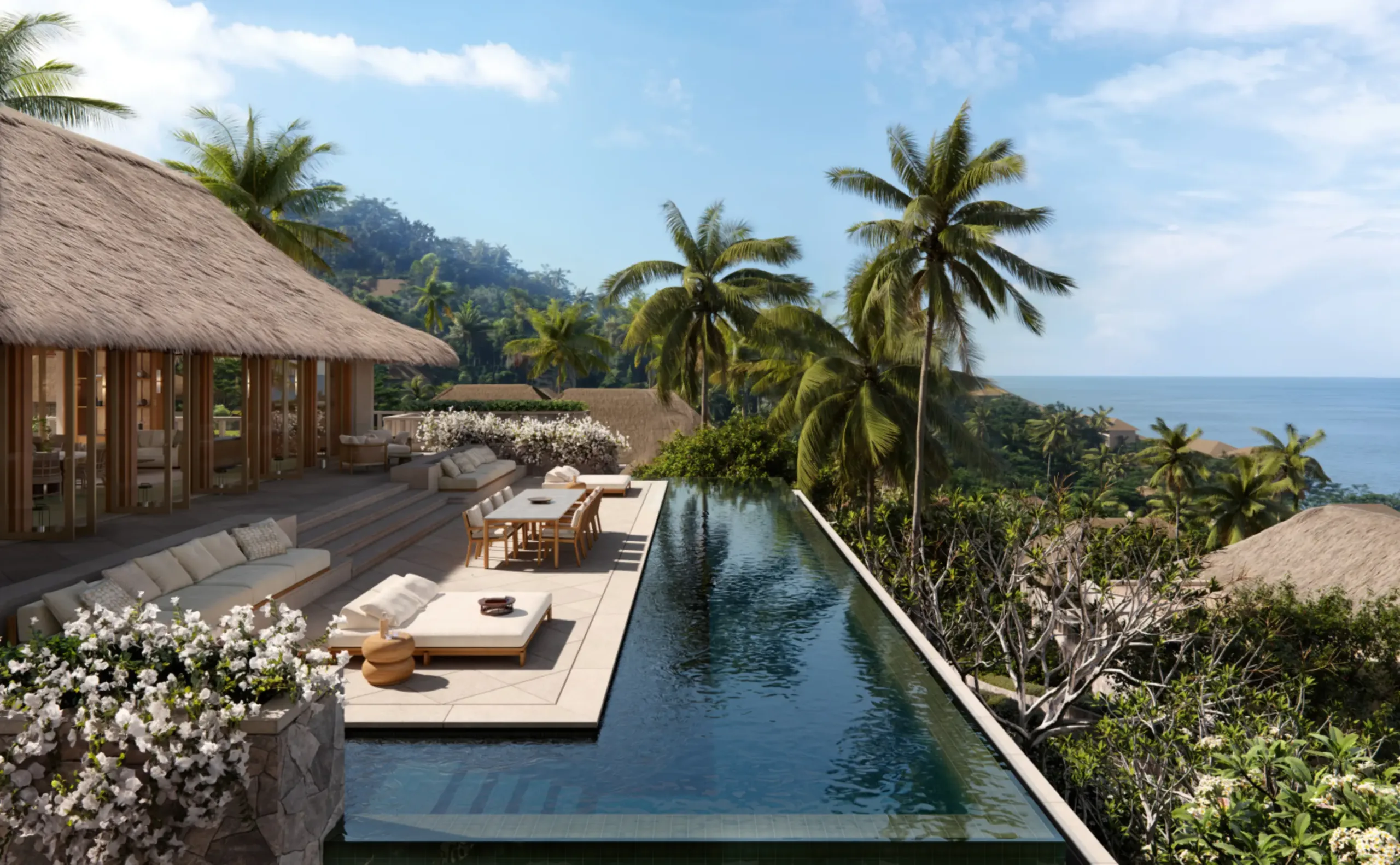
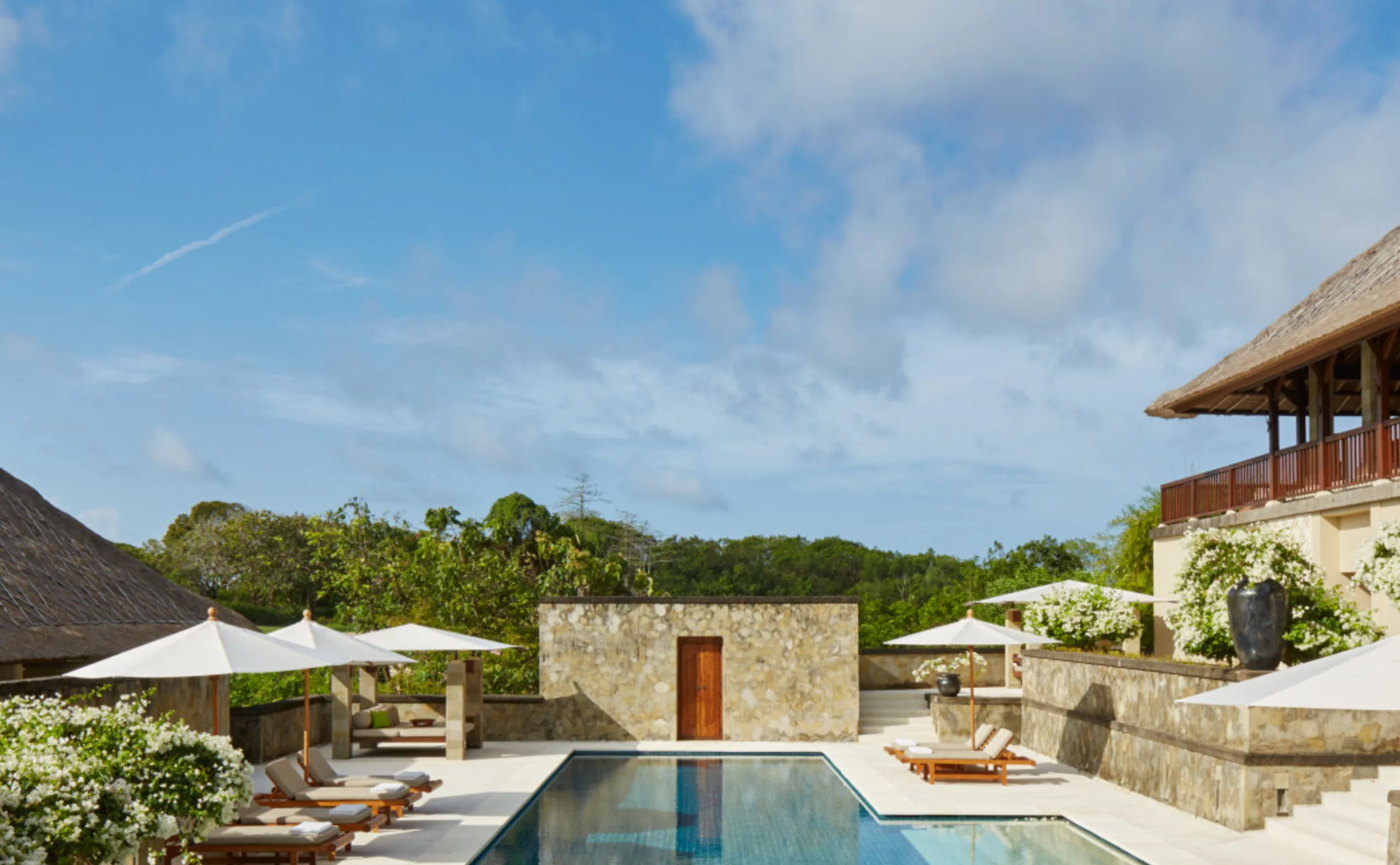
Own a residence
Branded residences for sale in Bali
Aman at Amankila and Nusa Dua, Raffles at Jimbaran: the Bali homes we know first-hand, with the ownership structure for a foreign buyer explained on each page.
When to Go
One date matters more than the season. Nyepi, the Balinese day of silence, closes the island for 24 hours — six in the morning to six the next morning. Nobody travels, the beaches and streets are closed to everyone including visitors, mobile data is switched off island-wide, and Ngurah Rai suspends all scheduled commercial flights; 440 were cancelled for it in 2026. It falls the day after the new moon of the ninth Balinese month, so the date moves each year, and the Balinese calendars do not always agree — for 2027 they split between 8 and 9 March. Send us your dates and we will tell you where they fall.
Inside a resort the day runs on its own rules. The hotel keeps working behind its walls, so you eat and swim through the daylight hours and the wifi stays on. After sunset it tightens: outdoor lighting goes off, the pools and outdoor bars close, dining moves indoors, and guests are asked to keep the curtains drawn. The eve is the opposite, with villages parading the ogoh-ogoh built for the occasion, and it is a normal flying day. Being there for it deliberately is a real trip. Arriving into it by accident costs a flight and a day.
Otherwise the island runs on the monsoon, and the useful way to read it is by coast. Indonesia's meteorological agency dates the dry season by rainfall and ties its arrival to the turn from the westerly Asian monsoon to the easterly Australian one. While those easterlies hold, roughly April to October, the west and south breaks at Uluwatu, Padang Padang and Canggu are offshore and clean. When the wind swings northwest for the wet months the advantage moves to the east coast, which is why Sanur's waves beyond the reef work best from November to April. Wet-season rain tends to arrive as heavy afternoon storms rather than grey days, and the terraces are at their greenest for it.
Getting There & Around
Everything arrives at Ngurah Rai (DPS). There are no non-stop flights from the Americas, so North American guests connect — most often through the Gulf, Singapore, Hong Kong or Tokyo. From Europe the Gulf carriers run about nine and a half hours on the final leg, and Turkish flies Istanbul non-stop. Every foreign visitor also pays the Bali tourist levy, 150,000 rupiah per person, once per visit and cashless. It is best paid online before you land, though counters at the airport and registered hotels take it too.
On the ground, plan around the roads. There is no useful railway, and the island moves by car and scooter on a network that was not built for either. The one quick road is the Bali Mandara toll across Benoa Bay — 12.7 kilometres including its access roads, the only toll road in Indonesia with a dedicated motorcycle lane, with wind gauges at each gate that close that lane above 40 km/h and cars above 80. It links the airport, Nusa Dua and Benoa and skips the worst of the Kuta congestion. Ubud to Uluwatu is about 55 kilometres: allow an hour and a half if you leave at dawn and up to 3 hours in the late afternoon, routed via the toll and Sanur rather than through Kuta.
We put a car and driver with every Bali booking rather than leaving it to apps, and we time transfers against the traffic rather than the map — an Ubud to Bukit move at ten in the morning is a different journey from the same move at five. One rule worth knowing before you plan your own days: under the governor's 2025 circular, foreign visitors are required to be accompanied by a licensed guide at cultural and natural attractions, and to dress modestly at temples. Scooters we would rather you left to other people.
What the Days Look Like
Pura Luhur Uluwatu is one of the six temples regarded as the spiritual pillars of Bali, on a cliff about 70 metres above the sea, and the kecak performed there at sunset is not the ancient rite it appears to be. It took its present form in the 1930s, when the dancer I Wayan Limbak and the painter Walter Spies shaped the sanghyang trance chorus into a Ramayana drama for visiting audiences — though Balinese scholars argue the form was already emerging before Spies arrived. Watch your sunglasses on that headland: the macaques there take objects and trade them back for food, a learned behaviour passed between generations and studied as such. Besakih, the mother temple on the slopes of Mount Agung, was re-approached rather than rebuilt — between 2021 and 2023 the state built a new arrival area and shuttle below it, leaving the sanctuaries untouched. Tirta Empul at Tampaksiring, founded around 962 AD, is where the melukat purification takes place, and Ulun Danu Beratan, seventeenth century, is the one that appears to float on its lake.
The rice terraces are a real choice. Tegallalang is about 10 kilometres north of Ubud, which makes it the convenient one and also the commercial one — admission is small, but landowners along the paths ask for further payments to cross their bridges, and the tour buses fill the middle of the day. Jatiluwih, west in Tabanan under Mount Batukaru, is the UNESCO-inscribed landscape: part of the 2012 listing of Bali's subak system, the cooperative water management that divides the island's irrigation between village associations. It is a longer drive and a better morning.
Mount Batur is walked for sunrise, a 1,717-metre volcano inside a double caldera, climbed with a guide from around half past three in the morning — and it is open, despite a 2023 announcement of a climbing ban that was never given legal effect. Nusa Penida, across the strait, has manta rays year-round and oceanic sunfish on the July-to-October upwelling; its cliff beaches at Kelingking and Diamond are designated no-swim and should be treated that way. In Ubud, the Campuhan ridge and the town's art museums fill the mornings the gorge does not.
Frequently Asked
Which part of Bali should you stay in?
Ubud, up in the Ayung river gorge, is river and temple country, about 200 metres above sea level and cooler than anywhere on the coast — culture and quiet, and no beach. The Bukit peninsula around Uluwatu is dry limestone standing over the surf, with the best sunsets and the least swimmable sea. Jimbaran sits in the Bukit's swell shadow behind an offshore reef, which makes it the most reliable of the southern beaches with children. Nusa Dua is a gated estate built from the 1970s, with shallow water, white sand and a security check at the gate — the easiest option with small children and the least Balinese in feel. East Bali, around Manggis, is black sand under Mount Agung and the quietest of the five. Most first trips take two of these, and the pairing that works most often is Ubud and one coast.
How bad is the traffic in Bali?
Bad enough that it should shape your itinerary. Badung regency, which contains the airport and almost every resort area, counts 1,046,547 registered vehicles against 568,550 residents on its transport agency's own numbers, and a journey that takes 15 minutes on clear roads can run to an hour and a half at peak. In Canggu a 5-kilometre trip that once took 10 to 15 minutes can now take more than an hour. The one quick road is the Bali Mandara toll across Benoa Bay, 12.7 kilometres including its access roads, which skips the worst of the Kuta and airport congestion. Ubud to Uluwatu is only about 55 kilometres, and you should still allow anywhere from an hour and a half off-peak to 3 hours in the afternoon rush.
How many nights in Ubud and how many on the coast?
For a week, 4 nights in Ubud and 3 on a coast works better than an even split: Ubud has more that needs a morning — the terraces, the water temples, the river — while the coast rewards doing nothing. For 10 nights, 5 and 5, and consider making the second coast East Bali rather than the south if you dive. We argue against three centres in a week. Each change of hotel costs the better part of a day once the drive and the two check-ins are counted.
What is Nyepi and will it affect my trip?
Nyepi is the Balinese day of silence, and it is the one date that can reshape a Bali holiday. For 24 hours, from six in the morning until six the next morning, the island stops: nobody travels or leaves their premises, the beaches and streets are closed, mobile data is switched off island-wide, radio and television stop broadcasting, and Ngurah Rai suspends all scheduled commercial flights — 440 were cancelled for it in 2026, emergency and specially authorised flights aside. Hotels keep running behind their walls, so you eat and swim through the day and the wifi stays on. After sunset it tightens: outdoor lighting goes off, pools and outdoor bars close, dining moves inside, and you are asked to keep the curtains drawn. The eve is the opposite, with the ogoh-ogoh effigy processions through the villages, and it is a normal flying day. The date falls the day after the new moon of the ninth Balinese month, so it moves each year — and the Balinese calendars do not always agree. For 2027 they split between 8 and 9 March, and the joint ministerial decree that settles it as a public holiday is usually issued only a few months ahead. Ask us for the year you are travelling.
Where in Bali can you actually swim?
The island's most photographed coast is its least swimmable. Jimbaran sits behind an offshore reef in the lee of the Bukit, sheltered from the prevailing southwest swell, which makes it reliable with children. Nusa Dua has shallow, clear, warm water over white sand, with the reef well offshore. Sanur is behind a long string of reefs that create calm lagoons. The Bukit — Uluwatu, Padang Padang, Bingin, Balangan — is surf: reef breaks over shallow coral, some of them expert-only, reached down cliff stairways. Canggu and Seminyak have dark grey sand, strong water and no reef protection. If swimming matters, book Jimbaran, Nusa Dua or Sanur and visit the Bukit for the afternoon.
Do you need a villa with its own pool?
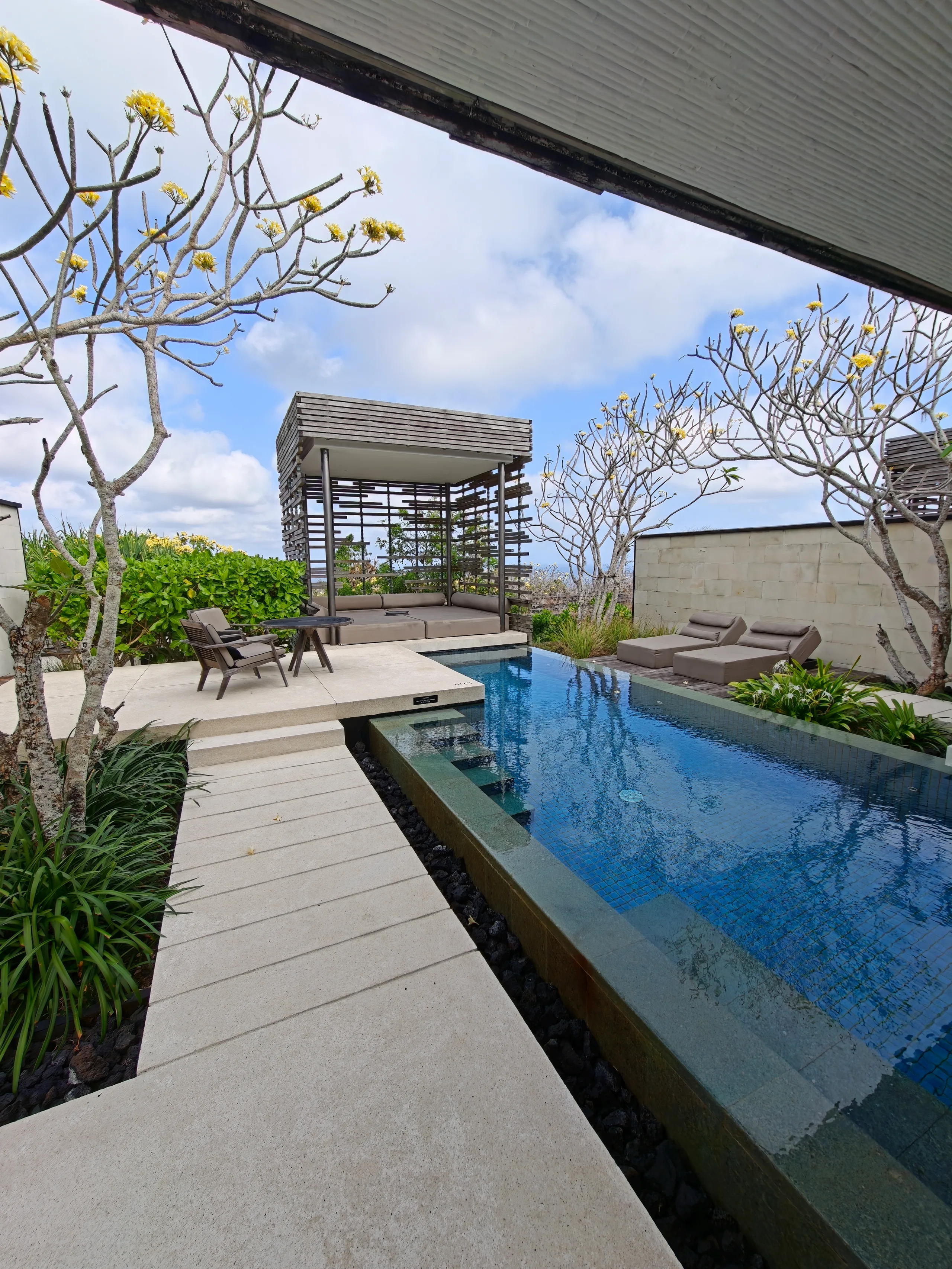
In Bali the villa category is the decision, more than the hotel. The properties on this page are mostly sold as free-standing villas rather than rooms, and the differences between them are real: whether the pool is private or shared, whether it is a plunge or long enough to swim, whether the villa faces the valley, the ocean or the garden wall, and whether it comes with a kitchen and staff. At Aman Villas at Nusa Dua the whole inventory is now multi-bedroom — the smallest is a two-bedroom, which Aman pitches at couples as well as families, so two people are paying for a house rather than a room. At Sayan the gap between a suite and a villa is the gap between a balcony over the Ayung and your own gate. This is the detail we check before quoting, because the published category names conceal it.
Is it worth booking Bali through an advisor?
The rate is the hotel's own, and the preferred-partner benefits — breakfast, upgrades when available, property credits — are added on top. What earns the relationship in Bali is narrower. Which villas at a given resort face the valley and which face a service road, because the category name does not say. Sequencing Ubud and the Bukit so the transfer happens at ten in the morning rather than five in the afternoon. Checking your dates against Nyepi and against the renovation calendars before you fall for a property that is closed the week you arrive. And knowing which of these houses suits a family, which suits two people who want to see nobody, and which has a beach worth the name.
Plan Your Journey
Stay in Bali with Via Privata
Same nightly rate as booking direct, with complimentary breakfast, upgrades when available and property credits added to every stay — plus the villa that faces the valley rather than the wall, the transfer timed against the traffic, and your dates checked against Nyepi before anything is confirmed.
Enquire Now