Start Your Journey
Luxury Safari, Explained: What's Actually Worth Paying For - PrivataList editorial collection
Experience

Luxury Safari, Explained: What's Actually Worth Paying For

What $2,000 to $5,000 a night per person actually buys at the top of the safari market — space, a private vehicle, the right reserve in the right month — and the five ecosystems where it is money well spent: the Okavango, Grumeti, the Maasai Mara, Sabi Sand and Rwanda's Volcanoes National Park.

By Albina Sharapova

Updated September 25, 2026 · 10 min read

All Collections

Ask us for the most luxurious lodge in Africa and we will steer you somewhere more useful, because at the top of the market a safari is bought on three things: access, privacy and time. Access to extraordinary wildlife country shared with very few other guests. A private vehicle and a guide who is yours for the week, so you stay with the leopard for another hour instead of following someone else's schedule. Remote camps reached by bush plane, private concessions rather than public parks, and enough space to feel you have disappeared into the wilderness. That is why two camps that look equally beautiful online can deliver completely different trips.

The honest budget at this level is $2,000 to $5,000-plus per person per night, particularly in peak wildlife season. Two published 2026 rates set the range. Angama Mara charges $2,750 per person per night in its peak season, July to September, and Wilderness Mombo in Botswana is $5,043 a night per person from June to October. For a couple, ten nights therefore lands somewhere between $40,000 and $100,000 before international flights, and the bush flights, private vehicles and extra experiences move it further still. Exclusive-use villas with their own guides, vehicles, chefs and staff are a category of their own again.

But comparing those figures with a hotel's nightly rate misses the point. A safari rate usually covers accommodation, meals, drinks, game drives, laundry and most activities — Mombo's, for instance, includes all meals, twice-daily activities, park fees, laundry and local drinks. You are paying for the whole day, and the room is the smallest part of it.

So what does luxury mean out here? Rarely marble bathrooms, enormous suites or a bigger plunge pool. Sometimes the most valuable thing you can buy is a private vehicle. On a shared game drive every stop is a compromise: one guest wants to photograph lions, another is interested in birds, someone wants to be back for breakfast while you would happily spend another hour with a leopard. With your own vehicle and guide, you set the pace. For families, photographers, repeat safari travellers and anyone making the one big trip, we would put the private vehicle ahead of the room upgrade, and we would take the entry-level suite in an outstanding wildlife area over the largest villa at the wrong camp.

Where we do spend more: on the reserve, the guide, the vehicle and the right location for the month you are travelling; on a private concession when it buys a quieter, more flexible safari; on internal aviation when it turns a complicated route into a simple one; and on an exclusive-use villa when you travel as a family or a group, because your own team, schedule and living space change the trip. What we would not automatically pay more for is square footage, and we would never add a camp because the itinerary has room for one. Safari gets better when you slow down — three or four nights at the right camp beat a week of airstrips and check-ins.

Every top-end lodge looks spectacular online: the tent, the outdoor shower, the plunge pool, elephants somewhere in the background. What the photographs never tell you is where the vehicles can go, how busy that area will be on your dates, how many guests share a vehicle and whether a private one is included, whether the camp is positioned for what you want to see that month, and whether the next lodge gives you a different experience or the same safari in a different room. Those decisions, and how the bush flights, conservation fees, transfers and arrival times fit together, are the work. Below, the five ecosystems we would build that kind of trip around — reserves and concessions first, lodges second.
The Itinerary

The Okavango Delta - Chief's Island, Moremi Game Reserve, and the private concessions around it

The Okavango Delta

Botswana · Wilderness Mombo, Xigera, Belmond's Eagle Island Lodge

$$$ · Chief's Island, Moremi Game Reserve, and the private concessions around it

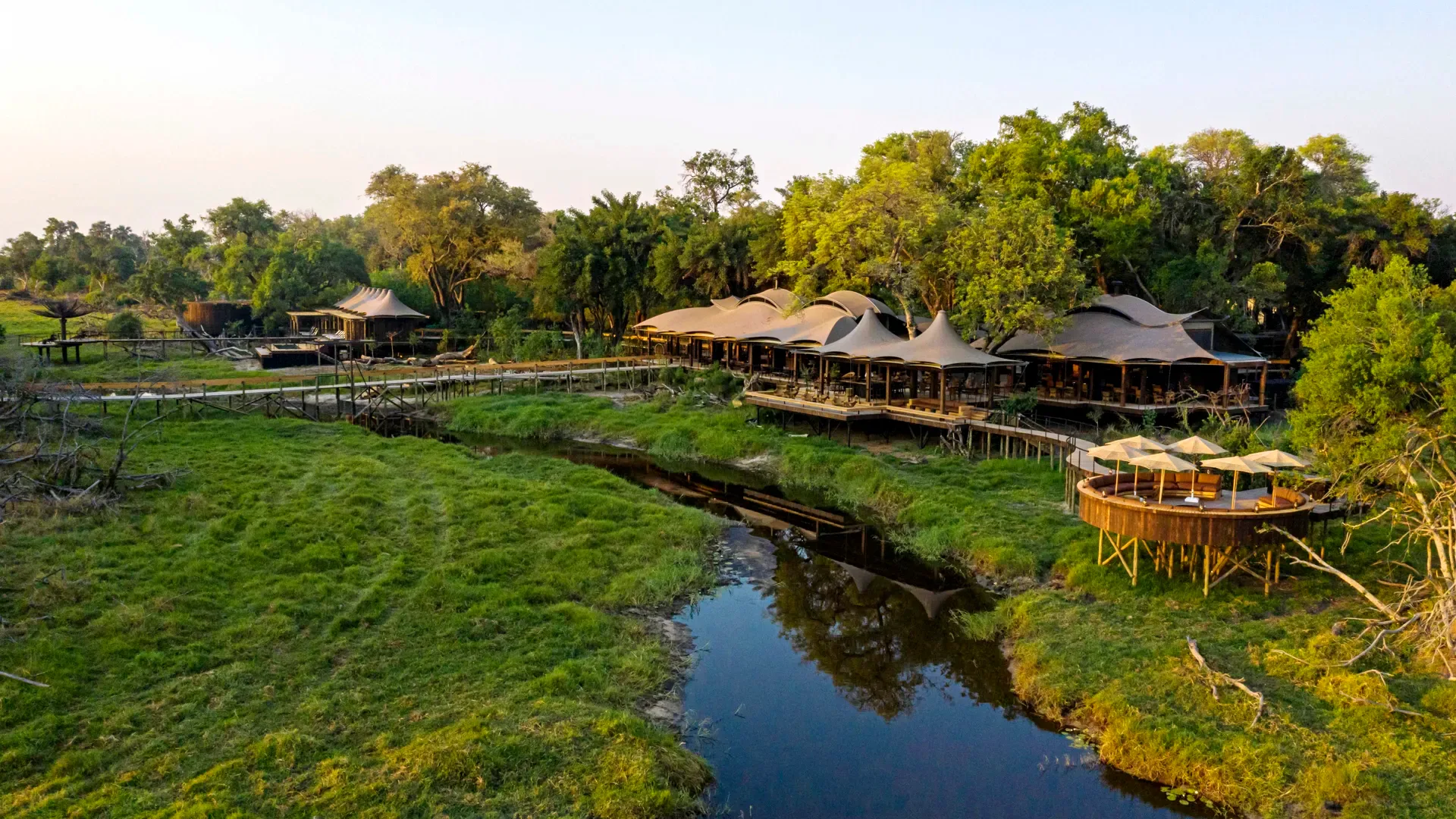
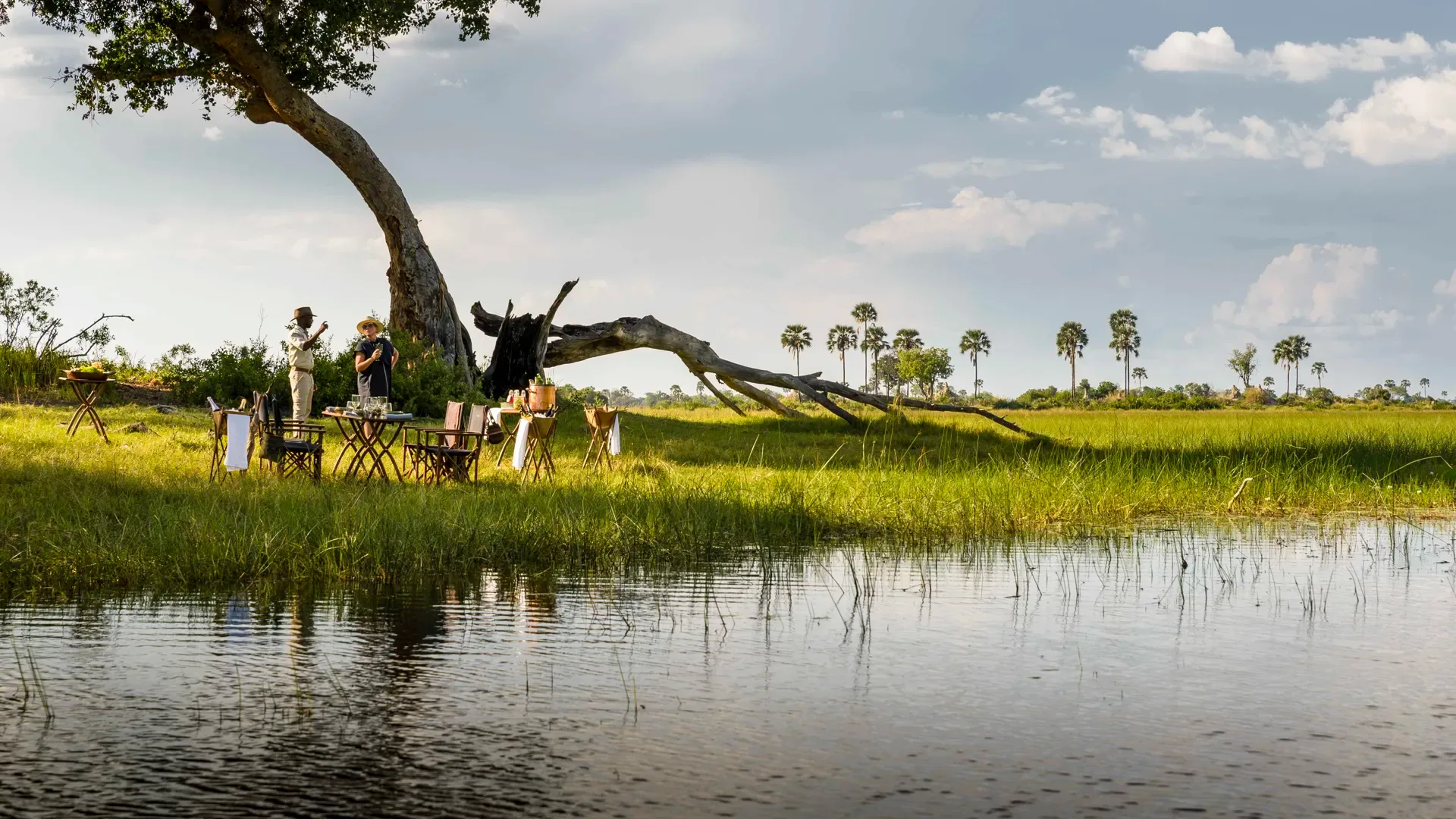
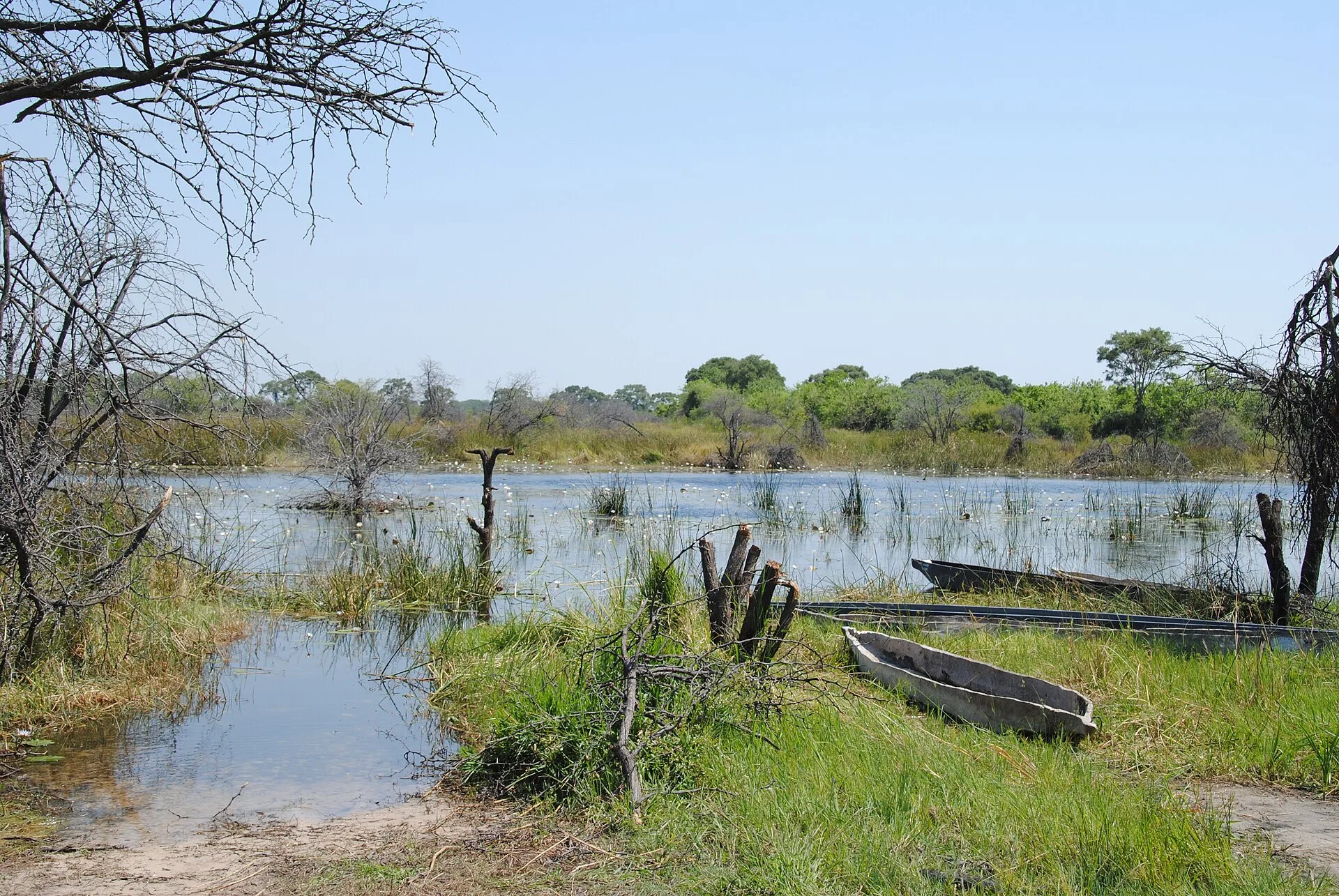
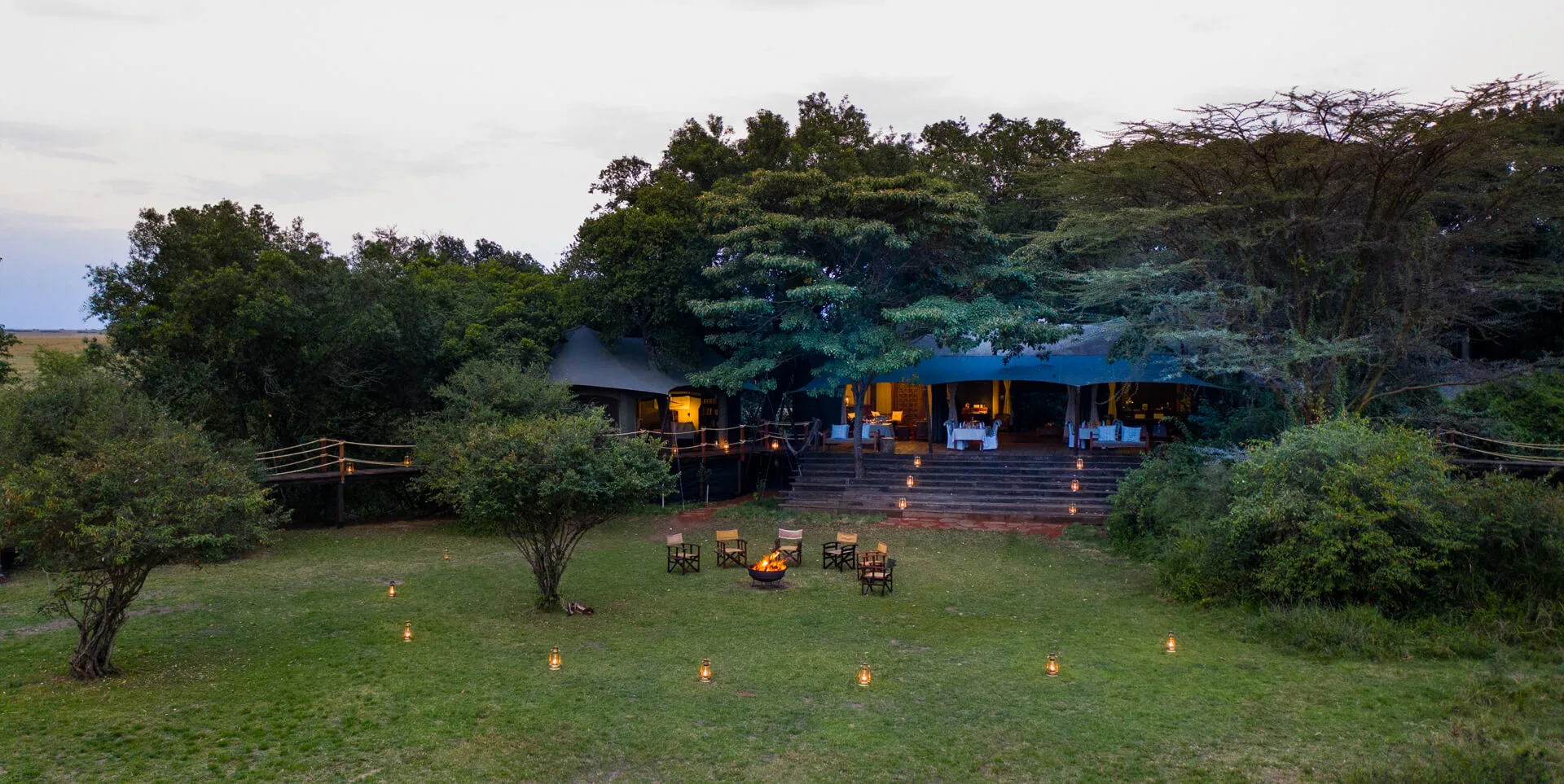
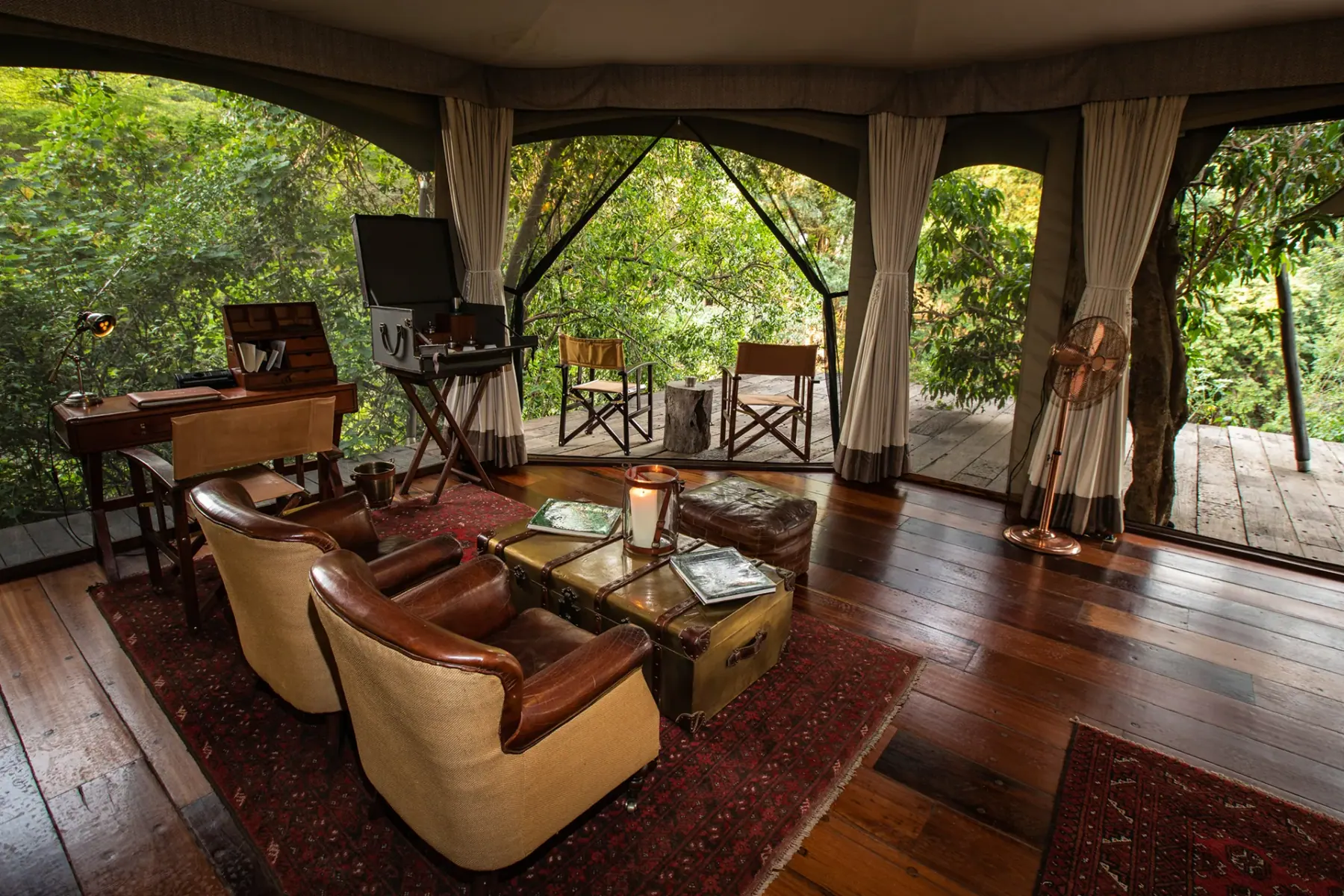
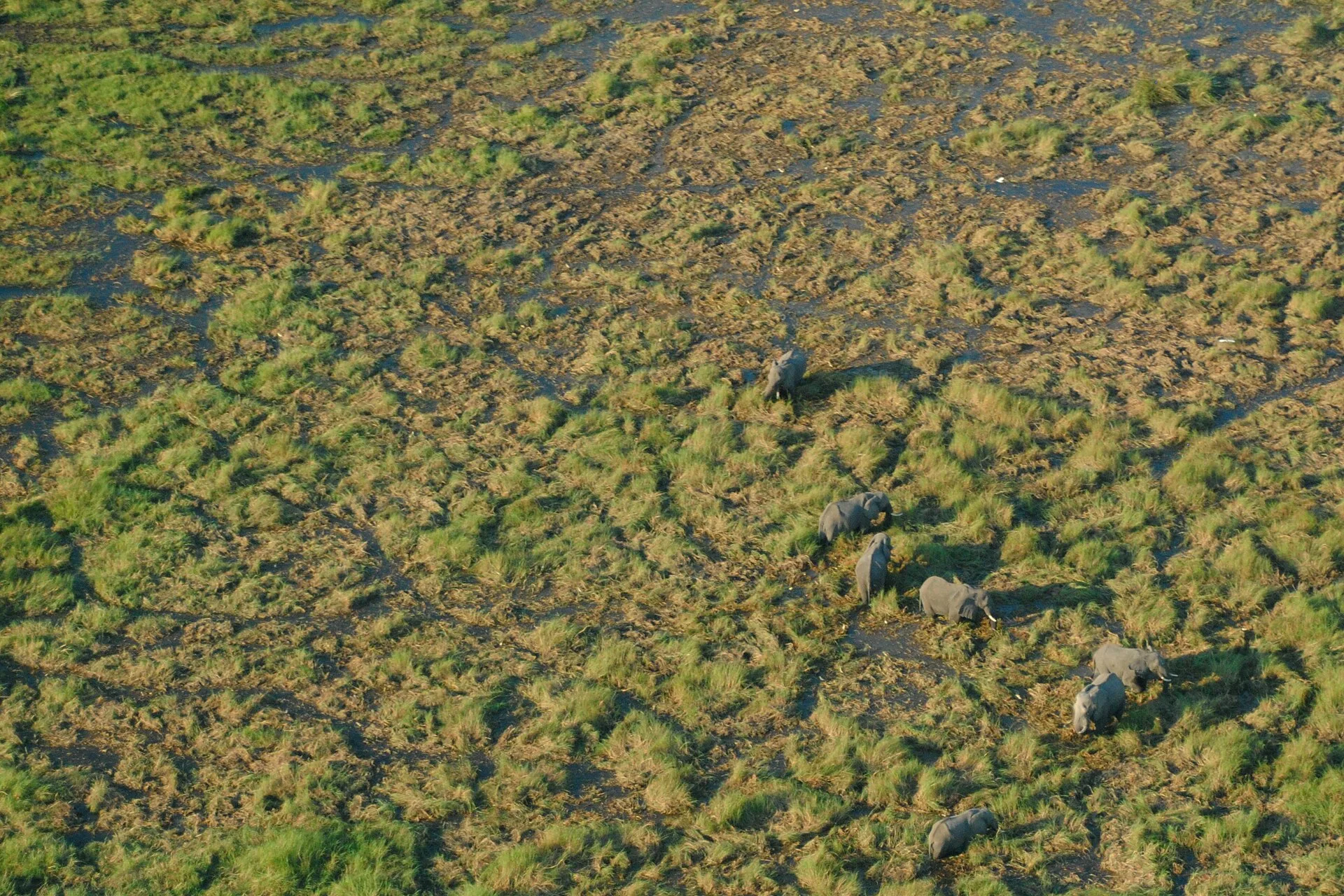
For pure remoteness and privacy, Botswana is hard to beat. The Okavango is a desert delta that floods each winter into a maze of channels, lagoons and islands, so a stay here pairs classic game drives with boating and mokoro canoe trips when the water allows, and the best camps sit inside enormous wilderness areas with tiny guest numbers. The benchmark is Wilderness Mombo on Chief's Island in the Moremi Game Reserve: eight tented suites plus one family unit, more than 45,000 hectares of exclusive wilderness to drive, and a 2026 rate of $5,043 per person per night from June to October that covers all meals, twice-daily activities, park fees, laundry and local drinks. Xigera, Red Carnation Hotels' lodge in the Moremi's NG28 concession, is the design pinnacle of the Delta: a dozen suites, one of them a two-bedroom family suite, furniture and art made by African artists and makers, what the lodge calls Africa's largest private collection of contemporary art in hospitality, and days that run to no set schedule. Belmond's Eagle Island Lodge, twelve tented suites raised over the floodplain, is the water camp we book for the mokoro-and-helicopter version of the Delta, and it pairs with its sister Savute Elephant Lodge in Chobe for the classic land-and-water circuit.

Botswana is for the traveller who values space, big game and the feeling of being very far away from everything.

The Okavango Delta — 1
The Okavango Delta — 2
The Okavango Delta — 3

Remoteness at its purest — a flooded desert, camps of eight to twelve suites, and more than 45,000 hectares of exclusive wilderness at Mombo.

Book it for: Land and water in one safari, with a bush plane between you and everyone else.

Grumeti Reserve - Western corridor of the Serengeti

Grumeti Reserve

Tanzania · Singita Sasakwa, Faru Faru, Sabora and the private villas

$$$ · Western corridor of the Serengeti

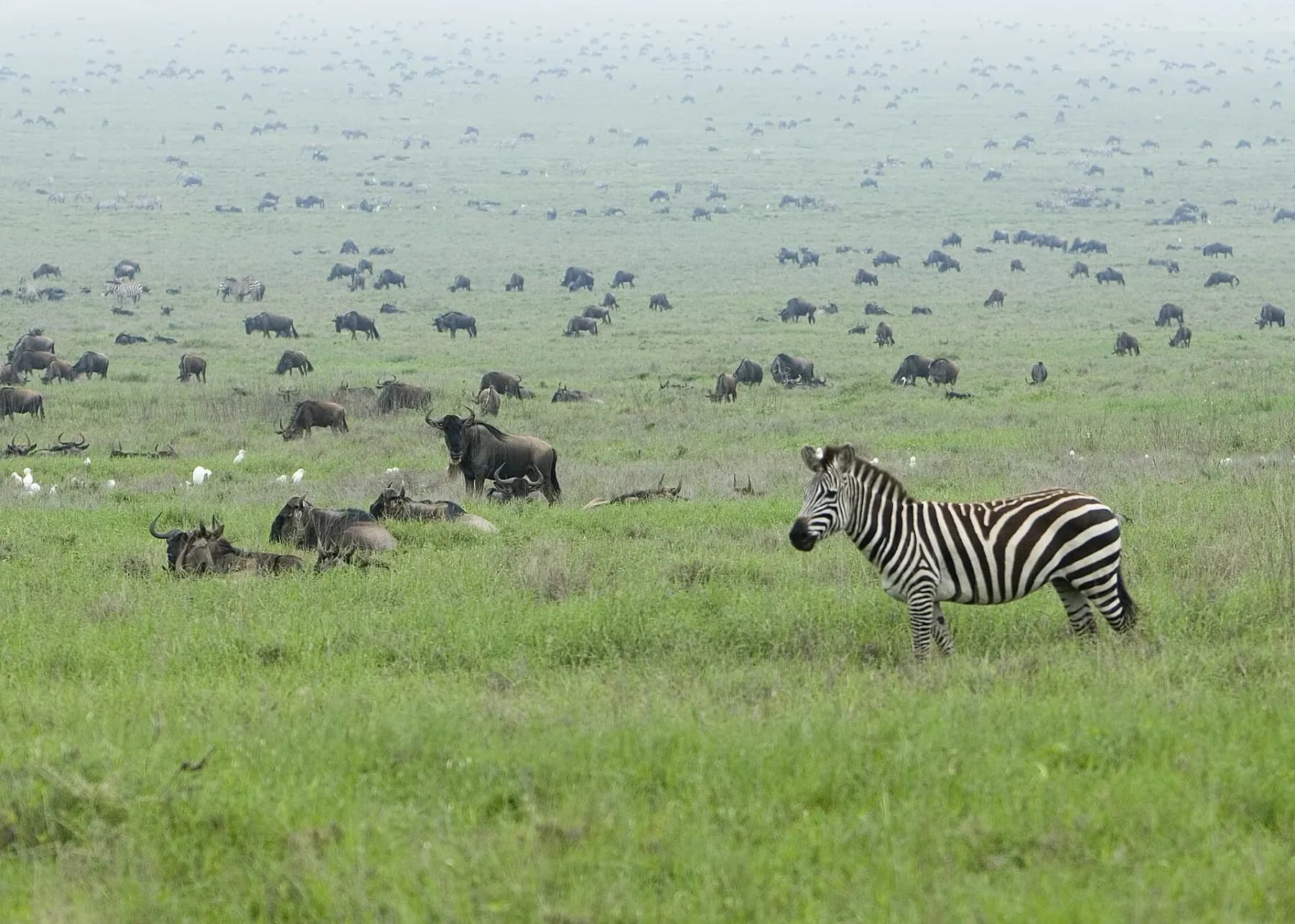
For Tanzania at this level we look past the word 'Serengeti' to the specific concession, and the one we come back to is Grumeti: 350,000 private acres on the Serengeti's western corridor where Singita is the sole operator, so sightings are never shared with other companies' vehicles and guided walking is part of the offer. It combines spectacular wildlife with some of the most sophisticated safari hospitality in Africa. Sasakwa is the Edwardian manor on the hill, Faru Faru sits low on the Grumeti River, Sabora is nine tents out on the open plain, and Serengeti House, Milele and Kilima are exclusive-use villas with their own staff, guides and vehicles. The migration typically reaches this corridor around June and July, when the Grumeti River crossings fall; outside that window it is resident-game country with far fewer vehicles, and we will tell you plainly when your dates do not match the herds.

Grumeti is for the traveller who wants serious safari without giving up design, food, wine, wellness and service.

A 350,000-acre private reserve on the migration route with a single operator on it — the Serengeti without the traffic.

Book it for: The June and July crossings with a plunge pool, a cellar and a spa waiting at the end of the drive.

The Maasai Mara - Oloololo Escarpment, above the Mara Triangle

The Maasai Mara

Kenya · Angama Mara, Mara Plains

$$$ · Oloololo Escarpment, above the Mara Triangle

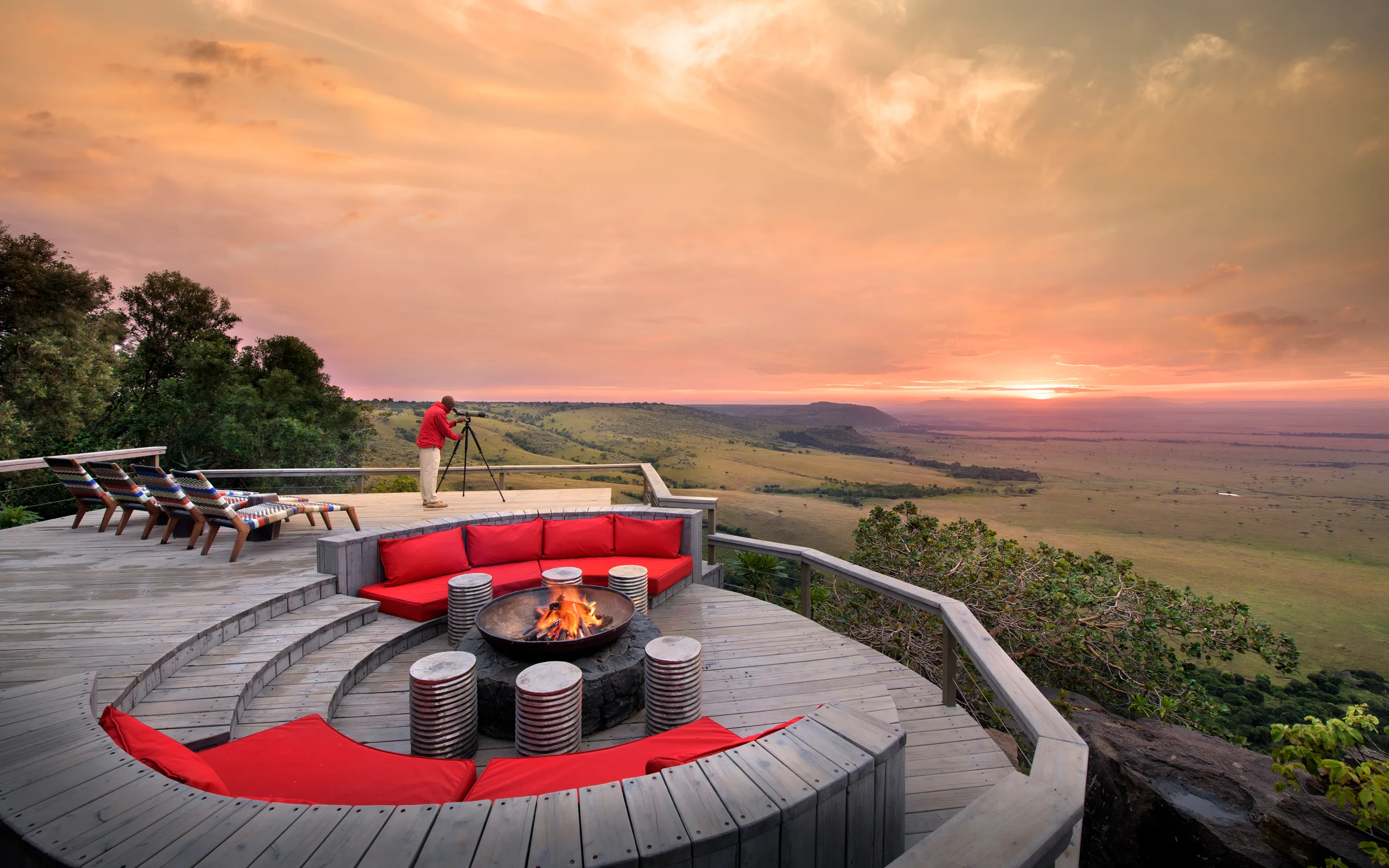
The Mara is the most famous name in safari, and the exact position of your camp matters more here than anywhere else. Before we book we check four things: how the camp reaches the reserve, how many other vehicles will be in that area on your dates, whether it sits in the national reserve or a private conservancy, and whether a private vehicle can be arranged. Angama Mara shows what the top end looks like: two intimate camps of fifteen tented suites each, hung on the Oloololo Escarpment above the Mara Triangle with quick access to the reserve below, and a published 2026 rate of $1,850 per person per night in standard season rising to $2,750 in peak, July to September and over Christmas. The rate is fully inclusive of guided safaris, meals and drinks, but a private vehicle is an extra — $400 for a full day in standard season and $800 from June to October — and park fees of $200 per adult per day from July to December sit on top. That is exactly the line item we would rather fund than a larger tent.

Mara Plains is the other side of the top end: a Great Plains Conservation camp of seven canvas suites in the private Olare Motorogi Conservancy, on the national reserve's northern boundary, in what the operator describes as the lowest-vehicle-density corner of the Mara. Its published rate, from $1,745 per person per night, includes the conservancy and park fees that Angama charges separately, and the two-bedroom Jahazi Suite comes with its own vehicle, guide and butler, so the private-vehicle question is answered before you arrive. It is a Relais & Châteaux member.

The objective is to experience the Mara in a way that still feels intimate: Angama for the escarpment, the design and the view; Mara Plains for the tiny conservancy camp with the vehicle included. The camp's position decides which is right for you.

The Maasai Mara — 1
The Maasai Mara — 2

Safari's most famous stage, where the camp's position decides whether the trip feels intimate or crowded.

Book it for: The July to September peak with a private vehicle from day one: Angama for the view, Mara Plains for the conservancy.

Sabi Sand - Sabi Sand Game Reserve, bordering Kruger National Park

Sabi Sand

South Africa · Singita Ebony, Boulders and Castleton

$$$ · Sabi Sand Game Reserve, bordering Kruger National Park

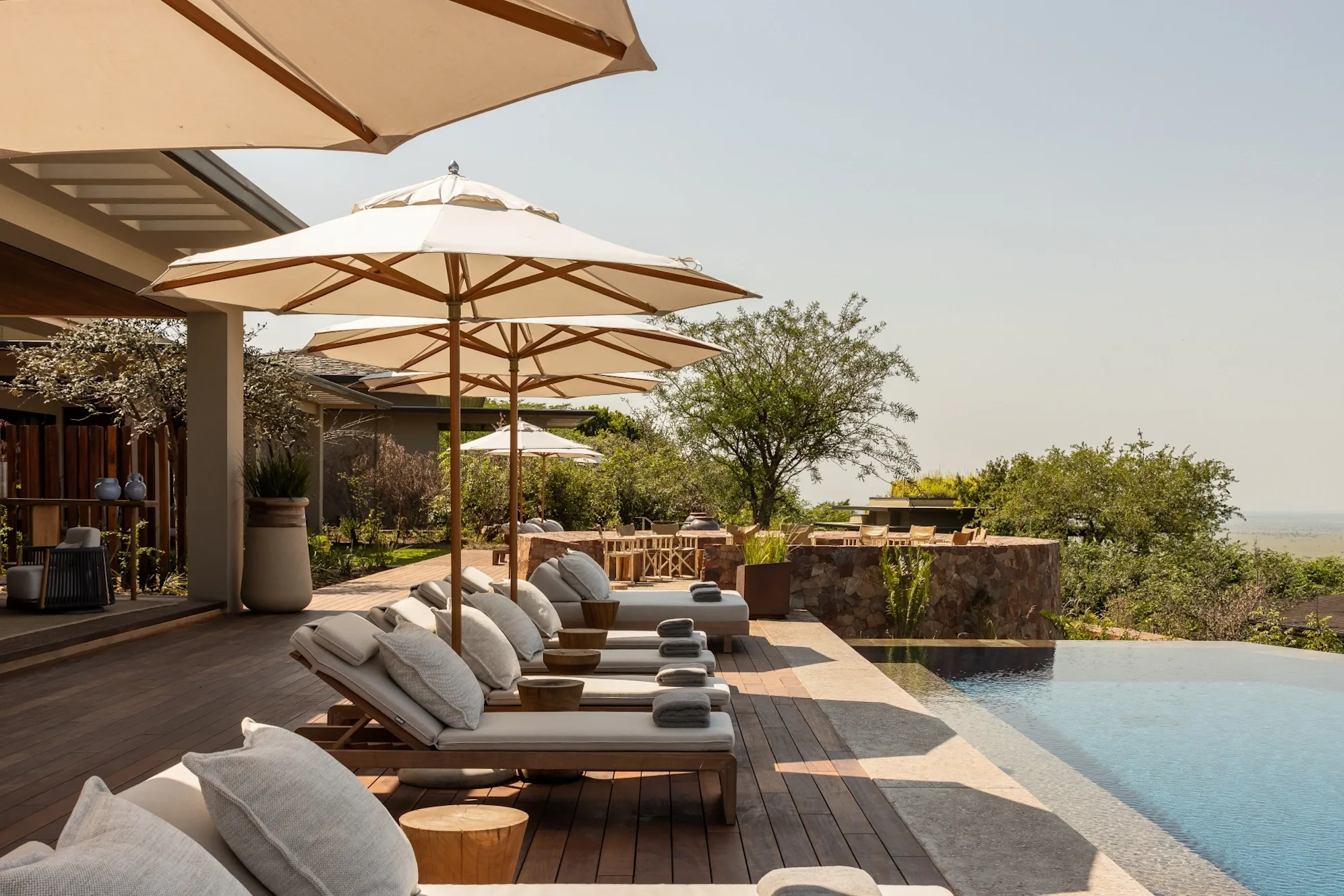
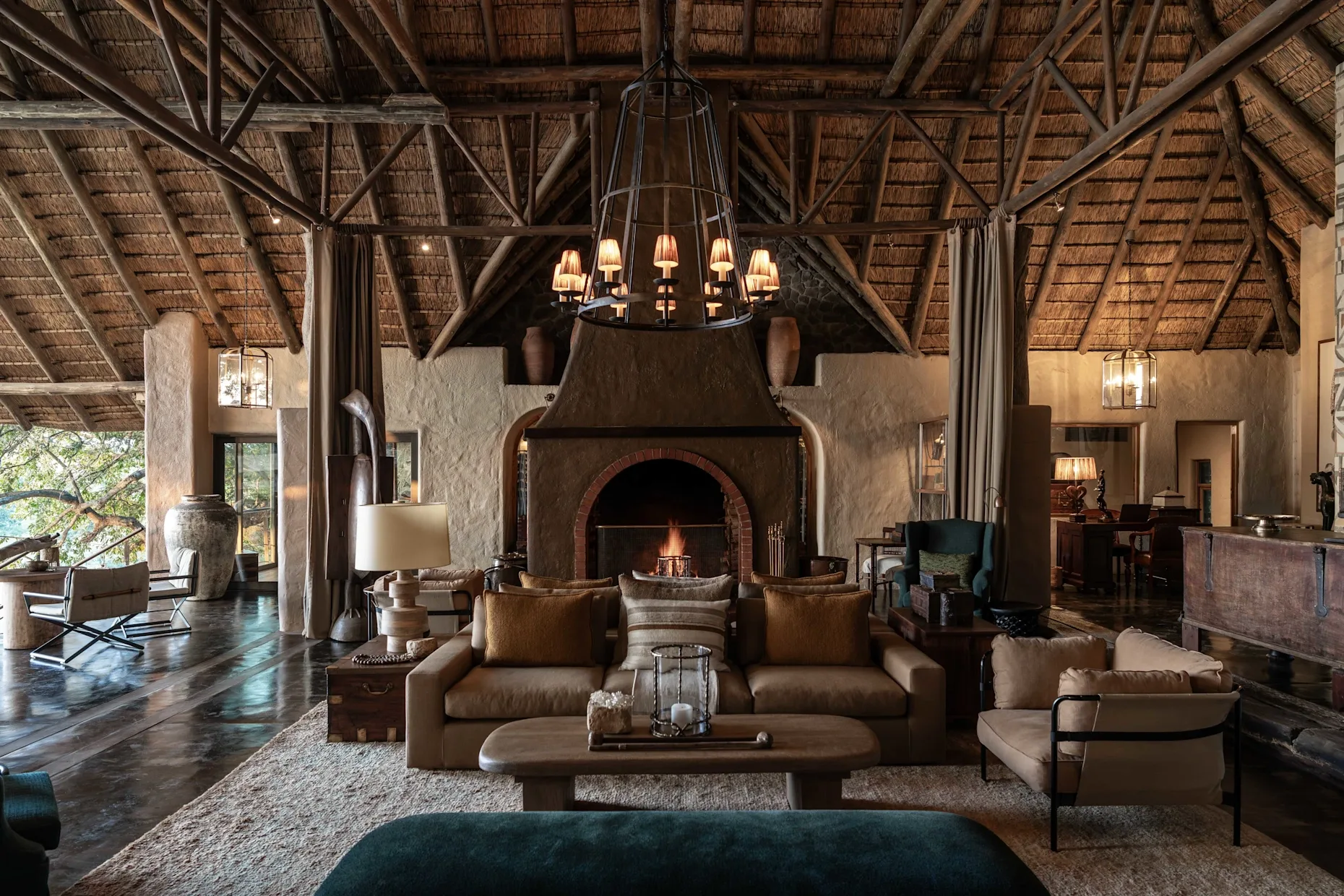
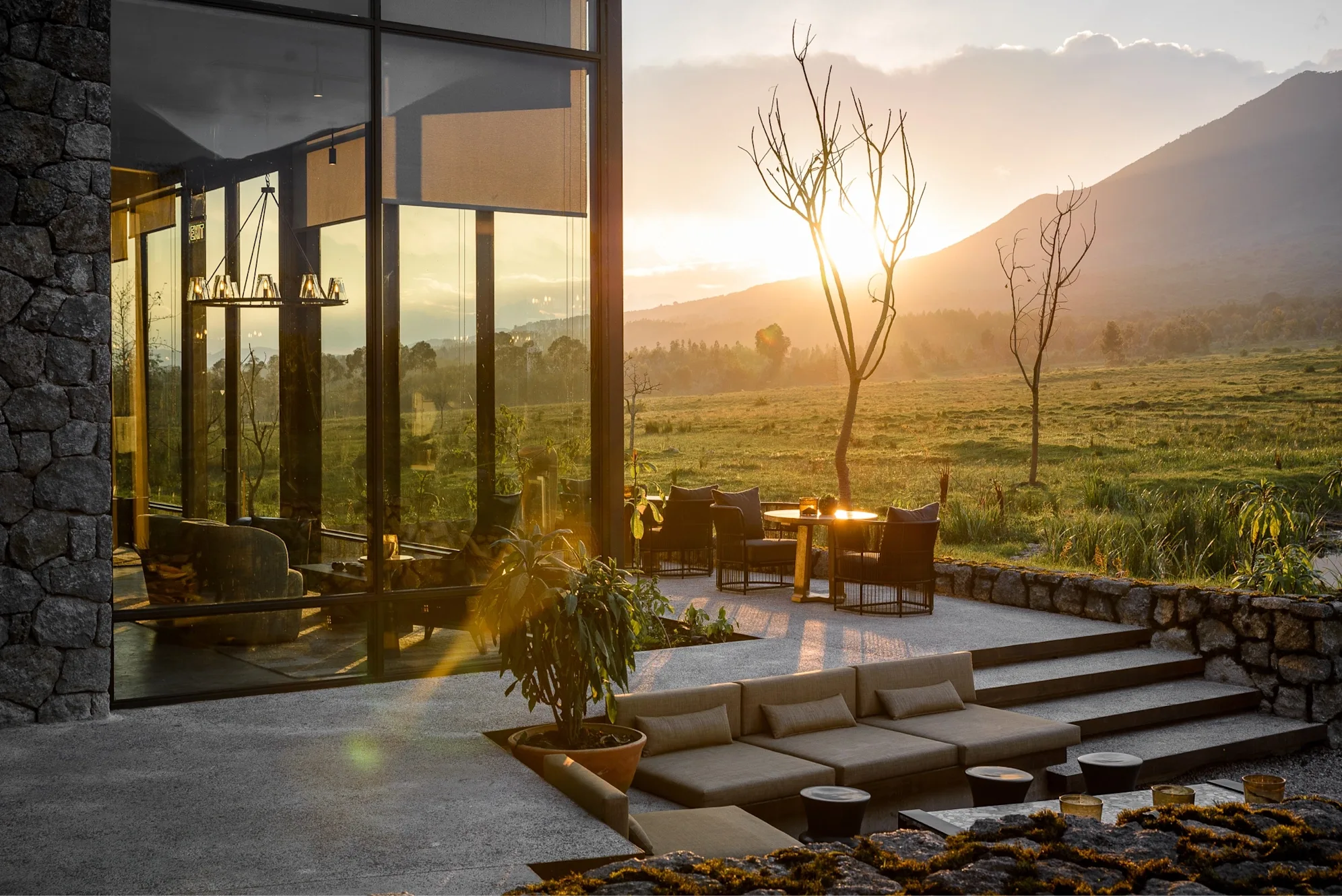
Sabi Sand is the strongest choice for anyone who wants exceptional wildlife alongside the comforts of a five-star hotel: private pools, serious food and wine, a wellness centre and highly polished service, with nothing given up on the safari itself. The reserve is synonymous with leopard, and sightings here are frequent and close. Singita's founding concession covers 45,000 private acres on the Sand River: Ebony, the original lodge from 1993, twelve suites fully redesigned inside in 2024; Boulders, its glass-walled sister, twelve suites for guests aged ten and over; and Castleton, six cottages taken as one house for up to twelve, with a private guide, tracker, chef and Land Rover.

It is also the easiest safari to combine with Cape Town and the Winelands, which makes South Africa the natural first African trip: a week in the bush, then vineyards and the sea.

Hotel-grade comfort and the reserve synonymous with leopard, an easy pairing with Cape Town — the ideal first safari.

Book it for: A first safari with five-star comfort, or a family that wants Castleton to itself, before Cape Town and the Winelands.

Volcanoes National Park - Northern Rwanda, on the edge of Volcanoes National Park

Volcanoes National Park

Rwanda · Singita Kwitonda Lodge and Kataza House

$$$ · Northern Rwanda, on the edge of Volcanoes National Park

Rwanda is a different proposition. You do not come for game drives; you come for one of the great wildlife encounters on earth, a morning among habituated mountain gorillas in the forest, and the days are built around the trek rather than the vehicle. Singita Kwitonda sits on the park boundary at roughly 2,600 metres, on 178 acres it is replanting from its own nursery, with a fireplace and a heated plunge pool in every suite for the cold mornings and Kataza House next door as the four-bedroom exclusive-use option. Permits are US$1,500 per person per trek and capped daily, so they are the first thing we secure, and we recommend two treks: no two gorilla families behave alike, and a second morning doubles your odds against fog and a poor draw.

We normally treat Rwanda as an extraordinary addition to a larger safari rather than a replacement for Botswana, Tanzania or Kenya. For the right traveller, though, it becomes the defining experience of the whole journey.

The stop where the vehicle is beside the point: mountain gorillas in the morning, fireplaces and heated plunge pools by early afternoon.

Book it for: The three-night addition that becomes the highlight — two treks, two permits, paired with the Serengeti or the coast.

Via Privata Advantage

Insider Access

  • +

    A private vehicle and guide secured when we book, not requested on arrival — where a camp sells it as an extra, as Angama Mara does, it is priced into the quote from the start, and where a suite includes it, as the Jahazi Suite at Mara Plains does, we say so

  • +

    The reserve chosen before the lodge: private concessions and conservancies checked for vehicle density on your exact dates, so the entry-level suite in the right area beats the villa at the wrong camp

  • +

    Bush flights, park and conservancy fees, transfers and arrival times sequenced end to end, with three or four nights per camp rather than a new airstrip every second day

  • +

    The exclusive-use houses held early for families and groups — Castleton at Sabi Sand, Serengeti House and Milele at Grumeti, Kataza House in Rwanda — each with its own team, vehicle and schedule

  • +

    Gorilla permits and migration windows booked first: Rwanda's permits are capped daily, and the Grumeti crossings and the Mara's peak months sell out the better part of a year ahead

Timing

When to Book

Peak wildlife season is the same problem everywhere: the best camps are tiny and the best months are short. Botswana's dry season runs from May to October, when the Delta's winter flood is in and game concentrates at the water; Mombo's peak rate applies from June to October, and with eight suites the earlier the better. The Grumeti crossings typically fall in June and July and are best booked nine to twelve months out; the Mara's peak season is July to September, and Angama prices it accordingly. Sabi Sand is excellent year-round, with the dry winter from May to September the strongest for viewing, and Rwanda's easier trekking windows are June to September and December to February, though permits run all year. Every stay on this list is enquiry-led: tell us the month and who is travelling, and we build the sequence — camps, flights, vehicles and permits — around it. Because the greatest luxury on safari is not having more. It is space, time and the freedom to see the wilderness your way.

FAQ

Questions, Answered

How much does a luxury safari cost per night?

Budget $2,000 to $5,000-plus per person per night at the top of the market, more in peak wildlife season. Two published 2026 rates set the range: Angama Mara in the Maasai Mara charges $1,850 per person per night in standard season and $2,750 in peak (July to September and over Christmas), and Wilderness Mombo in the Okavango Delta is $5,043 per person per night from June to October. The rates are per person rather than per room, and they are close to all-inclusive: meals, drinks, game drives, laundry and most activities are in, so the honest comparison is with a full day, not with a hotel room.

How much does a ten-night luxury safari cost for a couple?

Between $40,000 and $100,000-plus before international flights, at the rates above. Internal aviation, private vehicles, park and conservancy fees where a camp excludes them, and extras such as a hot-air balloon flight or a second gorilla permit sit on top. An exclusive-use villa with its own guide, vehicle, chef and team is a category of its own again, and the one we price first for a family or a group.

Is a private safari vehicle worth the money?

For most travellers at this level, yes, and we would fund it before a room upgrade. A shared vehicle means compromise on every drive: someone wants lions, someone wants birds, someone needs breakfast while you would rather stay with the leopard. Your own vehicle and guide put you in charge of the pace, the stops and the hours. Some camps include a private vehicle and others sell it as an extra. Angama Mara charges $400 for a full day in standard season and $800 from June to October and over the festive period; the two-bedroom Jahazi Suite at Mara Plains comes with its own vehicle and guide. We confirm the position for every camp before we quote.

How many camps should a luxury safari include?

Fewer than you think. Three or four nights at the right camp beat a week of airstrips, and a second camp only earns its place if it gives you a different experience: water after land, gorillas after plains, the Delta after the Mara. Constant packing, flying and checking in turns an extraordinary trip into logistics. A ten-night trip usually means two camps, sometimes three, and never a camp added because the itinerary had room for it.

Should I add Rwanda to a safari?

As an addition rather than a replacement. Rwanda is built around a morning with the mountain gorillas rather than game drives, so it pairs with Botswana, Tanzania or Kenya instead of standing in for them. Three nights at Singita Kwitonda allow two treks, which we recommend because fog and the draw of gorilla families vary from day to day. Permits are US$1,500 per person per trek and capped daily, and the minimum age for trekking is 15, with no exceptions.

Which safari destination is best for a first trip?

South Africa's Sabi Sand. The viewing is among the most reliable in Africa, with leopard the speciality; the lodges deliver hotel-grade comfort, which matters on a first trip; and it pairs easily with Cape Town and the Winelands, so a first African journey has a city and a coast in it as well as the bush. Botswana and Tanzania reward the traveller who has done that trip and now wants more space and fewer people.

Want this itinerary?

Our team will craft a personalized version tailored to your travel dates, preferences, and budget.

Plan This Trip
Plan This Trip