Start Your Journey
India, Done Right: A Luxury Journey from Delhi to Rajasthan and Mumbai - PrivataList editorial collection
Destination

India, Done Right: A Luxury Journey from Delhi to Rajasthan and Mumbai

Thirteen nights from Delhi to Mumbai: by road through Agra and rural Rajasthan with one private driver, a local guide in every city, and the five hotels we stayed in along the way.

By Albina Sharapova, founder and travel advisor at Via Privata

October 26, 2026 · 24 min read

Facts checked 26 October 2026

All Collections

India done right, in my view, is a thirteen-night luxury itinerary from Delhi to Mumbai: by road through Agra and the Rajasthan countryside with one private driver, a local guide in each city, and a single short flight at the end.

India surprised me with just how romantic it could be. The palace hotels, the architecture and the slower moments between sightseeing made it one of our most memorable journeys, and it was unlike almost anywhere else we had travelled.

It is also a country that rewards planning more than most. The distances are long, the great monuments draw enormous crowds, and a first day in Delhi can overwhelm anyone. Three decisions shape the whole trip: who drives you, who explains what you are looking at, and where you sleep at the end of each day.

This guide is built on our own journey along this route in February 2024: the hotels, sights and restaurants I describe as ours are first-hand. The practical details were checked again in October 2026, and the alternative hotels are researched recommendations rather than places we stayed.

The 13-night itinerary at a glance

Swipe to compare→

NightsWhereOur hotelGetting there
1 to 3New DelhiThe Oberoi, New DelhiInternational arrival; about 35 minutes from the airport
4 and 5AgraThe Oberoi AmarvilasBy road, about three and a half to four hours
6 and 7Rural RajasthanAmanbaghBy road via Chand Baori, most of a day
8 to 10UdaipurThe Oberoi UdaivilasBy road, a full day
11 to 13MumbaiThe Taj Mahal PalaceNonstop flight from Udaipur
Door-to-door times with a private driver, from the hotels' own figures and current routing; winter fog can add to the Delhi and Agra legs.

With twelve nights, I would take one from Delhi; with fourteen, I would give the extra night to Agra, for Fatehpur Sikri without rushing.

The order is the point. Delhi and Agra come first, while you are fresh, because they ask the most of you. Amanbagh slows everything down in the middle. Udaipur brings the palaces back with a lake around them, and Mumbai ends the journey in a different India altogether, with an international airport at the end of it.

Why I recommend a private driver and local guides in India

One of the best decisions we made was hiring the same private driver for the whole road journey, from Delhi through Agra and Amanbagh to Udaipur. We arranged him ourselves, separately from our hotels and our guides, and he drove us in a Toyota Innova all the way.

He was professional, punctual and knowledgeable, the car was comfortable, and the longer drives were manageable. I would book the same arrangement again.

What one driver changes

On this route, continuity matters more than any single transfer.

  • No unnecessary luggage transfers. Having the same car throughout the journey meant we didn't have to coordinate luggage between different drivers or vehicles.
  • The day starts when you are ready. If breakfast facing the Taj Mahal runs long, the car waits; there is no transfer slot to make.
  • You stop where you like. A stepwell, a roadside tea, a photograph: on a long drive, these pauses are what you remember.
  • There is nothing to coordinate between cities. No new company, no new car and no meeting point each time you check out.
  • The driver learns how you travel. After a day or two, you no longer explain when you like to leave or how long you want to stop.

Why this route works by road

Delhi, Agra, Amanbagh and Udaipur form one continuous route south and west from the capital, and the road connects them in order. Amanbagh sits in the Aravalli hills, an hour and a half to two hours from Jaipur's airport according to Aman, and the road from Agra passes Chand Baori, the stepwell at Abhaneri, which turns a transfer into one of the best mornings of the trip.

We generally prefer travelling overland when it lets us avoid an unnecessary domestic flight. A one-hour flight in India still costs most of half a day once you add the airports and transfers, and you see nothing of the country in between.

Be honest about the long days

Delhi to Agra is the easy leg, and the stop at Chand Baori gives the Agra to Amanbagh day its shape. Amanbagh to Udaipur is the longest day of the trip: roughly 480 kilometres, which routing services put at about six hours of driving without traffic. With lunch and rest stops it is a full day, so leave after an early breakfast and plan to arrive in the early evening.

In December and January, dense fog can settle over the plains around Delhi and Agra in the early morning, as India's weather service warned in December 2025; in those months I would not start the Delhi to Agra drive before daylight.

If long hours in a car are hard for you, change only that longest leg: drive from Amanbagh to Jaipur's airport and fly the short hop to Udaipur, which IndiGo runs nonstop in the current winter schedule. It saves less time than it seems once you count the airport, but it replaces most of a day on the road.

The guides

The driver handles the road. Guiding is a different job, and it needs a different person. We arranged our private guides through a luxury destination management company: a local guide in Delhi, Agra, Udaipur and Mumbai, each meeting us for the sightseeing in their own city. Our experience with them was consistently positive, and they made a real difference in four ways.

  • Context: a monument without its history is just architecture. With a good guide, the Red Fort or the City Palace becomes the story of the people who built it and lived in it.
  • Places beyond the usual routes: in Udaipur and Mumbai especially, our guides took us into neighbourhoods we would never have found on our own.
  • Logistics: gates, tickets, security queues and rules that change from one monument to the next. A guide carries all of that for you.
  • Crowds: they cannot make them disappear, but they know the hour, the entrance and the order of the day that make them easier to bear.

No guide skips the security line at the Taj Mahal or empties a monument for you. What a good one gives you is confidence and flexibility, so that a busy city feels like a place you understand rather than one you are being moved through.

The combination is what made the journey work: one driver for the road, and a local guide for each city.

The Route, Stop by Stop

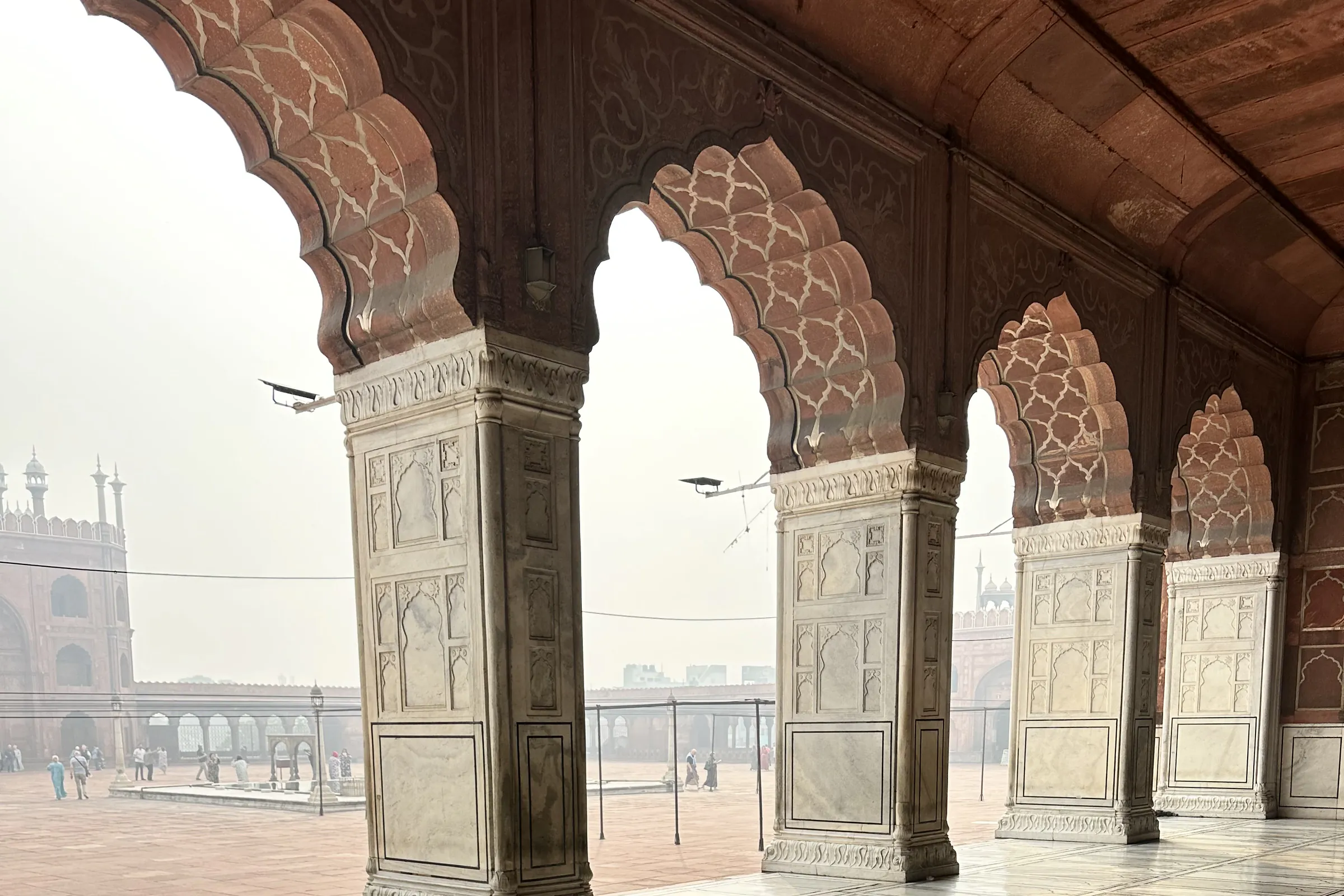
Scalloped red sandstone arches on carved marble pillars along the prayer hall of Jama Masjid in Old Delhi, above a white marble floor inlaid with black lines
The arcade of Jama Masjid's prayer hall, Old Delhi
01

New Delhi

Nights 1 to 3 · Old Delhi and New Delhi

Delhi is two cities, and seeing it well starts with knowing which one you are in. Old Delhi, Shah Jahan's walled city of the seventeenth century, is the Red Fort, Jama Masjid and the dense lanes of Chandni Chowk. New Delhi, laid out under the British in the early twentieth century, is its opposite: wide avenues, government buildings and India Gate. The Qutub Minar, in the south, is older than both.

We saw India Gate, the Lotus Temple, Jama Masjid, the Qutub Minar and the Red Fort with a private guide, and I would not try to fit them into one day. Delhi's traffic decides how much you can see, so I organise the city by geography.

Day one: Old Delhi

Start with the Red Fort, Shah Jahan's red sandstone palace-fortress, which now opens every day.

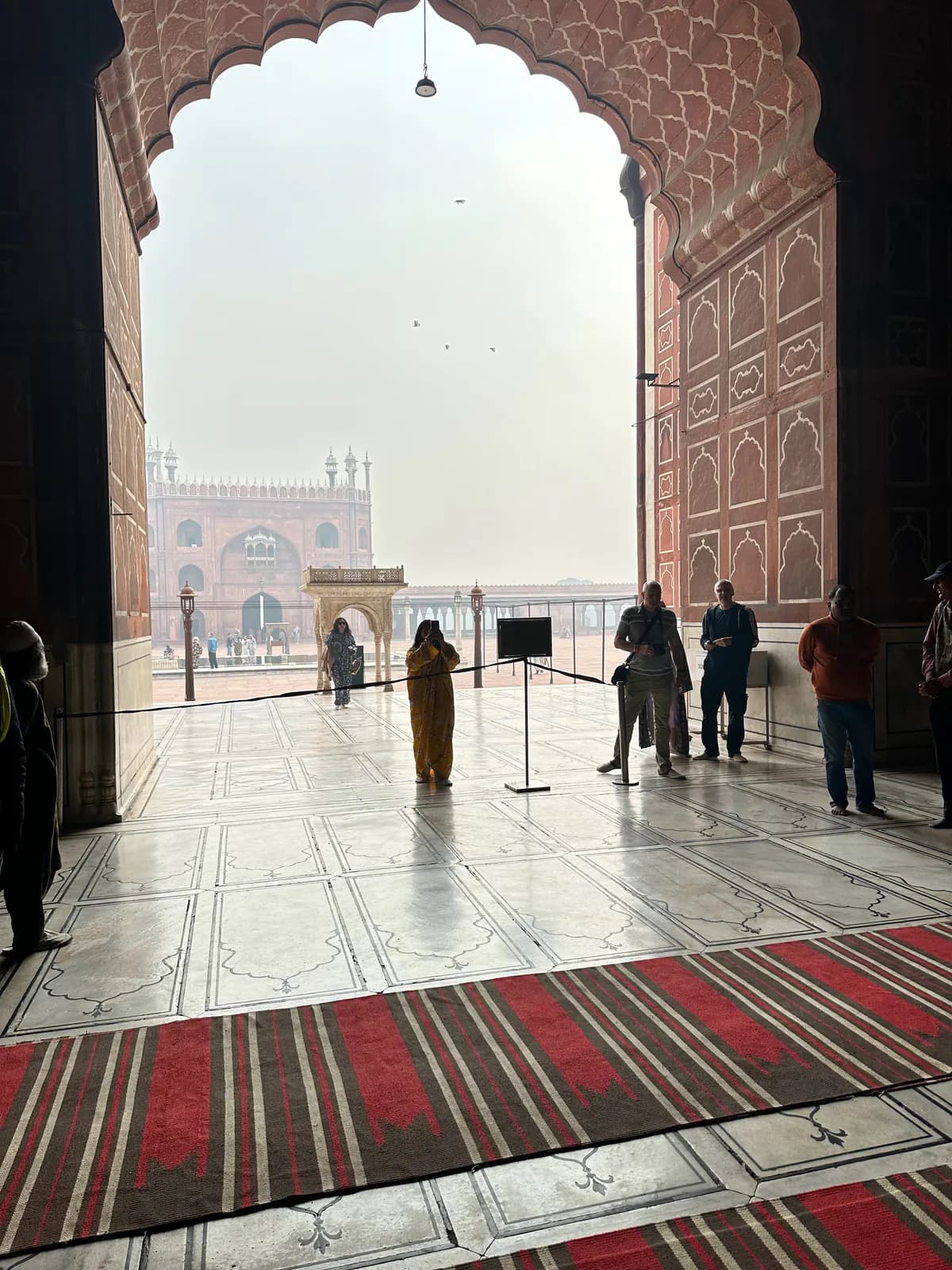
From there it is a short ride to Jama Masjid. Shoes come off at the steps, robes are available at the gate, and the mosque closes to visitors at prayer times, especially around Friday midday prayers, so make it a morning visit.

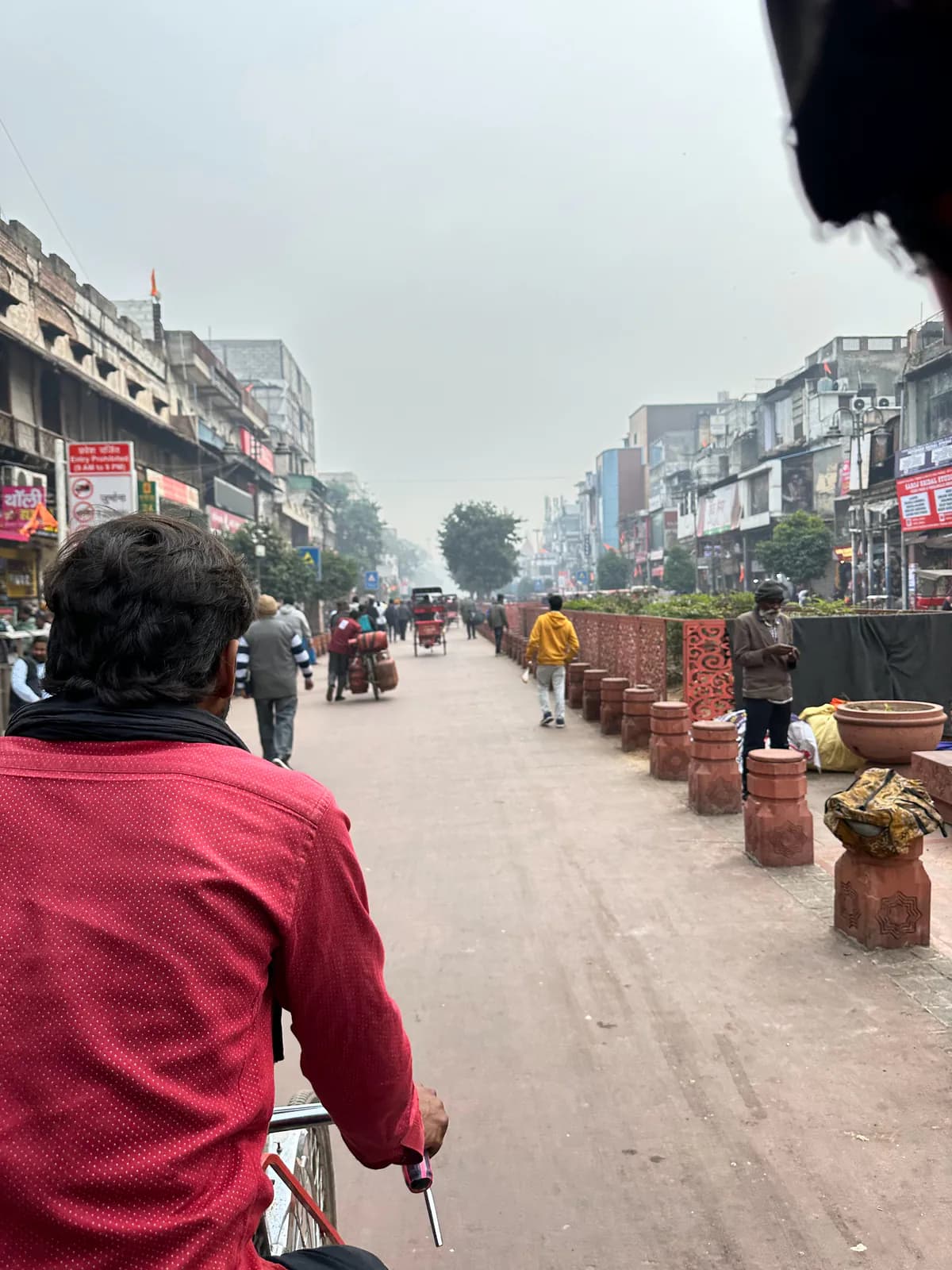
Then let the guide take you into Chandni Chowk by cycle-rickshaw; with someone local beside you, the crowd becomes part of the fun. By early afternoon, go back to the hotel: Old Delhi is a morning.

Day two: the south and New Delhi

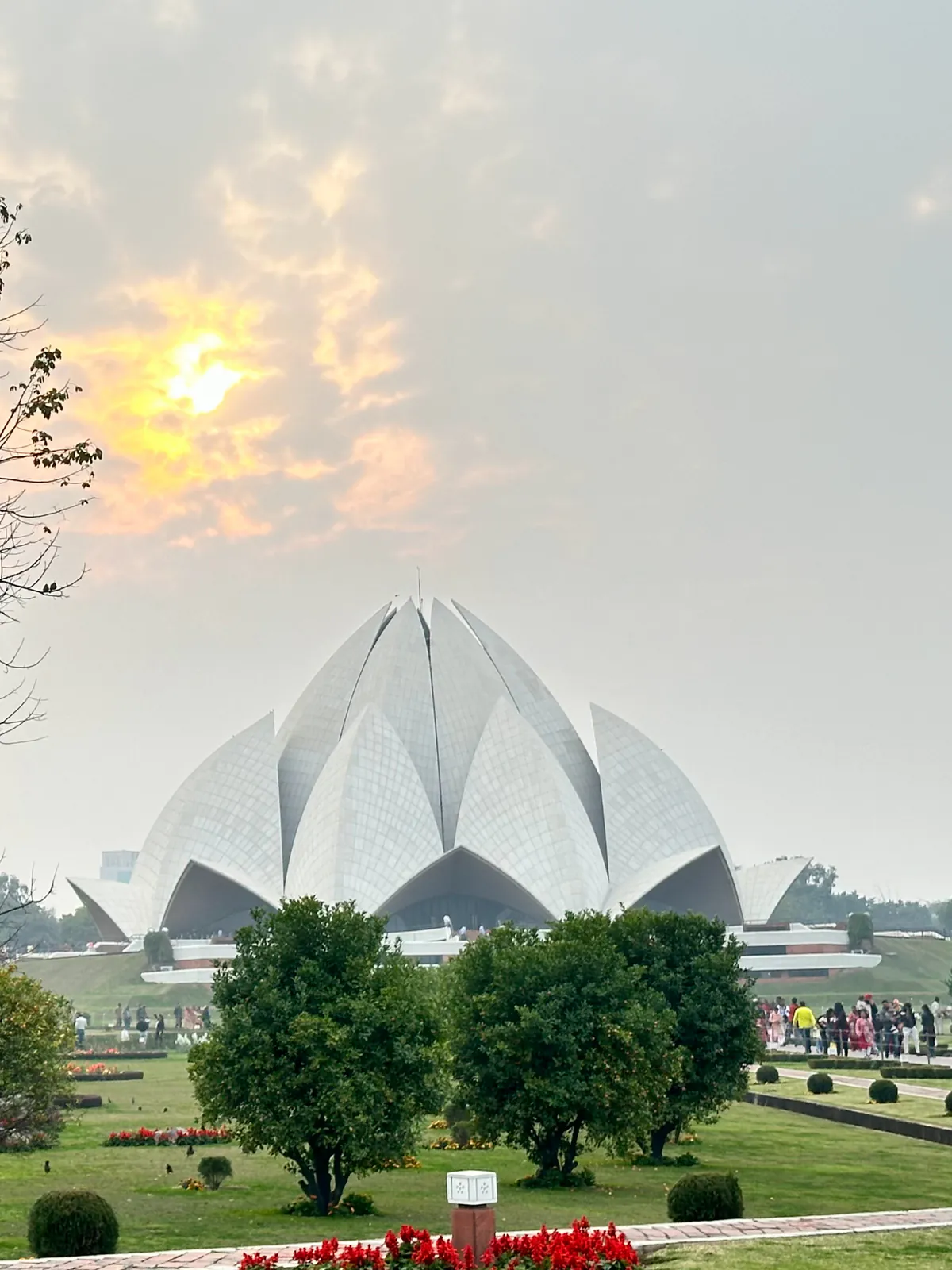
Begin at the Qutub Minar, the twelfth-century fluted sandstone tower surrounded by the ruins of a much older Delhi. Then the Lotus Temple, the Bahá'í House of Worship: white marble petals, open to every faith, free to enter and closed on Mondays. End at India Gate as the light goes, with the National War Memorial beside it.

If you arrive on a long-haul flight, keep the first evening for the hotel. Three nights gives you two full, unhurried days, and Delhi needs both.

Where we ate in Delhi

Indian Accent is the restaurant I would build an evening around. It is in The Lodhi hotel, and its cooking pairs Indian flavours with global ingredients and techniques, as tasting menus or à la carte. When we ate there it was still Manish Mehrotra's kitchen; he left in 2024, and the executive chef today is Shantanu Mehrotra, who has been with the restaurant since it opened. Book well ahead.

Bukhara, at the ITC Maurya, is the opposite experience and a Delhi institution: North-West Frontier cooking since 1978, from the tandoor, at rough wooden tables, with aprons handed out so you can eat with your hands. Dal Bukhara and the Sikandari Raan are the dishes it is known for.

Choose Indian Accent for the creative tasting menu, and Bukhara for the classic.
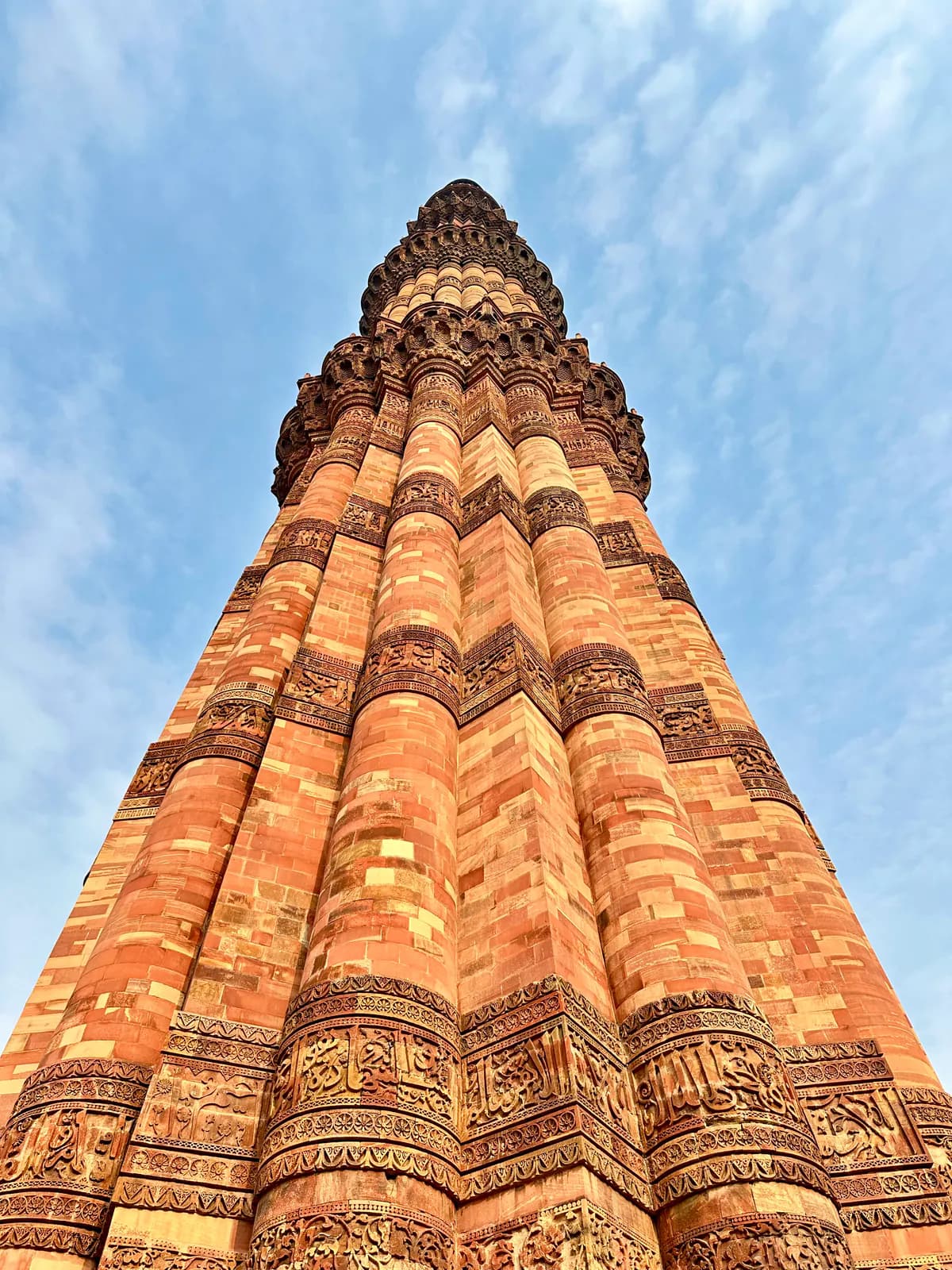
The fluted red sandstone shaft of the Qutub Minar against a blue sky, seen from its base
Looking out from beneath a scalloped arch of Jama Masjid's prayer hall across the marble courtyard to the far gate
The white petals of the Lotus Temple, the Bahá'í House of Worship in Delhi, behind trees and lawns in the afternoon haze
A cycle-rickshaw ride through Chandni Chowk in Old Delhi, the rider in a red shirt seen from the passenger seat

Where I Would Stay

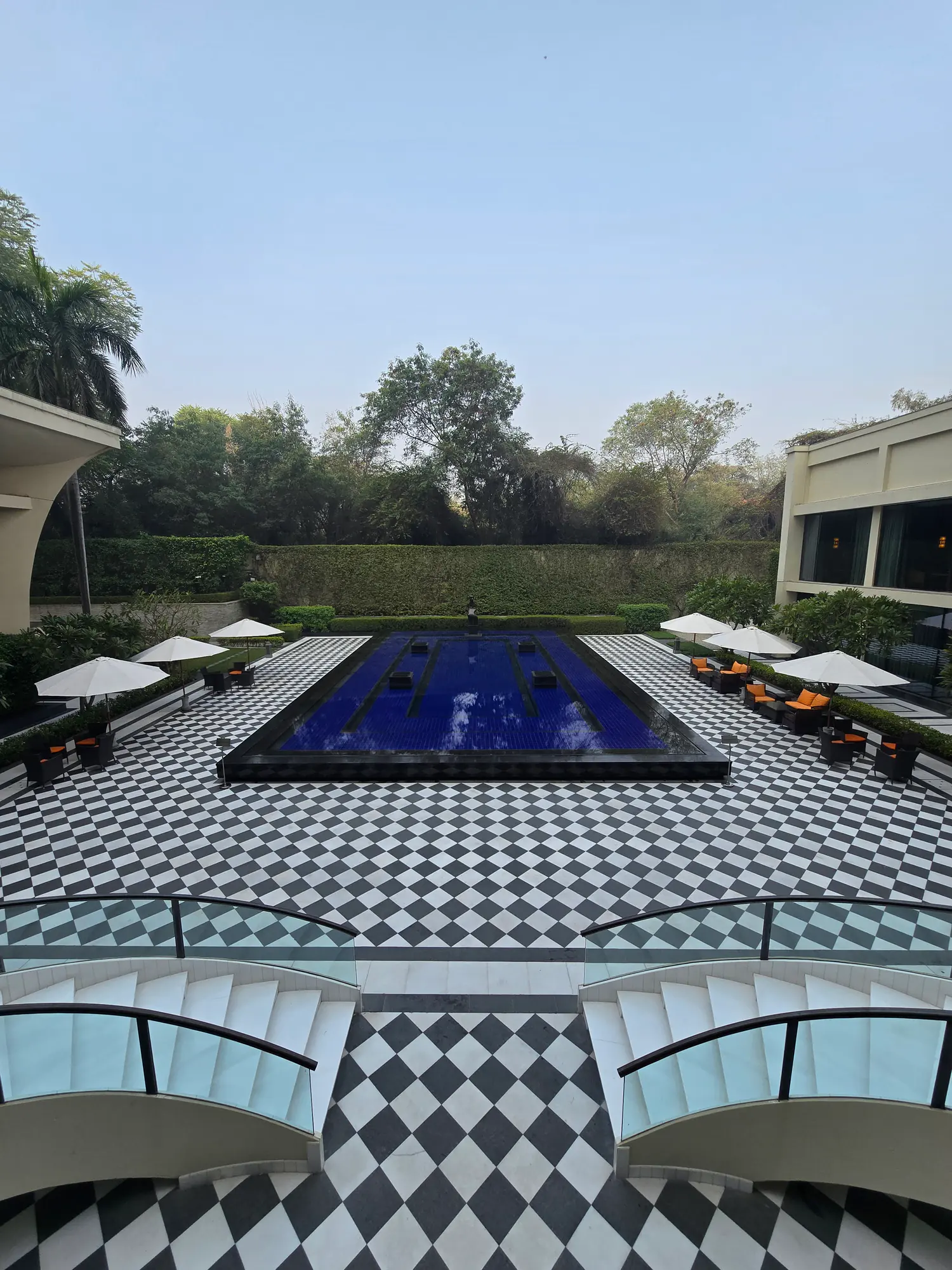
The courtyard water garden at The Oberoi, New Delhi, seen from above: a blue-tiled pool on a black-and-white terrace
The Oberoi, New Delhi

Where we stayed

Our first hotel in India, and still the one I would choose for a first night. It stands on the edge of the Delhi Golf Course, with the fairways on one side and the dome of Humayun's Tomb on the other, and the renovation that reopened it in 2018 gave it fewer, larger rooms and a calm, modern interior by Adam D. Tihany.

After a long flight, that calm is the point. The service is in the Oberoi tradition, with a butler for every room, and Dhilli, its restaurant devoted to the cooking of Delhi, makes a good first dinner.

Room to book
A Premier Plus Room on the Humayun's Tomb side: the extra space, the second basin and the Residents' Lounge make the most difference.
Best for
First-time visitors to India, couples, and anyone beginning a longer journey through Agra and Rajasthan.
Location
Central New Delhi, about 35 minutes from the airport and 3.4 kilometres from India Gate. Old Delhi and the Qutub Minar are each about half an hour away by car.
Read our full review
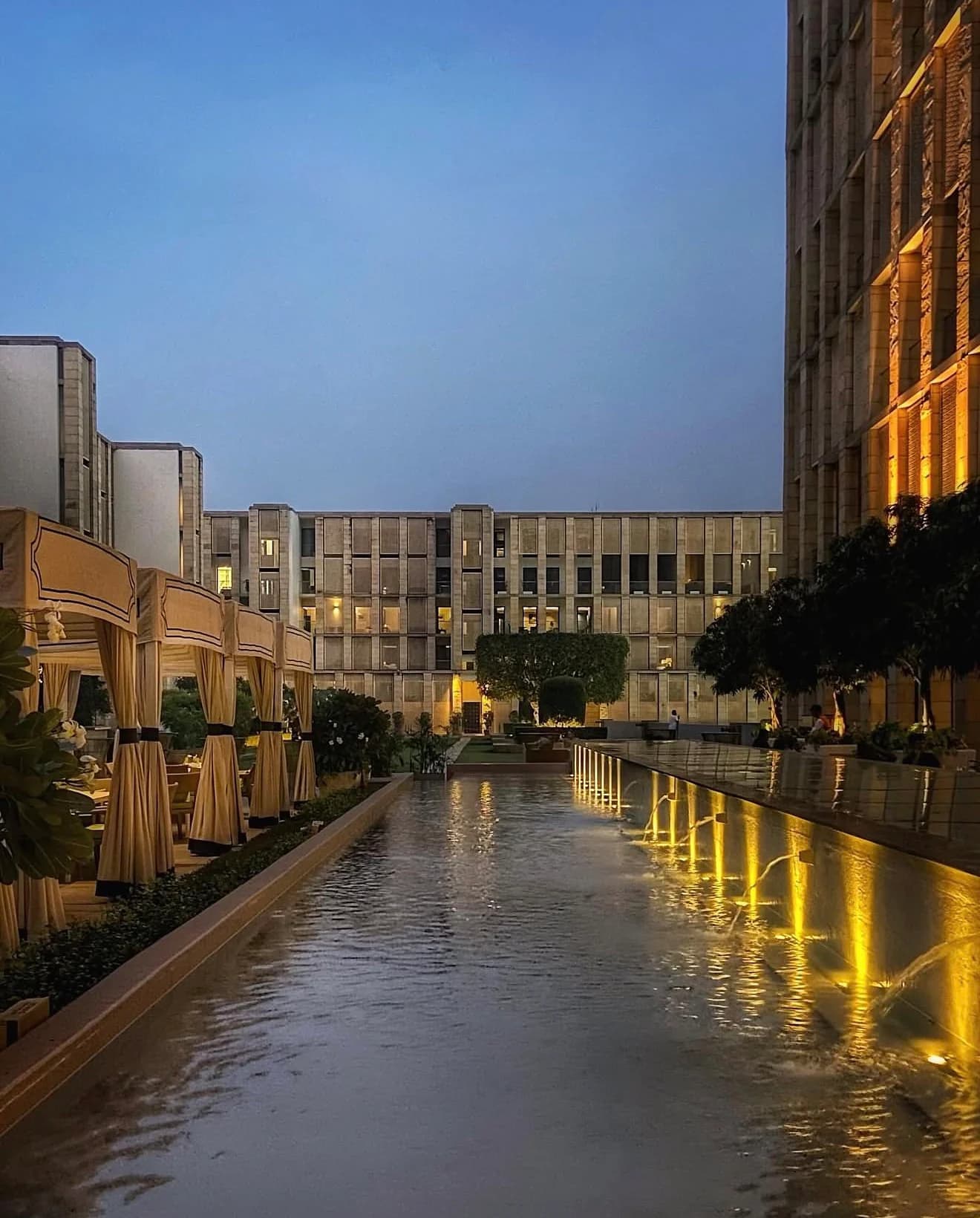
The Lodhi in New Delhi at dusk: the long pool lit by fountains, curtained cabanas and the hotel's sandstone wings

Photo: The Lodhi

The Lodhi

Also worth considering

The Lodhi is the contemporary alternative: a quieter hotel on Lodhi Road, at the green edge of Lutyens' Delhi, designed by the architect Kerry Hill. Most of its room and suite categories have their own plunge pool, there is a 50-metre heated lap pool, and Indian Accent is in the same building, a short walk from your room.

Best for
Travellers who prefer modern design and privacy to the grand-hotel feeling, and anyone planning more than one meal at Indian Accent.
Location
Lodhi Road, close to Humayun's Tomb and Lodhi Garden. Not every category has a plunge pool, so ask for one by name.
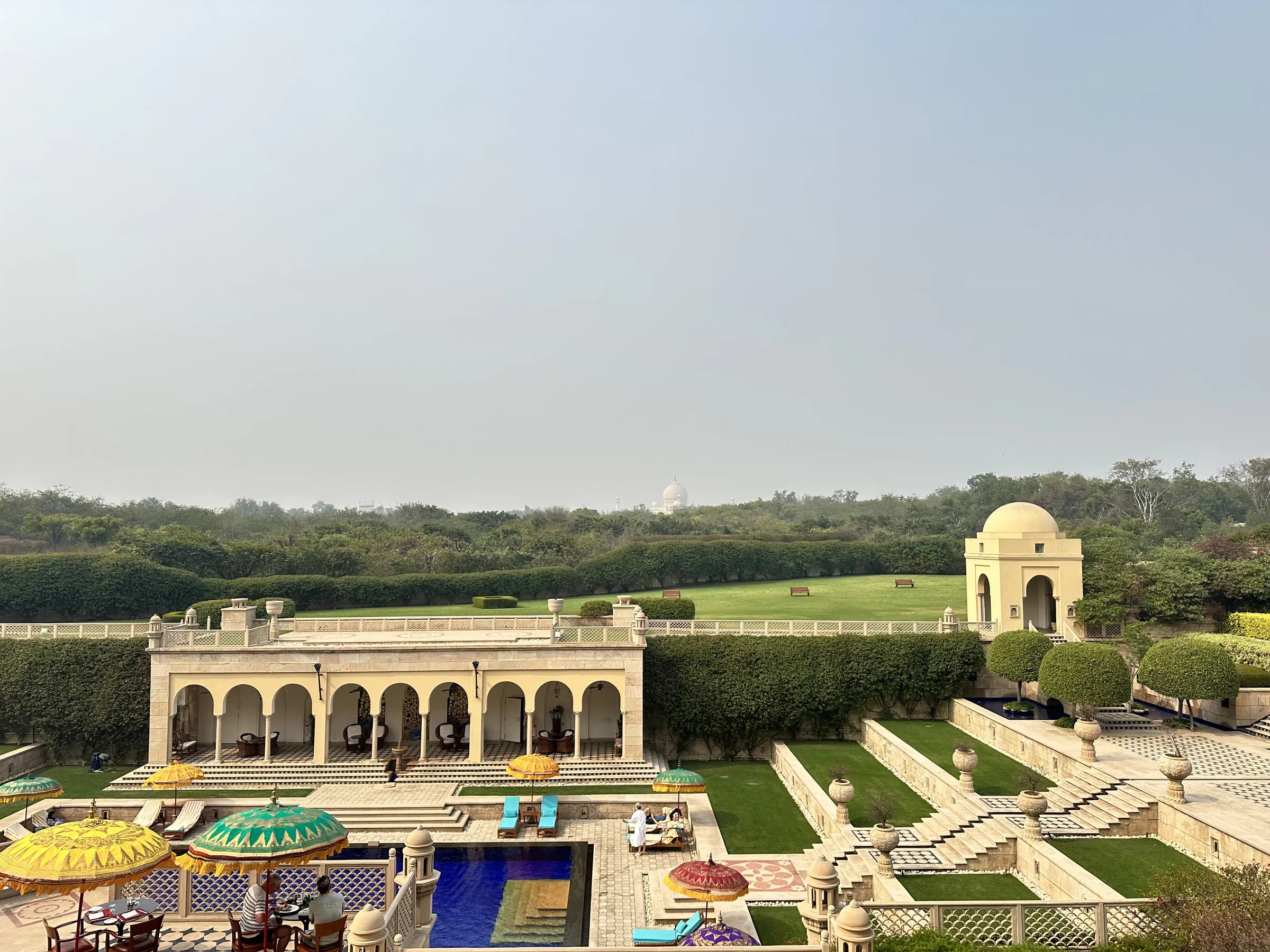
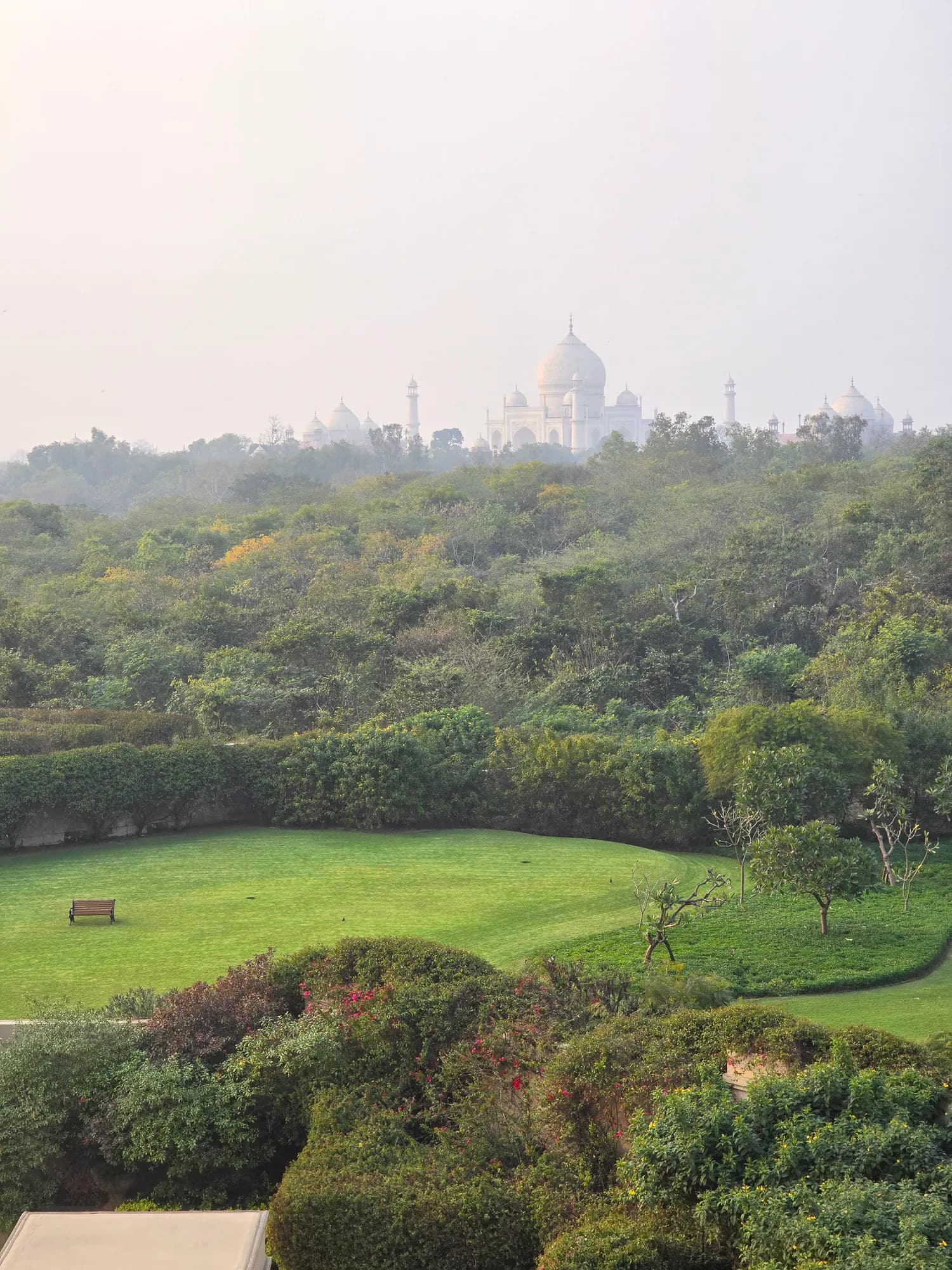
The terraced gardens, pool pavilion and parasols of The Oberoi Amarvilas, with the Taj Mahal small on the hazy horizon beyond the trees
The gardens of The Oberoi Amarvilas, with the Taj Mahal on the horizon
02

Agra

Nights 4 and 5 · The Taj Mahal and Mughal Agra

Agra was the seat of the Mughal emperors at the height of their power, and almost everything worth seeing here was built by three generations of them in less than a century. The Taj Mahal is why you come. The rest of Mughal Agra is why I would stay two nights rather than one.

The Taj Mahal

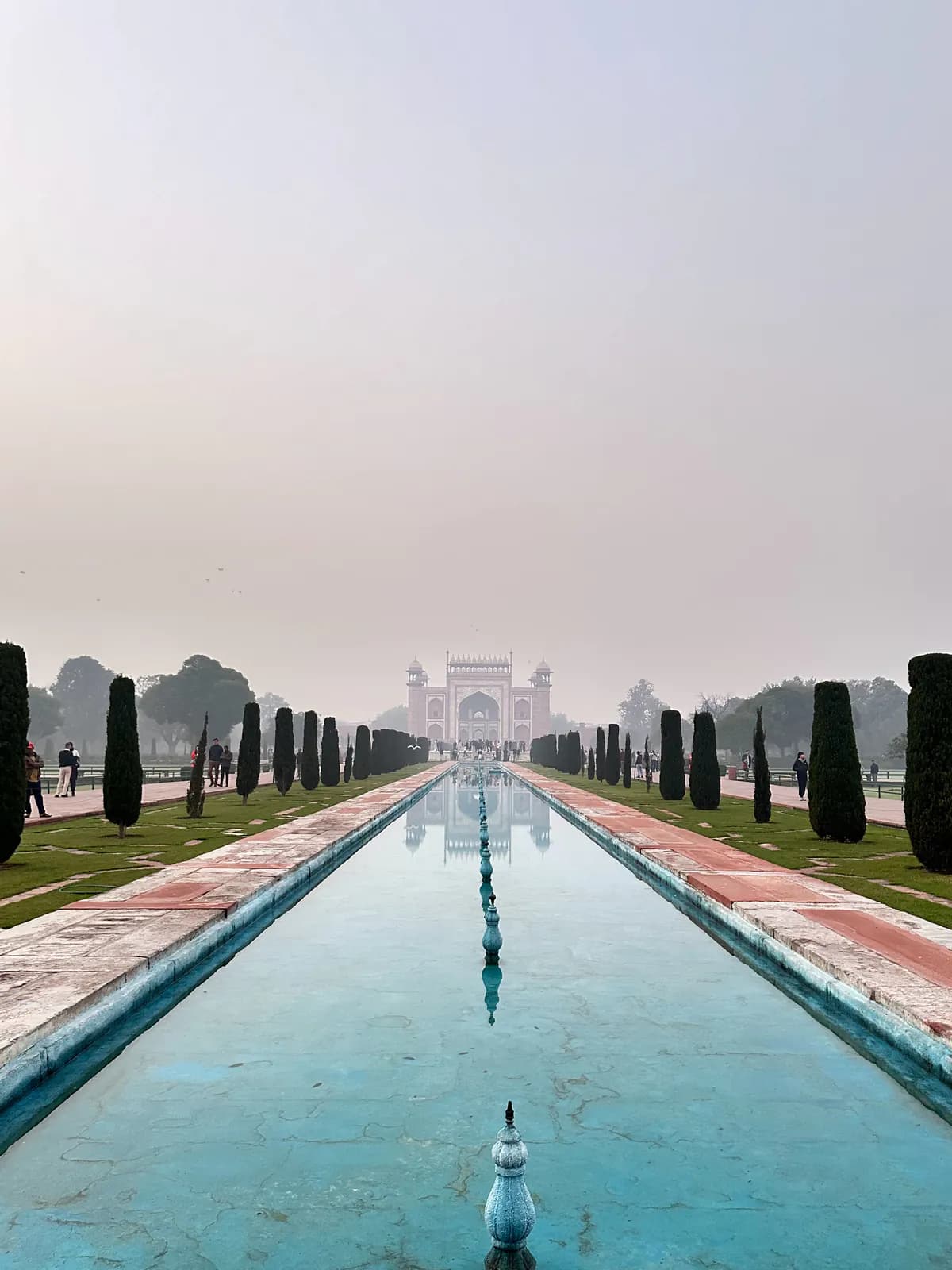
We went in at opening time, in the early morning, and I would recommend the same to anyone: the light is soft and the crowds are at their thinnest. The practical details, as the monument's official site publishes them:

  • It is closed every Friday. Never make a Friday your only full day in Agra.
  • It opens 30 minutes before sunrise and closes 30 minutes before sunset.
  • Foreign visitors pay INR 1,100, plus an optional INR 200 for the main mausoleum, a little less online. The ticket includes shoe covers, water and the electric shuttles from the parking areas.
  • Use the east gate. The official site recommends it to avoid crowds.
  • Travel light. Food, drones, tripods, headphones and phone chargers are not allowed in, and there is no photography inside the mausoleum.

On five nights around each full moon, except Fridays and during Ramzan, small timed groups can also see the Taj Mahal by moonlight; places are limited.

The rest of Mughal Agra, in a sensible order

We saw six Mughal monuments with our guide, spread over our stay, and I would not try to see them all in two days.

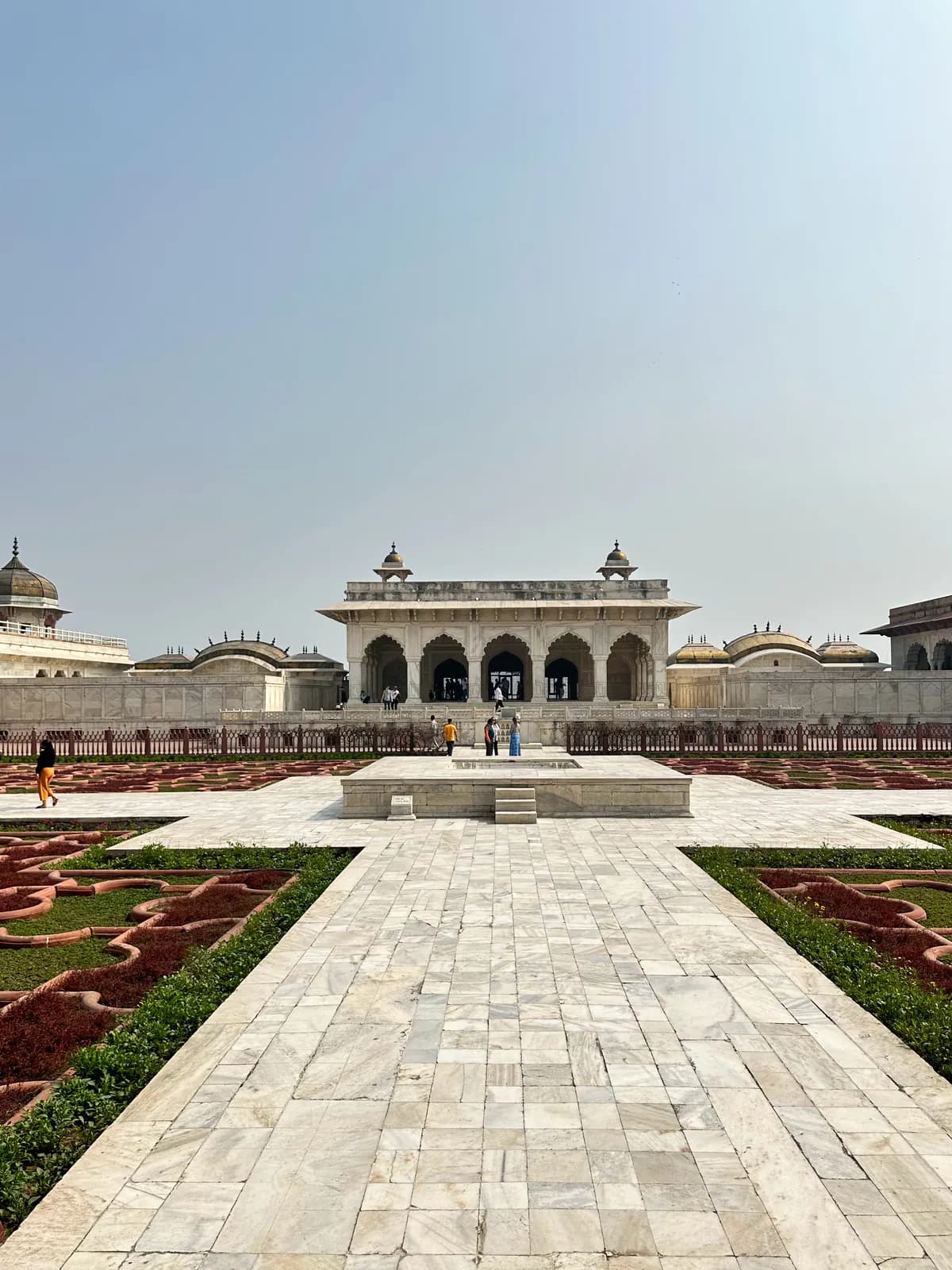
  • Essential: Agra Fort, later on the Taj day. Akbar's red sandstone fortress, where Shah Jahan was later imprisoned within sight of the Taj Mahal, is where a guide adds the most.
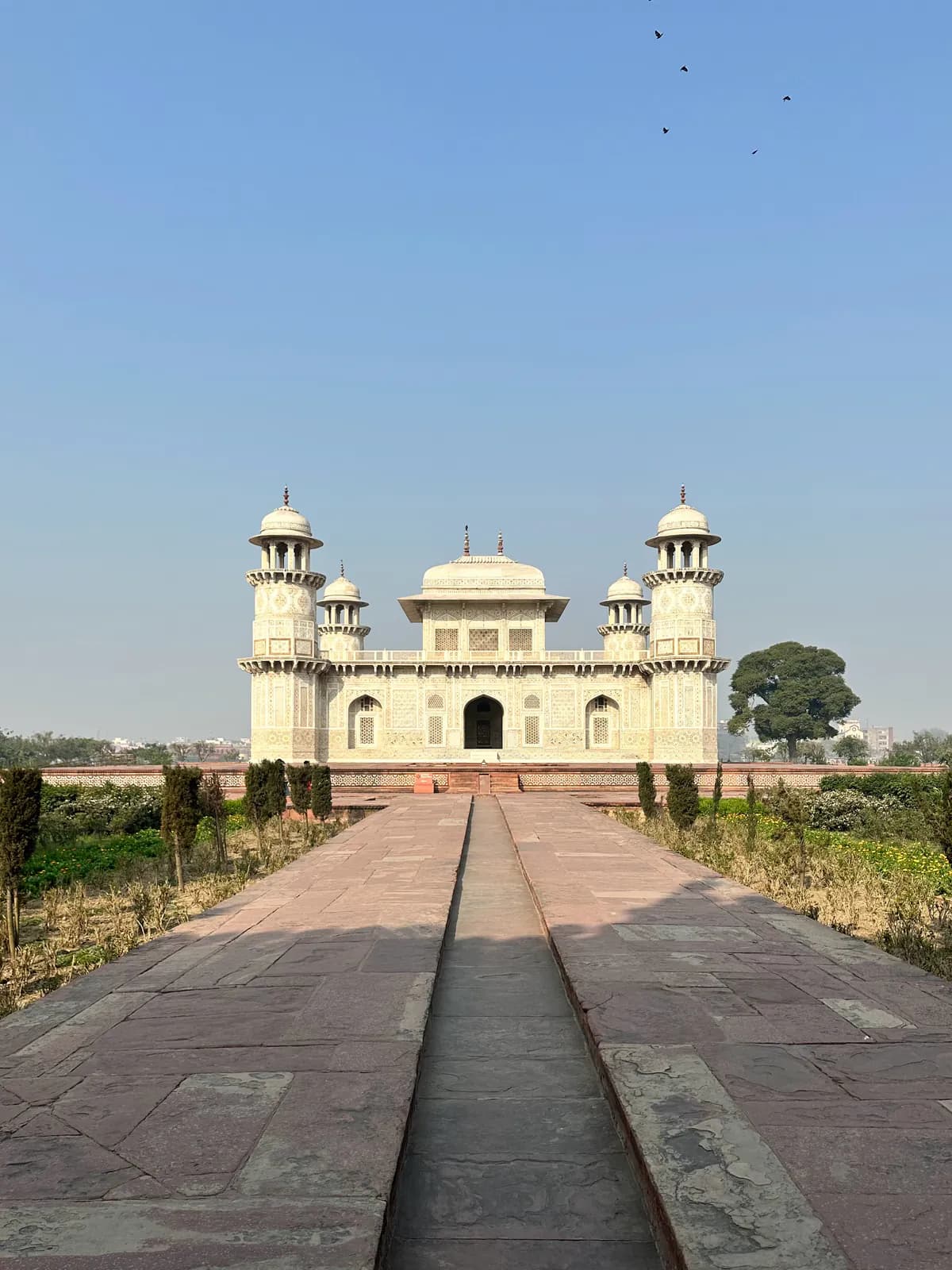
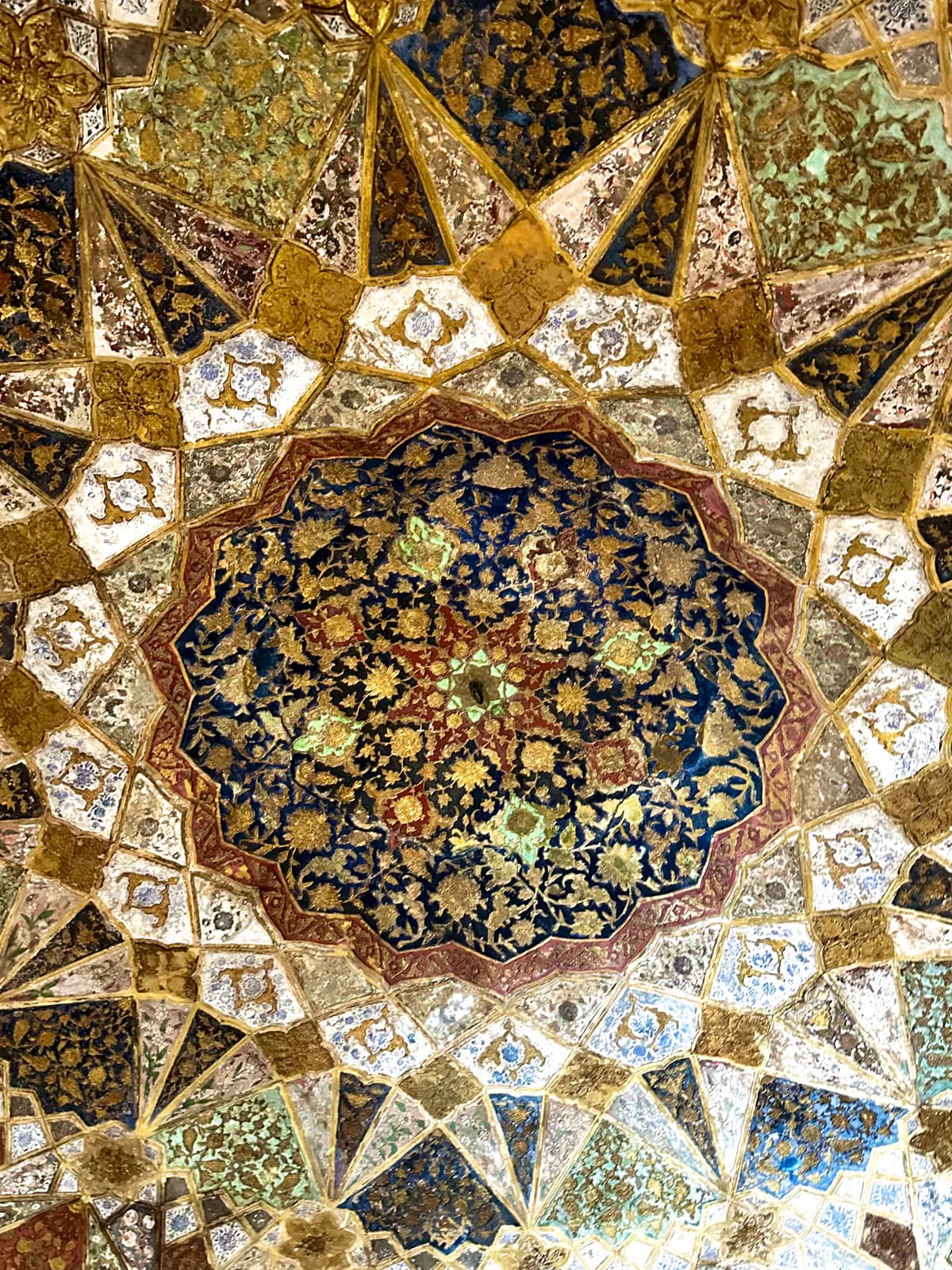
  • Worth adding: Itimad-ud-Daulah's Tomb, often called the Baby Taj: small, quiet and covered in inlay and painted decoration, a lovely contrast to the scale of the Taj.
  • Worth adding: Mehtab Bagh at sunset, the garden across the Yamuna that gives you the Taj Mahal from the river side.
  • If you have time: Akbar's Tomb at Sikandra, about ten kilometres from the centre.
  • If you have time: Fatehpur Sikri, Akbar's red sandstone capital, about 40 kilometres west. It needs half a day of its own, which is the reason to add a third night.

Visit the Taj Mahal first: its ticket covers the local levy at Agra's other main monuments on the same day.

Where we ate in Agra

We enjoyed dining at The Oberoi Amarvilas itself; Esphahan, its dinner-only tandoor restaurant with live traditional music, is the room to reserve.

We also went to Peshawri, at the ITC Mughal, and I would recommend it: the same North-West Frontier tradition as Bukhara in Delhi, built on kebabs, breads and dal from the tandoor, and a good change of scene from the hotel.

A white marble pavilion inside Agra Fort, reached by a stone path between formal garden beds
Itimad-ud-Daulah's Tomb in Agra, the white marble 'Baby Taj', at the end of a long stone causeway
The painted and gilded ceiling inside Itimad-ud-Daulah's Tomb, a star of floral motifs in gold, blue and green
The long water channel of the Taj Mahal gardens at dawn, looking back towards the red sandstone gateway

Where I Would Stay

The white dome of the Taj Mahal rising above the treetops, seen from The Oberoi Amarvilas
The Oberoi Amarvilas

Where we stayed

This is the most important hotel decision on the route. The Oberoi Amarvilas stands 600 metres from the Taj Mahal, and every room and suite is sold with a view of it. That changes the rhythm of Agra: the monument becomes something you live with, from the first evening's light on the dome to breakfast on your balcony.

Our stay fell over Valentine's Day, and the hotel surprised us with a private breakfast in the Kohinoor Suite (the hotel's Presidential Suite), accompanied by a live musician. Nothing of that kind can be promised, but it only happens when a hotel knows the occasion, so if you are celebrating something, tell the hotel before you arrive.

Room to book
The Premier Room with Balcony. The outdoor space makes the difference, with the Taj Mahal directly in view.
Best for
Couples and honeymooners, first-time visitors to the Taj Mahal, and anyone who sees Agra as the highlight rather than a stop.
Location
Taj East Gate Road, a few minutes from the monument's east gate by the hotel's buggy.
Read our full review
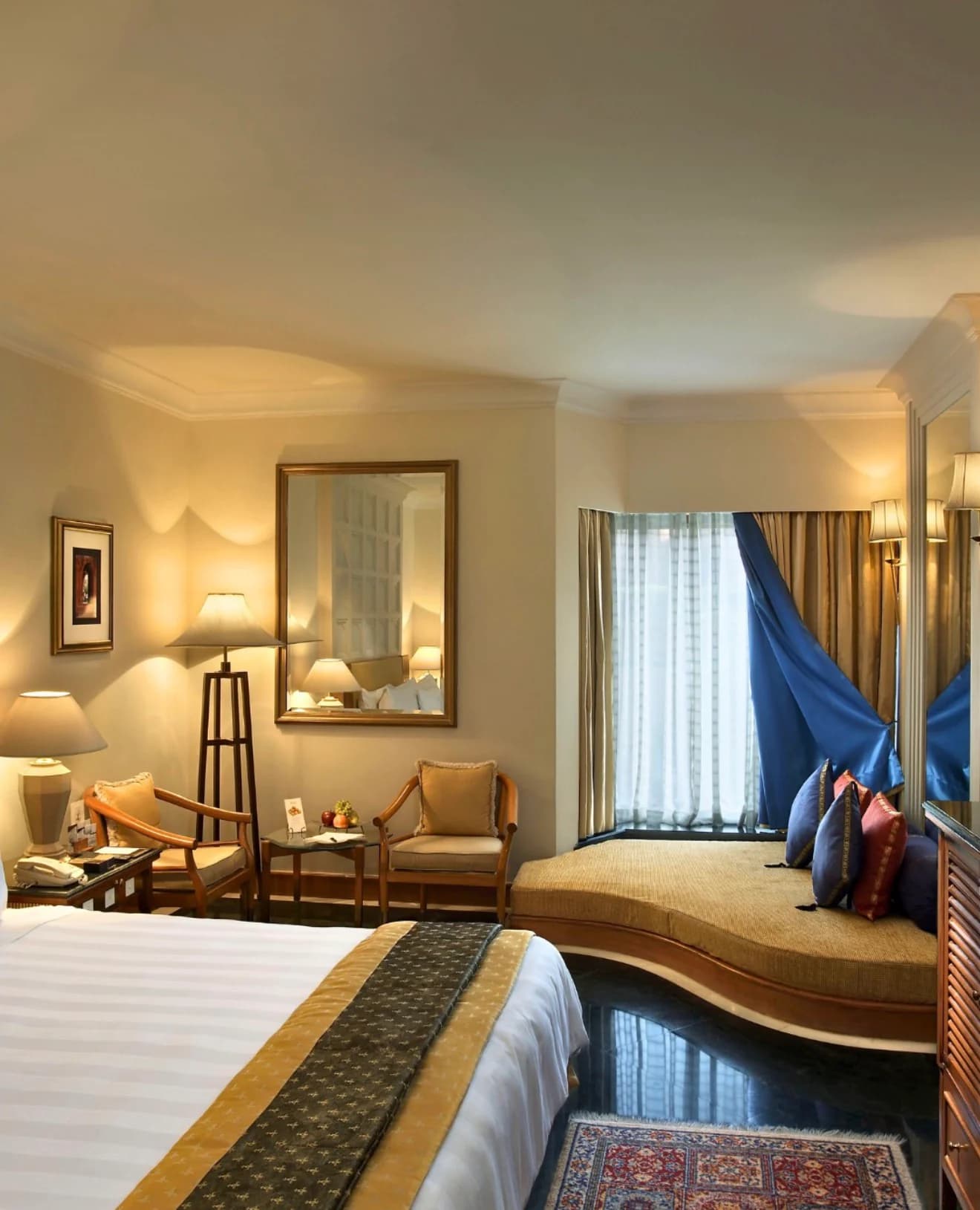
A guest room at ITC Mughal, Agra: a deep window seat with blue curtains and cushions, cane armchairs and a dark marble floor

Photo: ITC Mughal

ITC Mughal, a Luxury Collection Resort & Spa

Also worth considering

ITC Mughal is the garden-resort alternative, and a different kind of stay altogether. Low red-brick buildings are set around courtyards on 23 acres of Mughal-style gardens, its Kaya Kalp spa is one of the largest in India, and Peshawri is downstairs. ITC describes it as the only hotel in India to have won the Aga Khan Award for Architecture.

What it does not offer is Amarvilas's outlook. It is about four kilometres from the Taj Mahal, and its rooms are not sold with a view of the monument.

Best for
Families who want space and gardens, spa-led stays, and travellers who prefer a large resort to a hotel built around one view.
Location
Tajganj, about four kilometres from the Taj Mahal and Agra Fort.
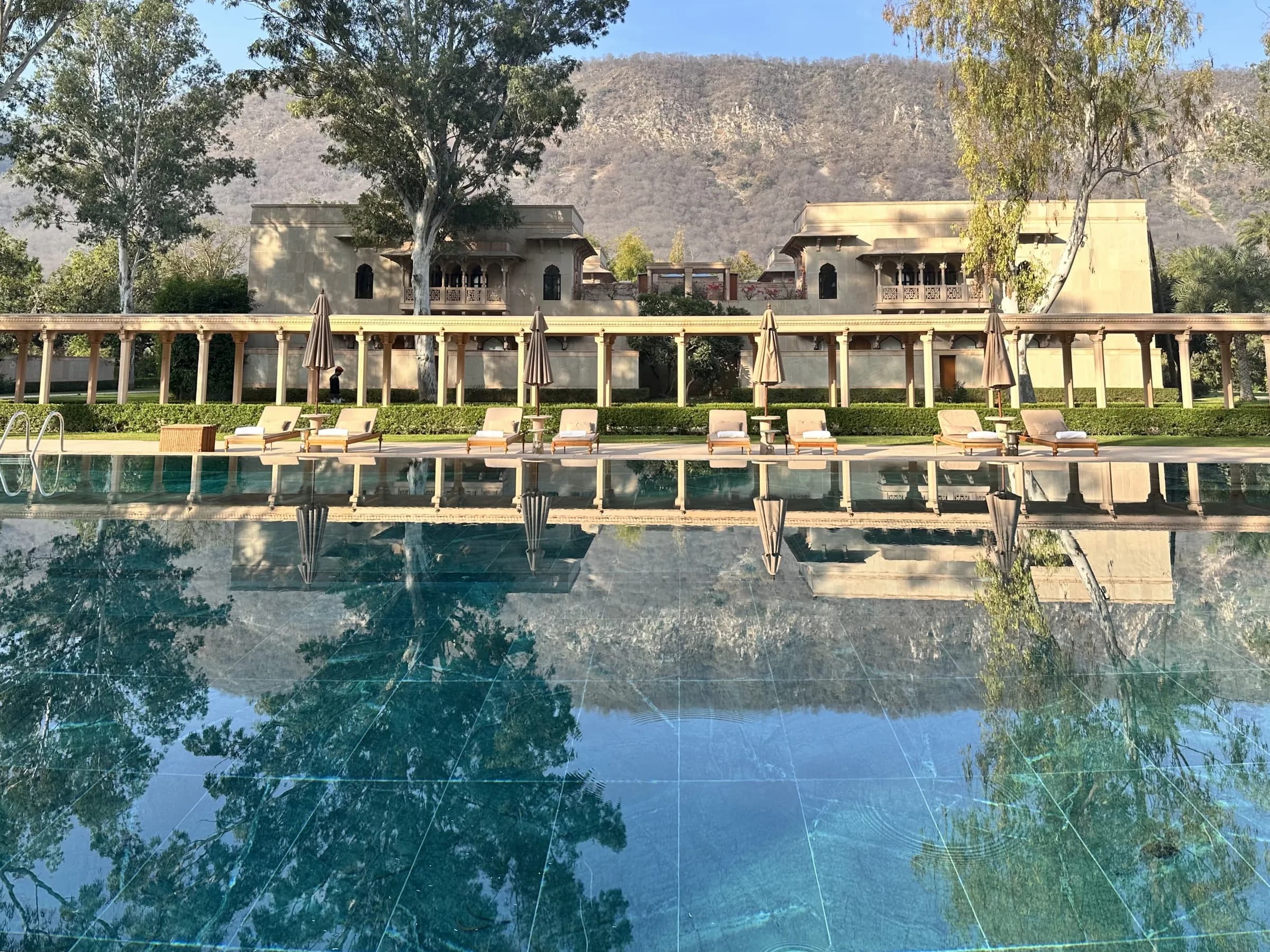
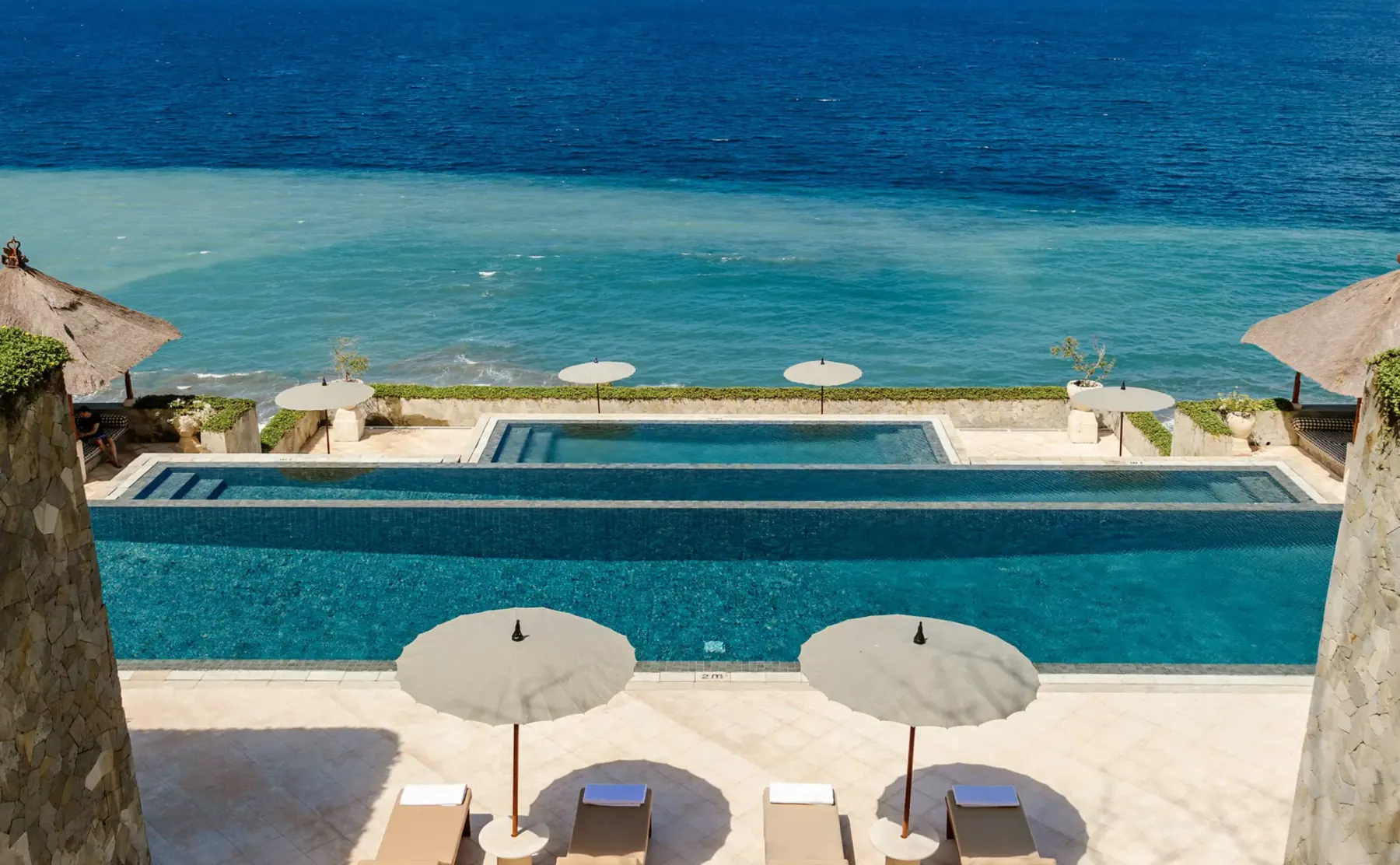
Amanbagh's long green marble pool reflecting the colonnade, the sandstone pavilions and the Aravalli hills on a clear morning
The main pool at Amanbagh, below the Aravalli hills
03

Rural Rajasthan

Nights 6 and 7 · Amanbagh, by way of Chand Baori

After Delhi and Agra, Amanbagh is where the journey slows down. If anyone asks me which two nights to protect, it is these.

The drive from Agra, via Chand Baori

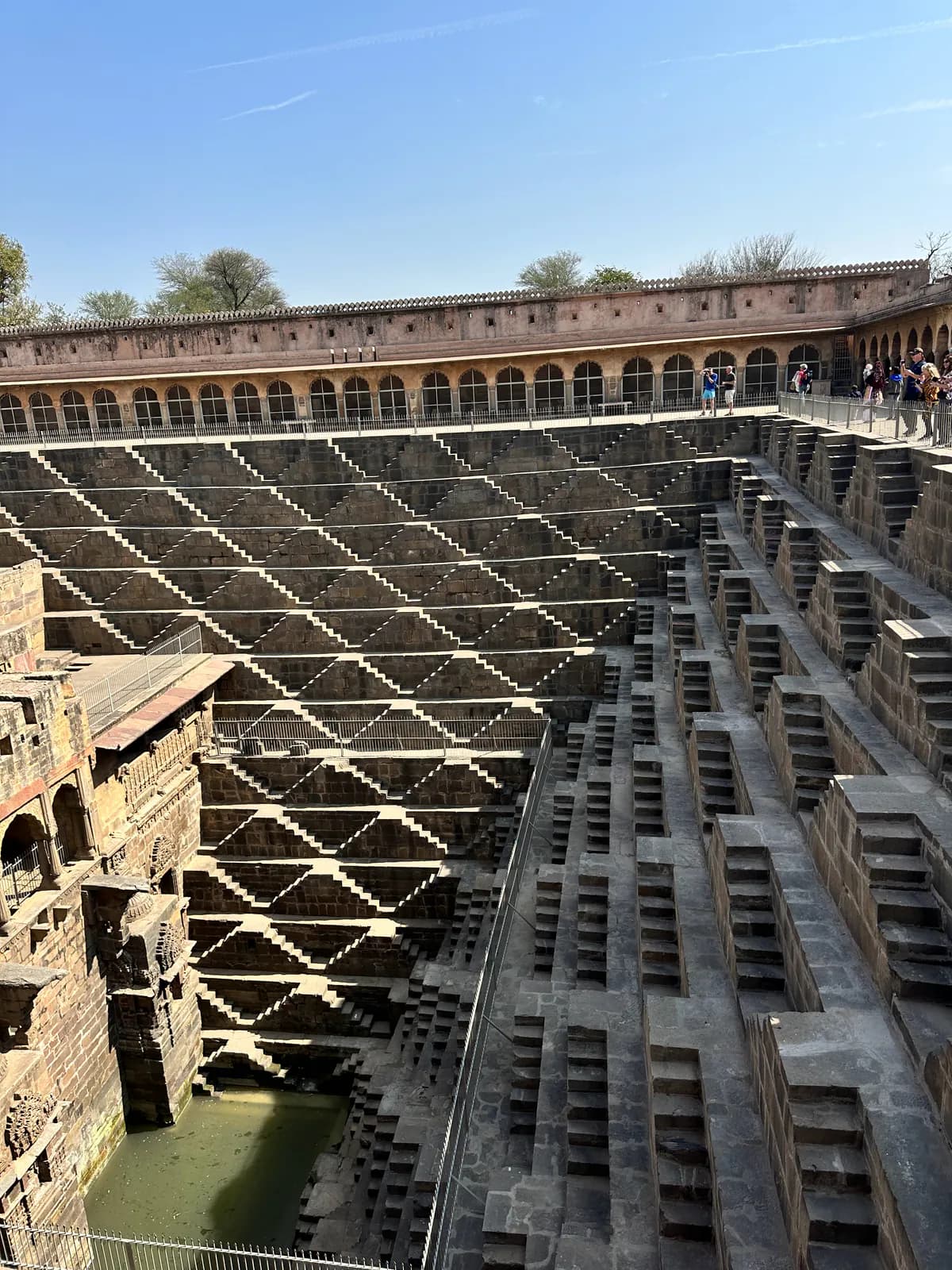
We broke the drive from Agra at Chand Baori, the stepwell in the village of Abhaneri, about 65 kilometres from Amanbagh. It was dug more than a thousand years ago to hold water through the dry season, and what stops you at the edge is the geometry: some 3,500 narrow steps falling thirteen levels in criss-crossing flights, with pillared galleries on the fourth side.

It is the reason I would always do this leg by road. Allow about an hour, ideally before the midday heat, and the transfer day gains a centrepiece.

Amanbagh

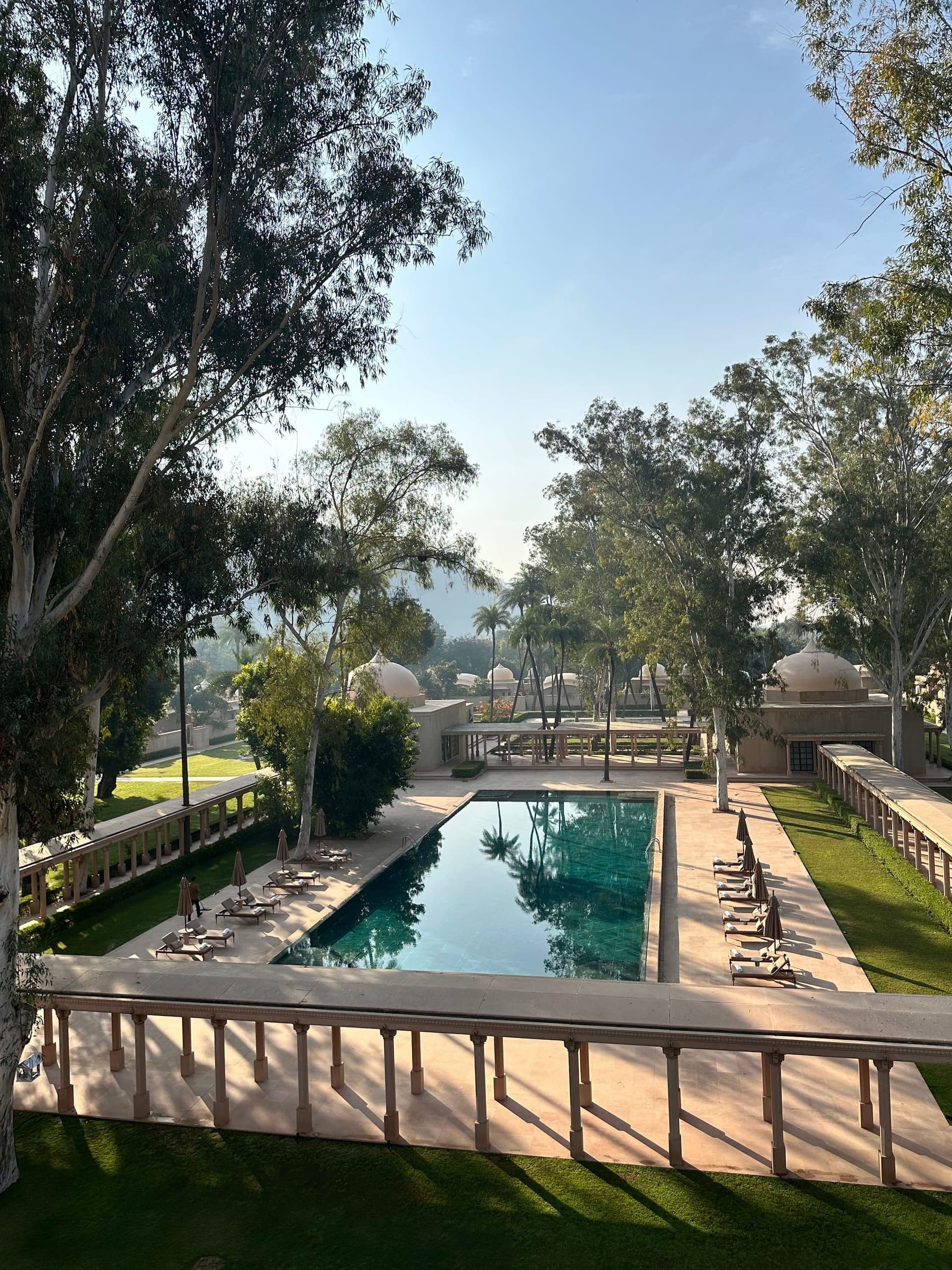
Amanbagh sits behind high walls in the Aravalli hills, in country that was once a hunting ground of the Maharajah of Alwar: pink sandstone and marble, colonnades and domed pavilions around a long green pool. We loved the architecture, the atmosphere, the service, the spa and the surroundings.

The Cow Dust experience

We joined Amanbagh's Cow Dust experience, travelling out into the surrounding countryside in one of the resort's vehicles to observe village life around Ajabgarh. It is a gentle, respectful way into rural Rajasthan, the opposite of the monument days, and I recommend it.

The spa, and doing very little

The rest of our time went to the spa and to simply being at the resort. The contrast with the cultural intensity of Delhi and Agra is one of the reasons the itinerary works: two days with nothing to see are what make the next week feel fresh.

The criss-crossing flights of steps of Chand Baori stepwell in Abhaneri, descending to green water
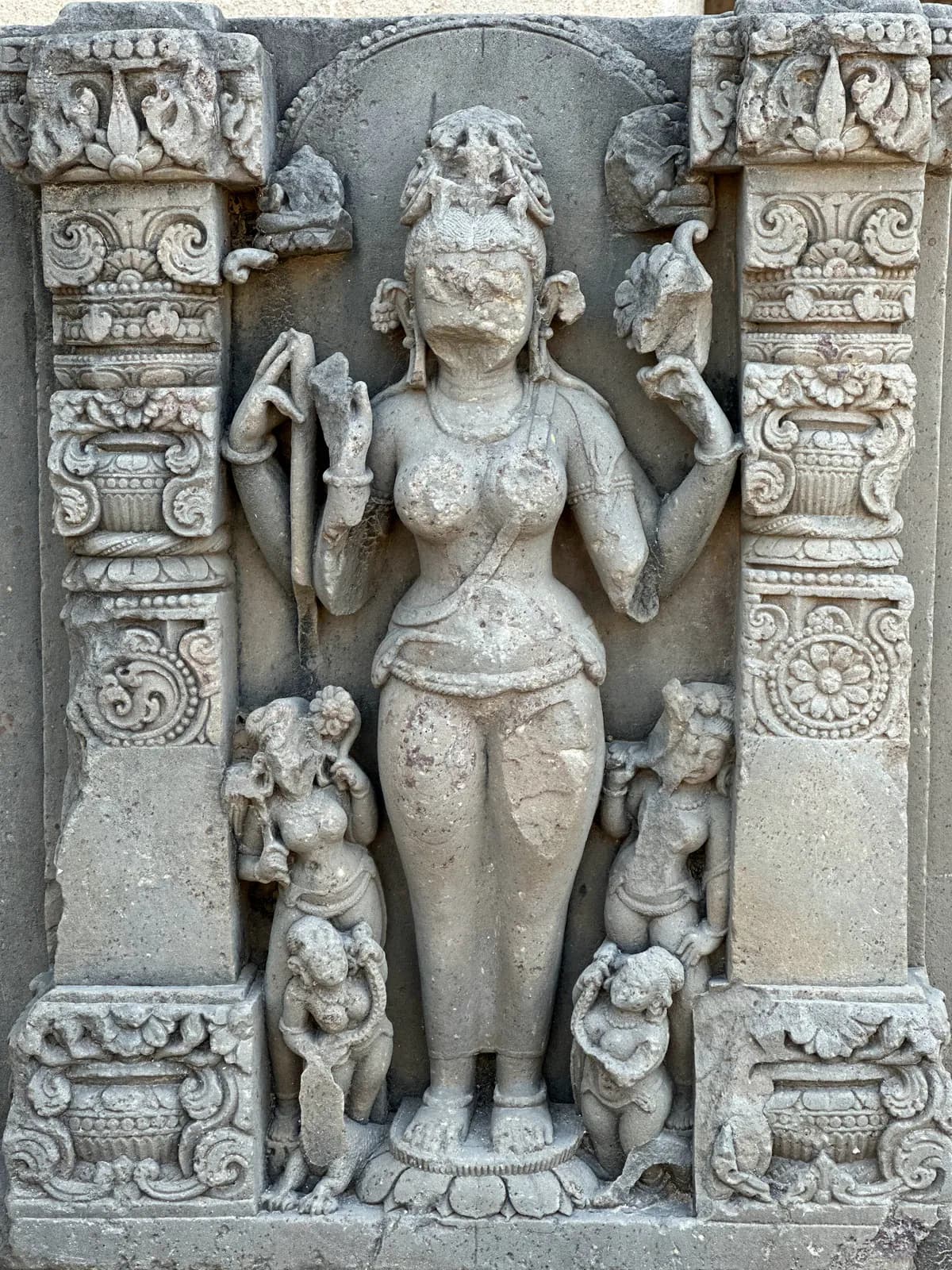
A carved stone goddess flanked by attendants in the arcades of Chand Baori, Abhaneri
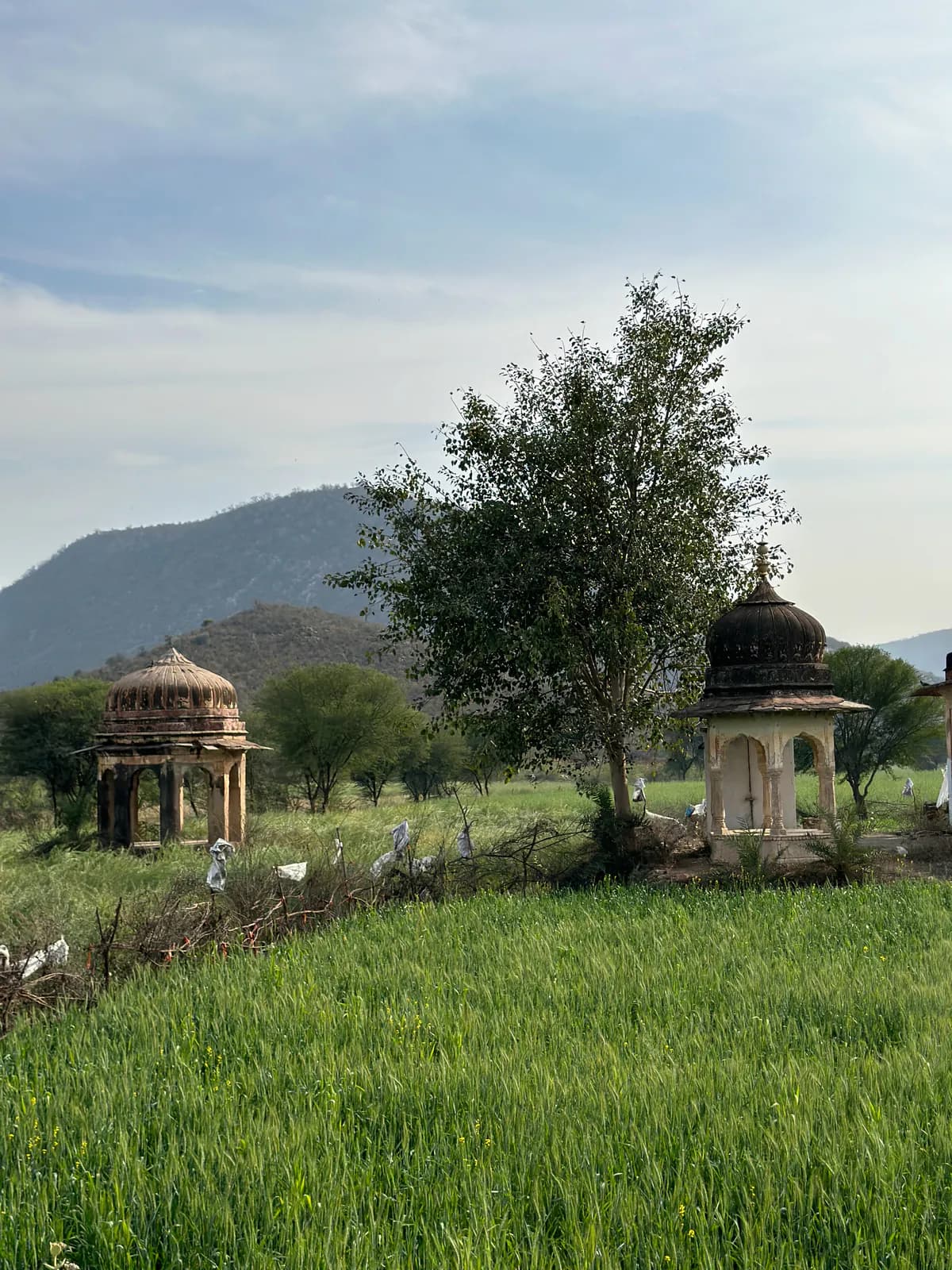
Two domed chhatris among green fields below the Aravalli hills near Ajabgarh
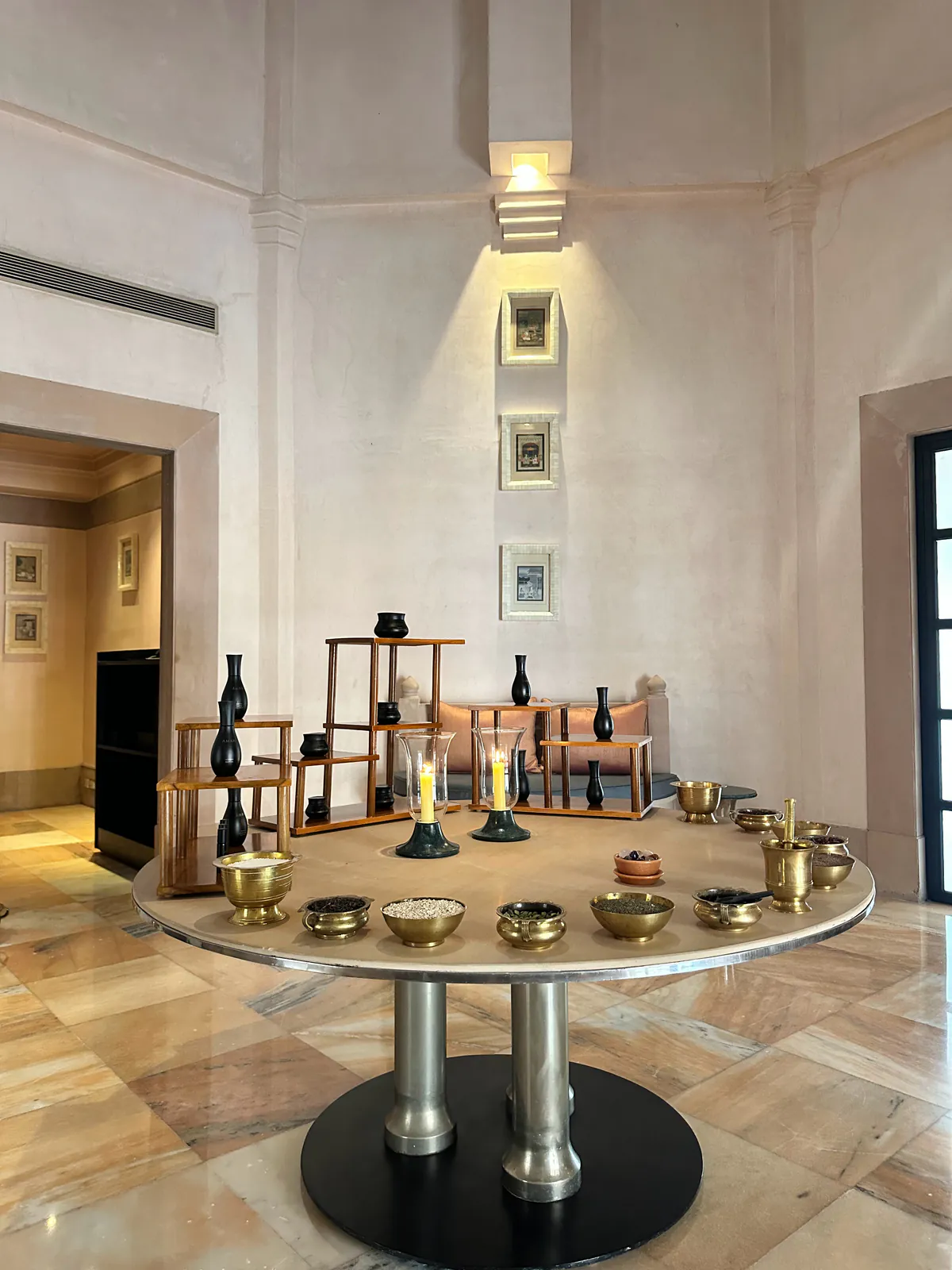
Brass bowls and dark vases on a round table in the Aman Spa at Amanbagh

Where I Would Stay

The long pool at Amanbagh seen from an upper terrace, loungers along both sides and domed pavilions beyond
Amanbagh

Where we stayed

Amanbagh is one of the most serene hotels I know in India, and the counterweight to everything else on this route. It has 22 Haveli Suites and 15 Pool Pavilions, each pavilion a domed house of its own around a private garden courtyard and pool.

I have not paired it with a second hotel. Within easy reach of this route there is nothing that does what Amanbagh does, and one right hotel is better than two compromises.

Room to book
A Pool Pavilion, with its own courtyard and nine-metre pool; the Haveli Suites are generous too, so there is no weak choice here.
Best for
Couples, anyone who wants rest in the middle of a busy journey, and travellers drawn to rural India rather than its cities.
Location
Ajabgarh, in the Aravalli hills of Alwar district: a destination in itself rather than a base for sightseeing.
Read our full review
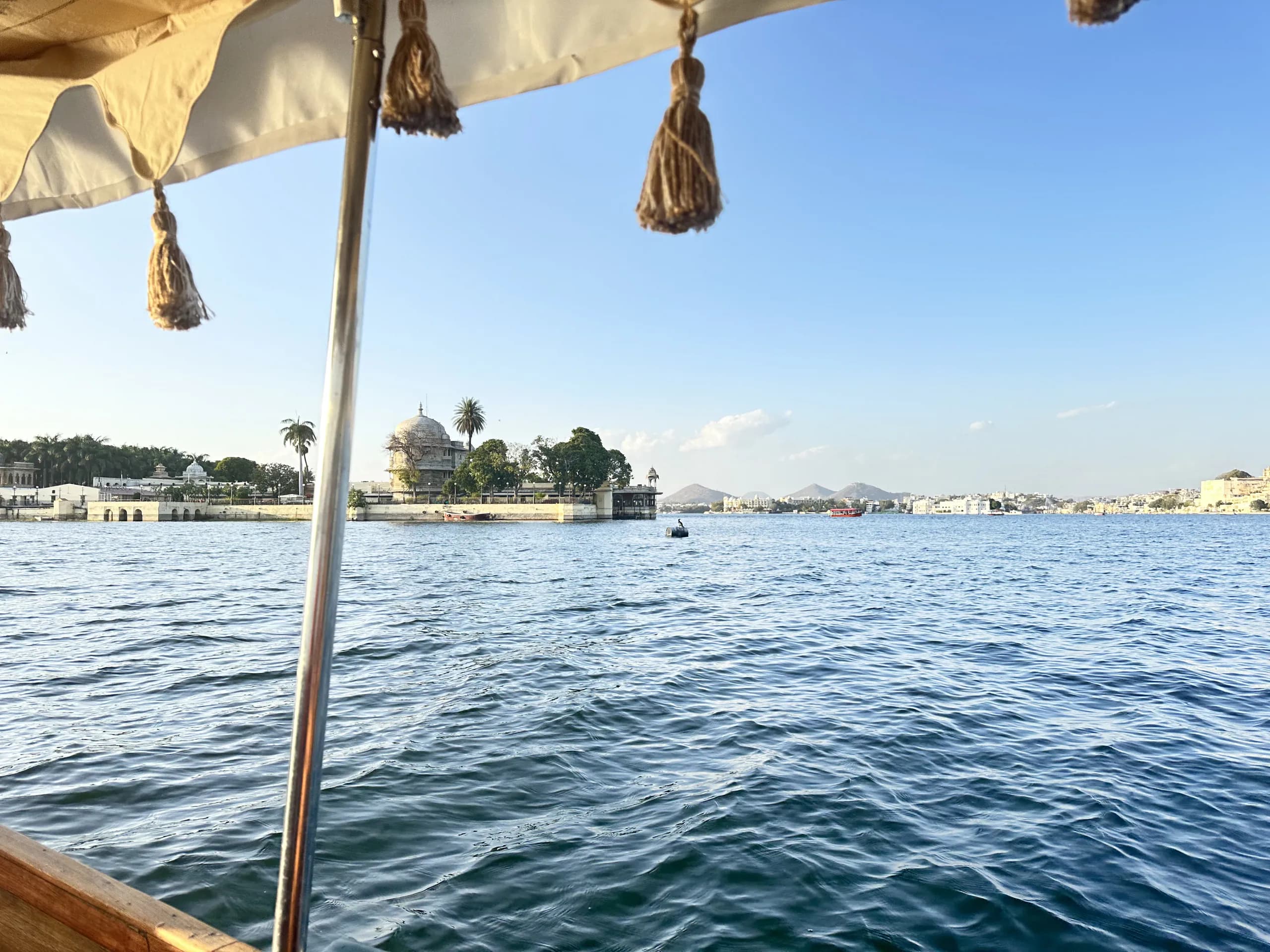
Lake Pichola seen from beneath the tasselled canopy of a boat, an island palace with a white dome and palm trees on the water ahead
Lake Pichola from the boat
04

Udaipur

Nights 8 to 10 · Lake Pichola

Udaipur is the softest city on the route: the old capital of the Mewar rulers, built around linked lakes in the Aravalli hills, with palaces along the shores and on islands in the water. Three nights let you see the city and still enjoy the hotel.

The City Palace and Jagdish Temple

With our guide we saw the City Palace, the long palace complex of the Mewar rulers above Lake Pichola, now partly a museum, with painted walls, coloured glass and mirror-work, and windows framing the lake below. Go early: it is Udaipur's busiest sight. Jagdish Temple, a short walk away, is a seventeenth-century temple still in daily use; take off your shoes and dress modestly.

Everyday Udaipur

The part of Udaipur I remember just as clearly is not a monument. Our guide also took us away from the main sights into the ordinary streets and neighbourhoods of the old city, where Udaipur lives its daily life. That combination is how I would see it: the landmarks for the history, and an hour in the everyday city for everything they leave out.

On the water

Udaipur is best understood from the lake, and we went out on Lake Pichola by boat. From Udaivilas, the hotel's own boats cross to the old city in a few minutes, which also keeps the old city's noise on the far shore.

Where we ate in Udaipur

We ate at Upre by 1559 AD, the rooftop on top of the Lake Pichola Hotel, looking across the water to the City Palace and the lake's island palaces. Book it for sunset and ask for a table at the edge.

We also enjoyed dining at The Oberoi Udaivilas. Between October and March, Chandni, its open-air terrace facing the City Palace, is the table to reserve first.

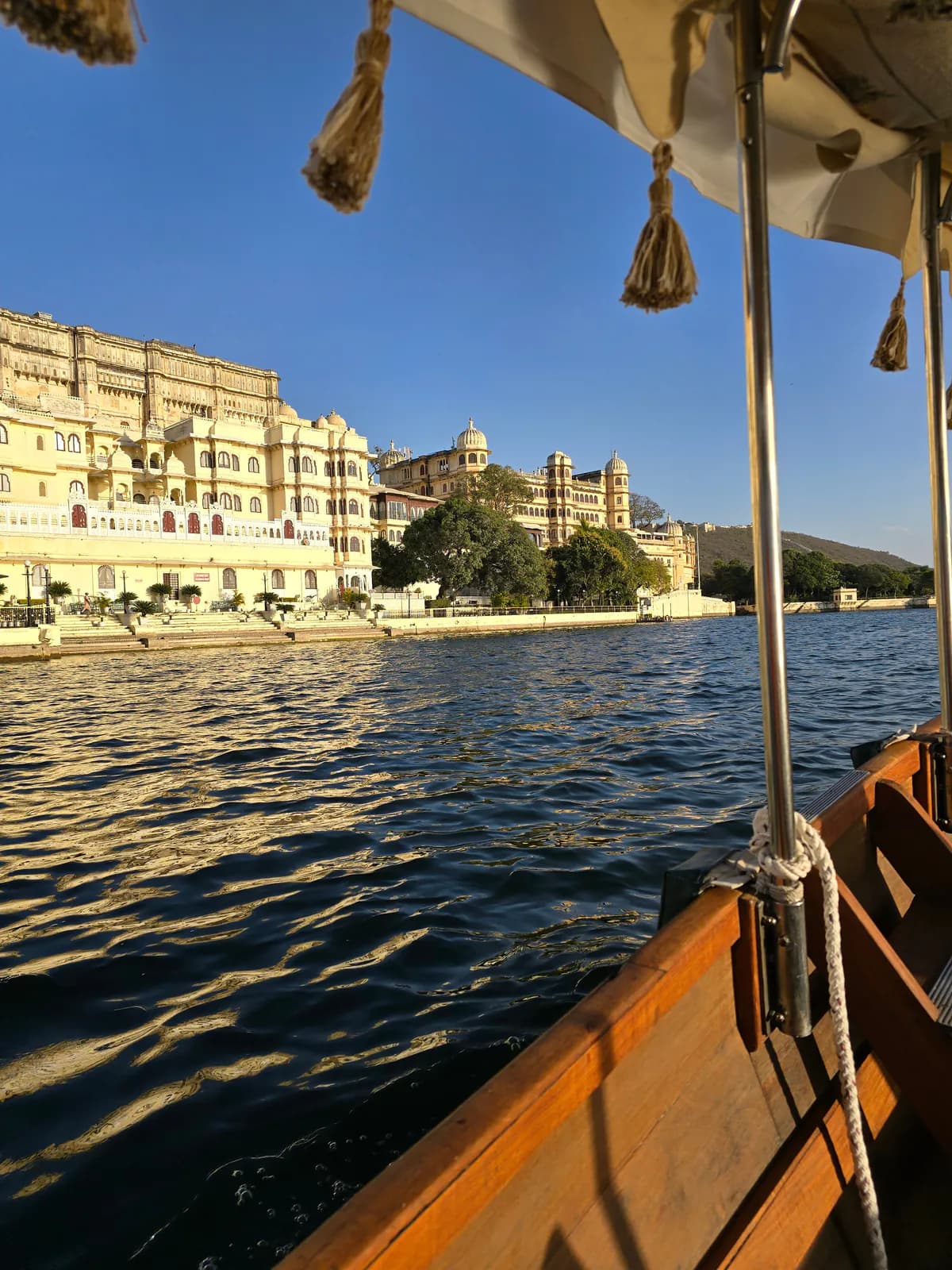
The City Palace of Udaipur along the shore of Lake Pichola, seen from a boat beneath a tasselled canopy
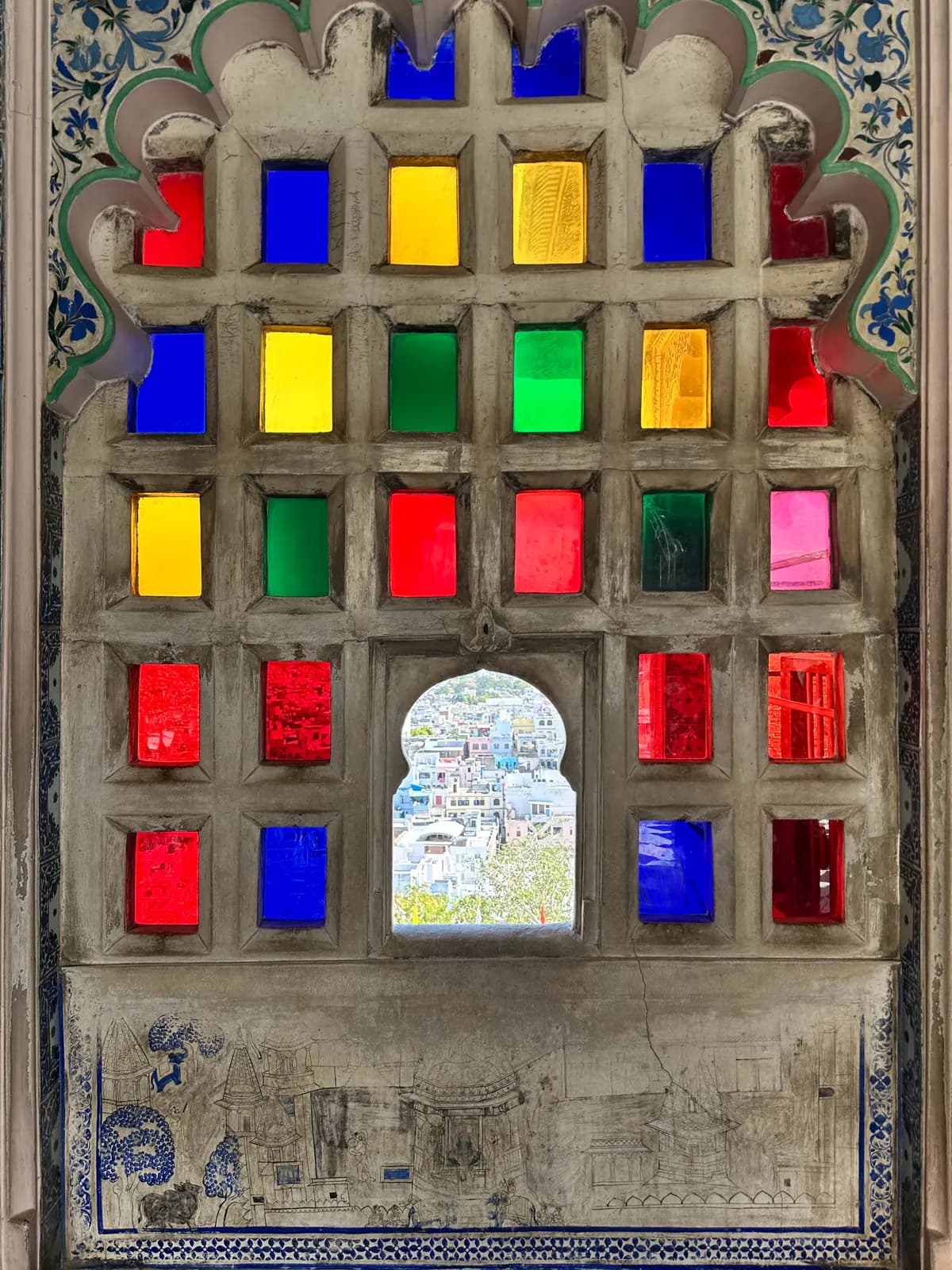
A window of coloured glass panes in red, blue, green and yellow inside the City Palace, Udaipur
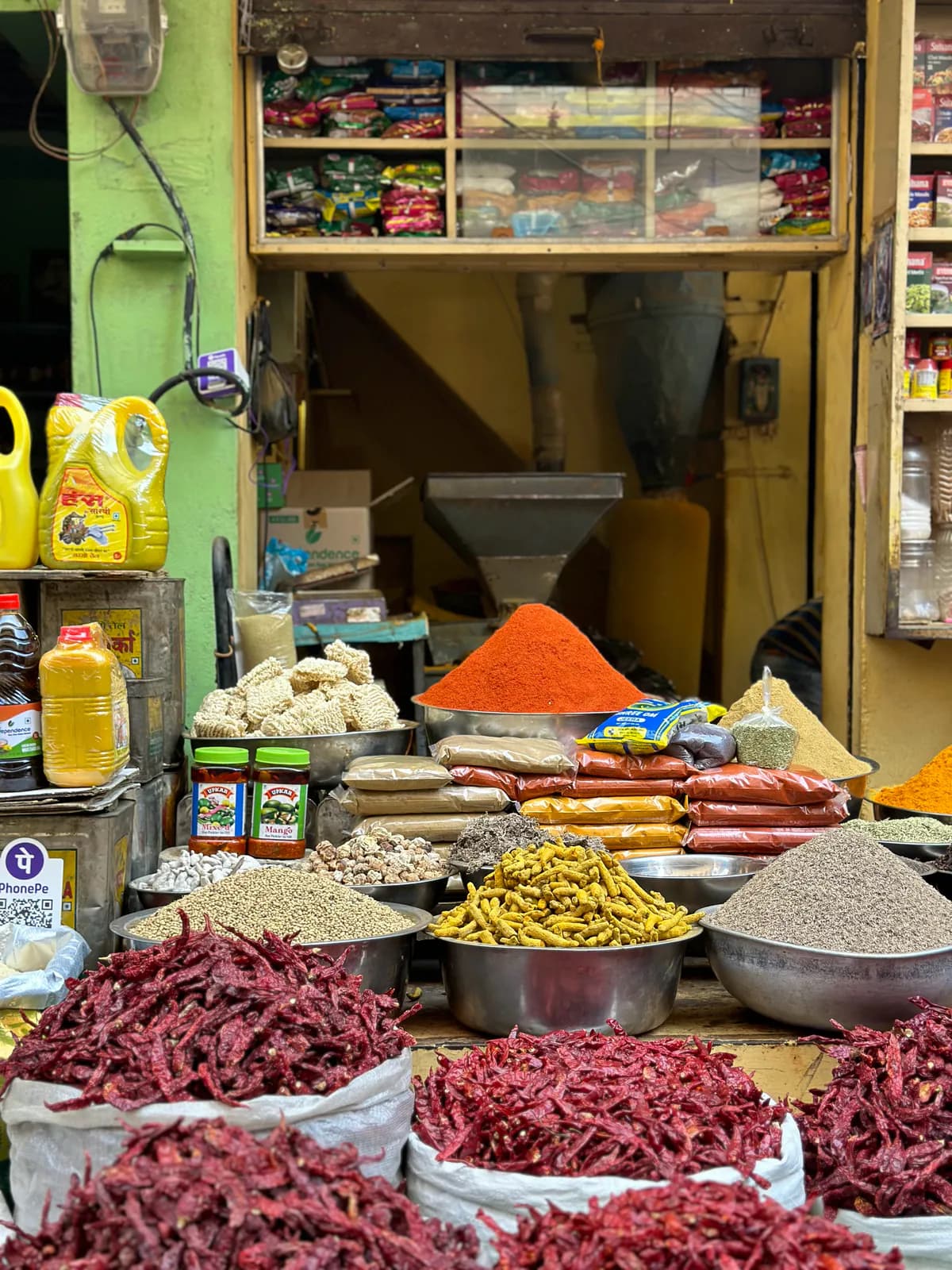
Sacks of dried red chillies, turmeric and spices outside a small shop in Udaipur's old city
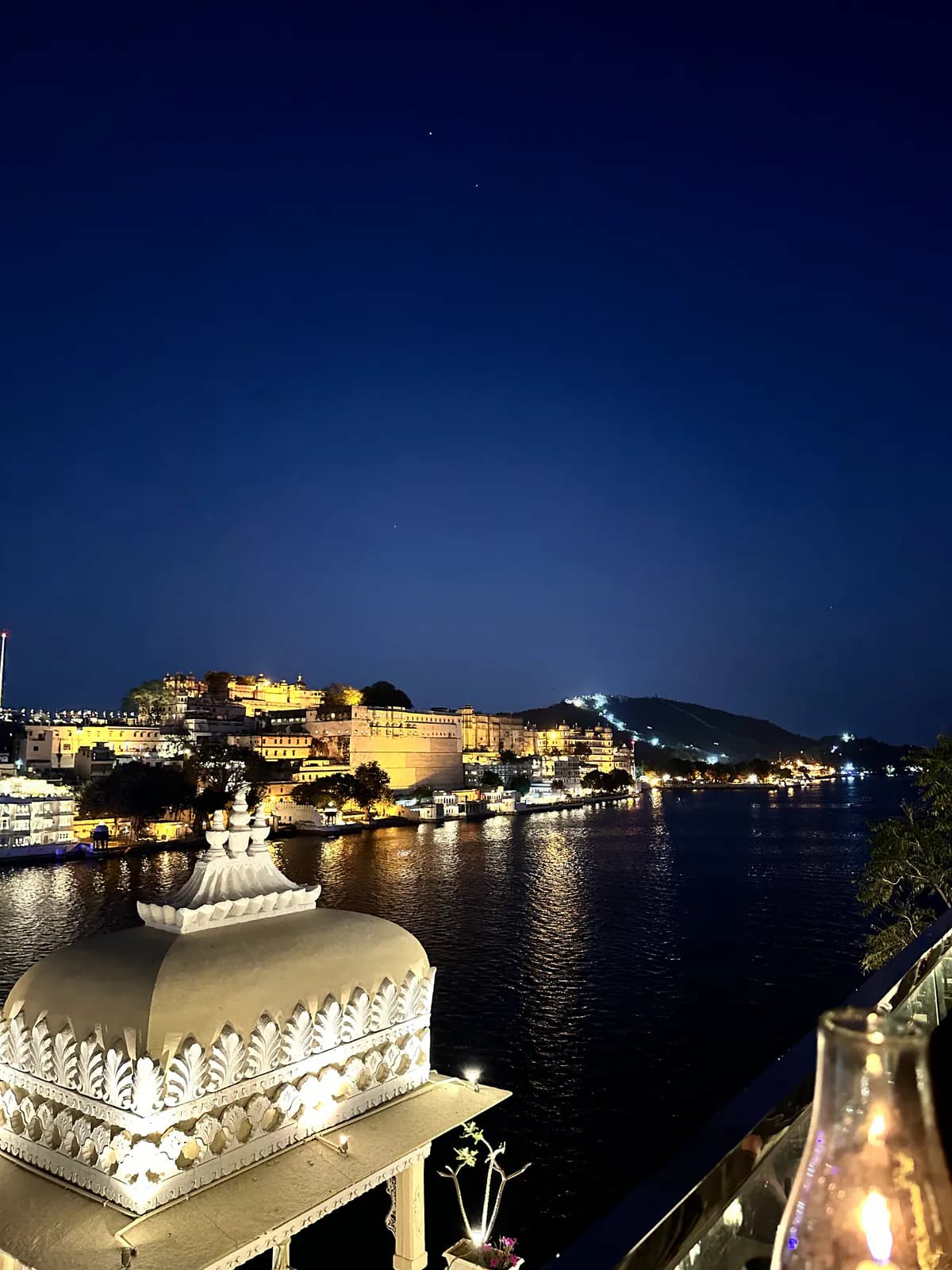
Lake Pichola at night from the rooftop of Upre by 1559 AD, a white carved dome in the foreground and the lit City Palace across the water

Where I Would Stay

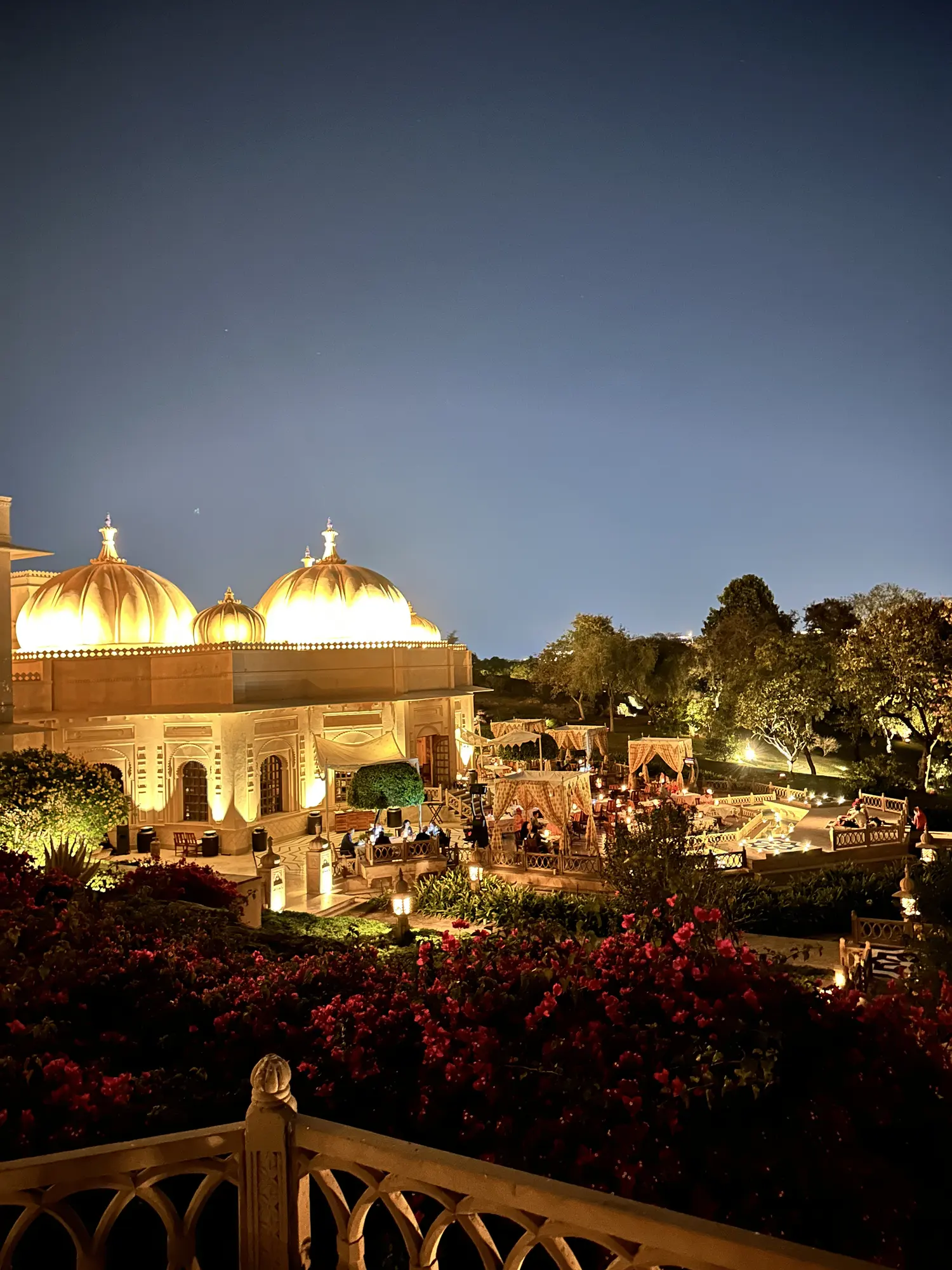
The gilded domes of The Oberoi Udaivilas at dusk
The Oberoi Udaivilas

Where we stayed

Udaivilas is one of the most beautiful hotels in India. It stands on the shore of Lake Pichola, directly across the water from the City Palace, and its domes, courtyards, water gardens and lawns run down to the lake. Peacocks wander through all of it, and they were one of the things we enjoyed most.

Much of the pleasure here lies outside the room, which is why I would book a category with a pool on the terrace. Arrive by the hotel's boat, and give at least one full day to the hotel itself.

Room to book
The Premier City Palace View Room with Semi-Private Pool: the lake view and the water together, without the step up to a suite. There are only ten, so book them early.
Best for
Couples, honeymoons and anniversaries, and anyone who wants a few days to stay put after the road.
Location
Across Lake Pichola from the old city, a few minutes by the hotel's boat; about 50 minutes from Udaipur's airport.
Read our full review
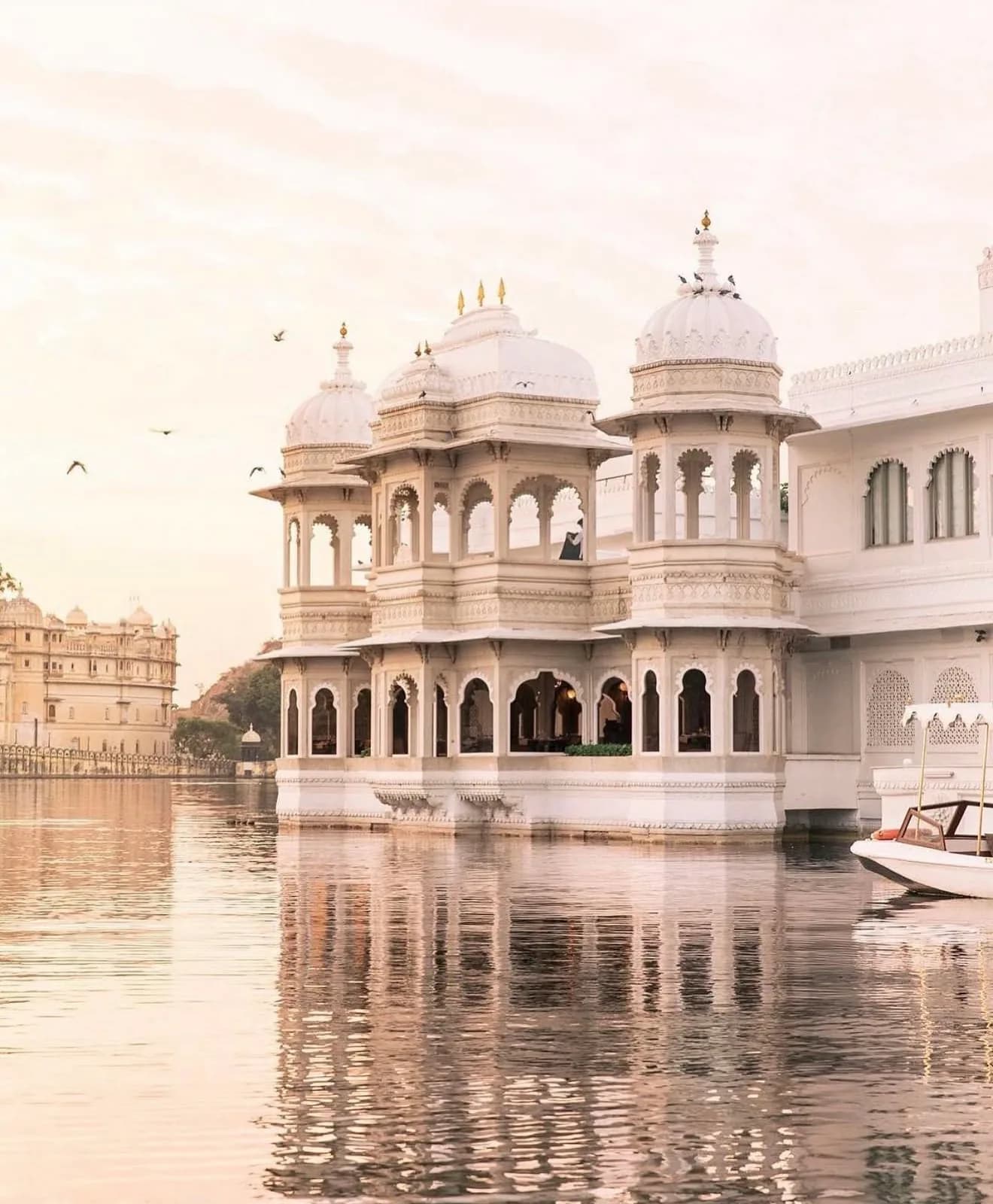
The white domed pavilions of Taj Lake Palace rising from Lake Pichola, with the City Palace on the shore behind

Photo: Taj Lake Palace

Taj Lake Palace

Also worth considering

Taj Lake Palace is the alternative that is impossible to confuse with anything else: an 18th-century palace conceived for Maharana Jagat Singh II on Jag Niwas, an island in the middle of Lake Pichola, now a hotel of 65 rooms and 18 suites that you reach by boat. You see it from the City Palace and from rooftops across the old city.

Where Udaivilas gives you gardens, space and the view of the palaces, Lake Palace puts you inside one, surrounded by water.

Best for
Travellers who want to sleep inside the history rather than look across at it, and romantics for whom arriving by boat every evening is the point.
Location
On Jag Niwas island in Lake Pichola; every arrival is by the hotel's boat.
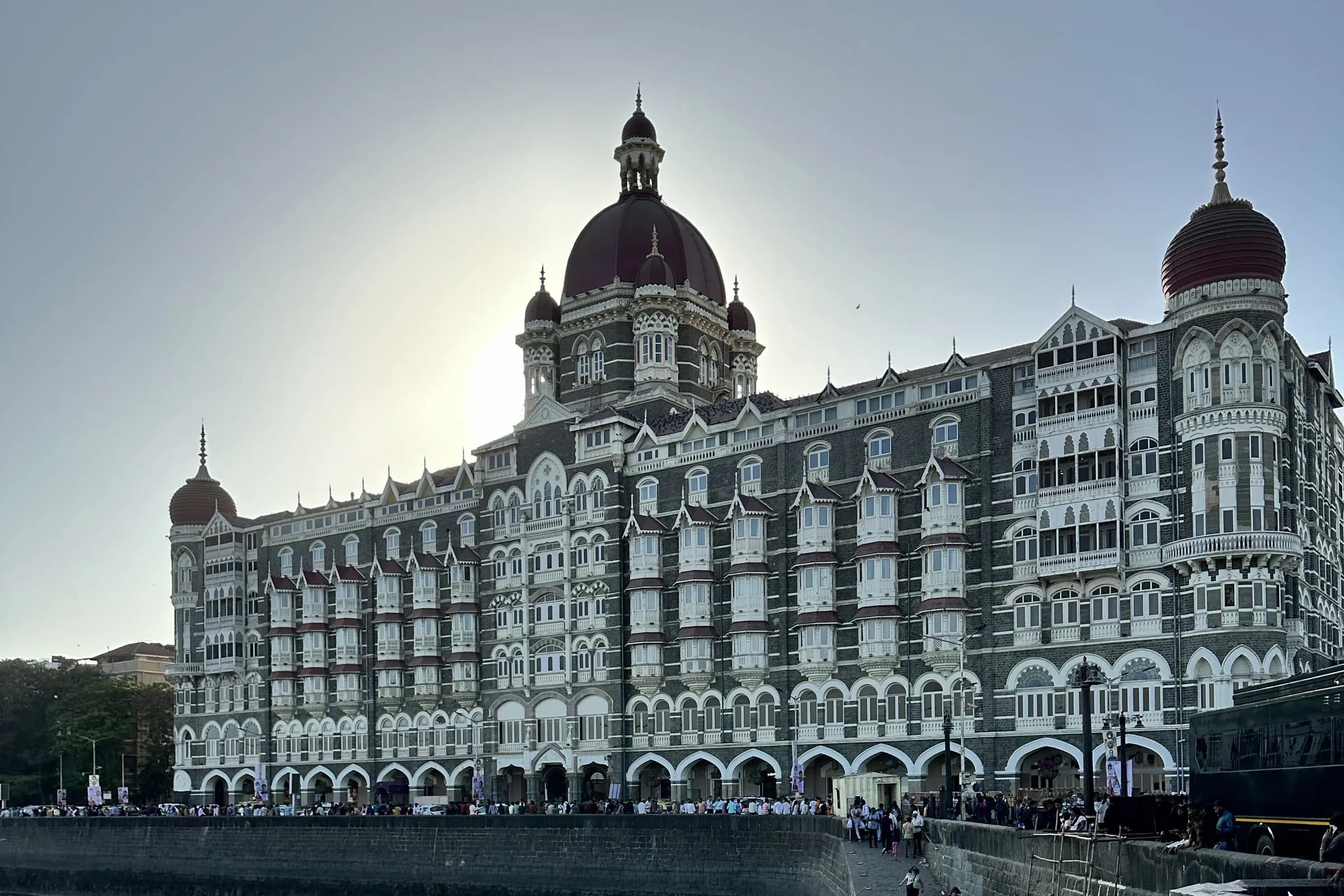
The Palace Wing of The Taj Mahal Palace with its red domes, seen across the harbour, small boats at the quay below
The Taj Mahal Palace from the harbour, in the late afternoon
05

Mumbai

Nights 11 to 13 · The city by the sea

For the last leg we flew from Udaipur to Mumbai, in Vistara Business Class. Vistara has since merged into Air India, in November 2024; this winter the route is flown nonstop by Air India, IndiGo, SpiceJet and Akasa Air, in roughly an hour and a half. If a business-class seat matters, look at Air India and check the cabin on your flight, and make sure the ticket lands at BOM: some Udaipur flights now use Navi Mumbai's new airport, much farther from Colaba.

After palaces and lakes, Mumbai is the right ending: India's commercial capital, crowded, fast and always on the move, and a side of the country Rajasthan never shows you.

Exploring Mumbai beyond the landmarks

We explored Mumbai with a private guide, visiting the Gateway of India, right outside The Taj Mahal Palace, and other parts of the city beyond the usual tourist circuit.

Organised tours of Mumbai's informal settlements are available, and some travellers choose them. We felt that experience wasn't for us, and observed these neighbourhoods from a distance instead.

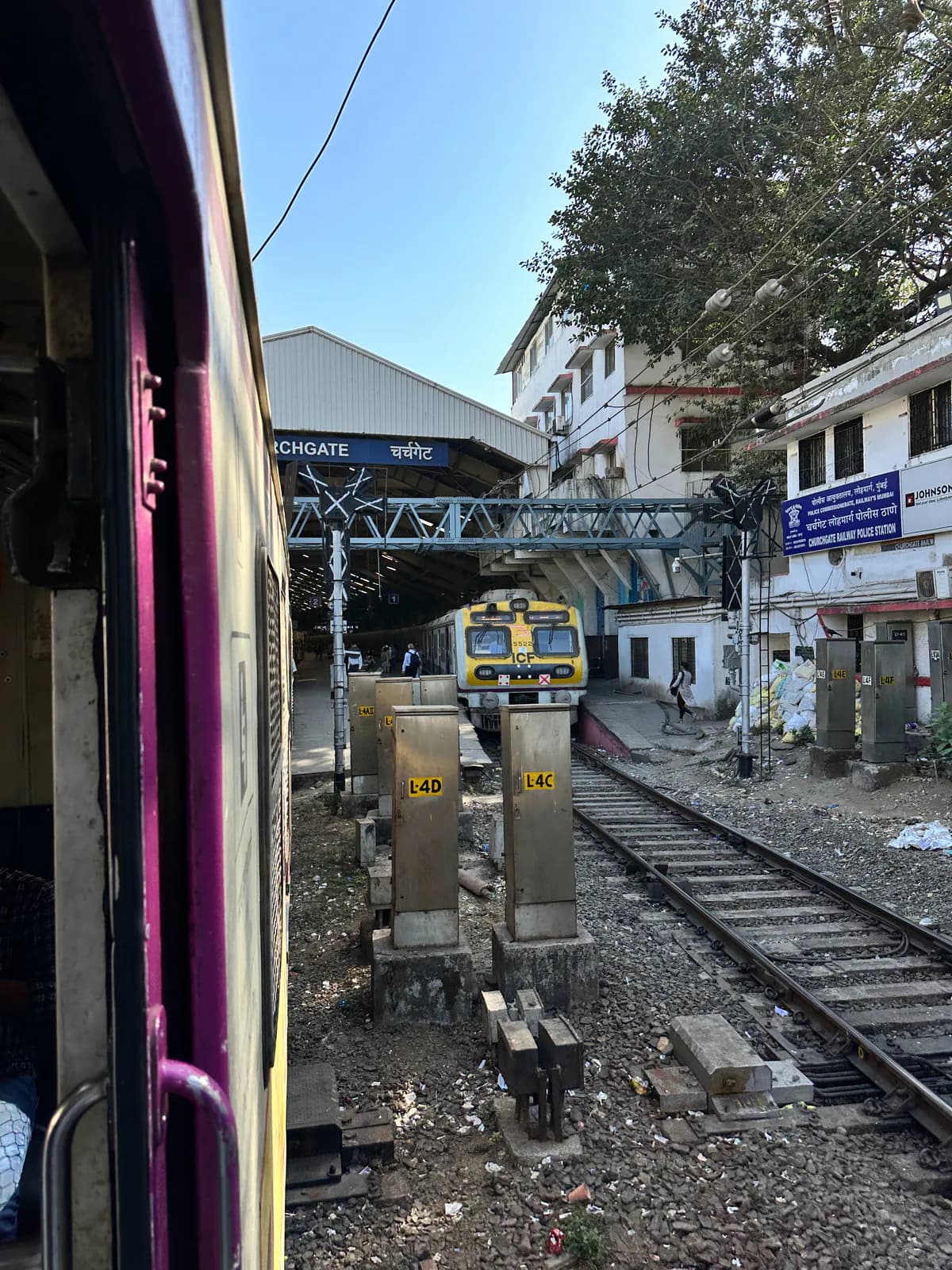
We then took a local train to Chhatrapati Shivaji Maharaj Terminus. The suburban railway is how much of Mumbai gets to work, and even a short ride gave us a glimpse into everyday life in the city that no landmark could. At the end of the ride we explored CSMT itself: a Victorian Gothic station and UNESCO World Heritage Site whose architecture is remarkable.

If you take the train, go with a local guide and avoid the morning and evening rush hours. Trains have first-class carriages and carriages reserved for women, and tickets are sold at stations and through Indian Railways' RailOne app.

Where we ate in Mumbai

We had dinner at Ziya, at The Oberoi, Mumbai, where classic Indian dishes are taken apart and reimagined under the mentorship of the Michelin-starred chef Vineet Bhatia. Reserve ahead; gentlemen are asked to wear full-length trousers and closed shoes.

We also ate at Ekaa, in the Kitab Mahal building in the Fort district, where chef Niyati Rao's menus draw on India's regions, people and seasons and change through the year. Choose Ziya for a polished, classic evening, and Ekaa for something more experimental.

Looking out of the open door of a Mumbai local train as it pulls into Churchgate station
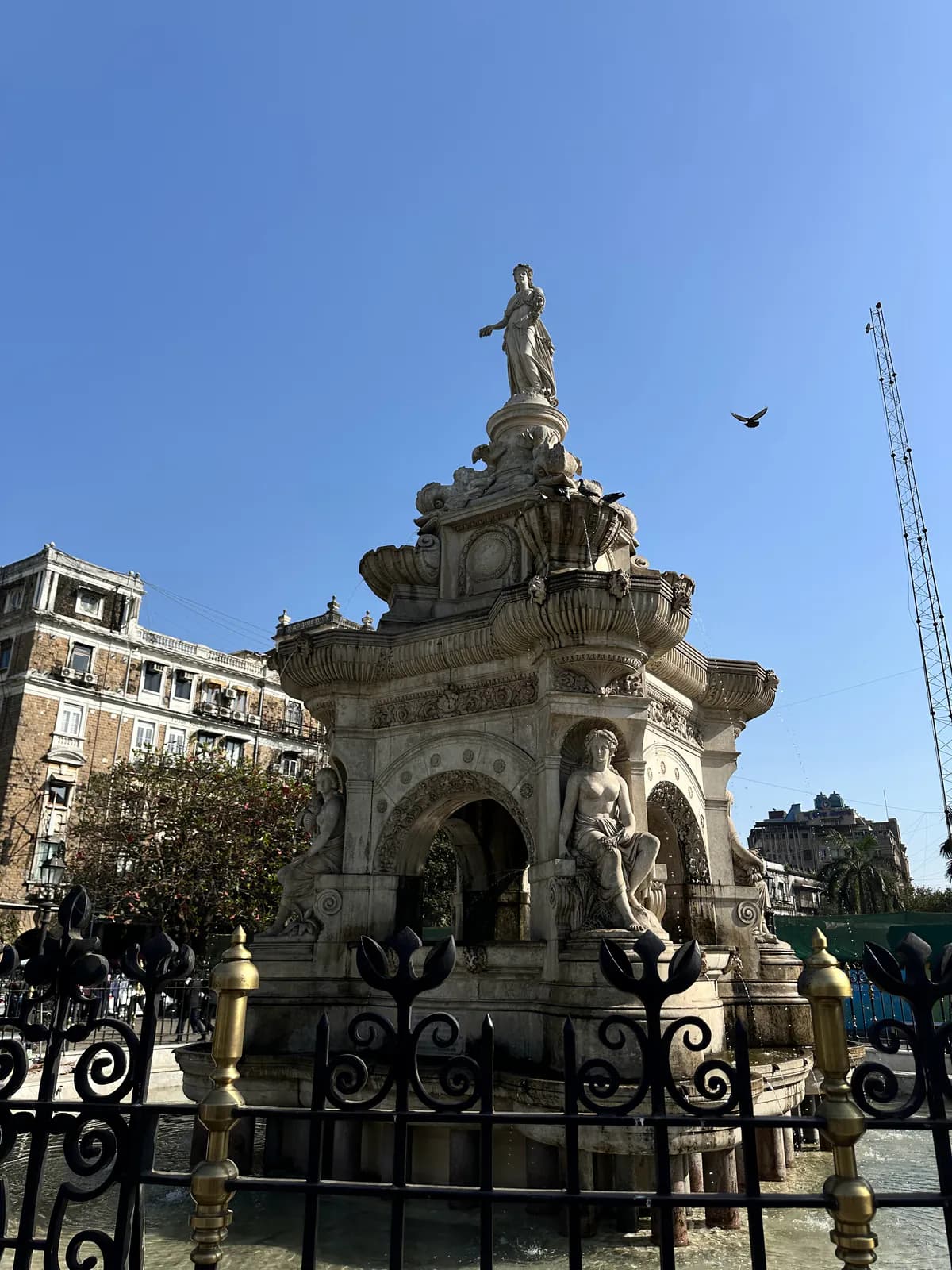
Flora Fountain in Mumbai's Fort district, a carved Victorian fountain behind wrought-iron railings
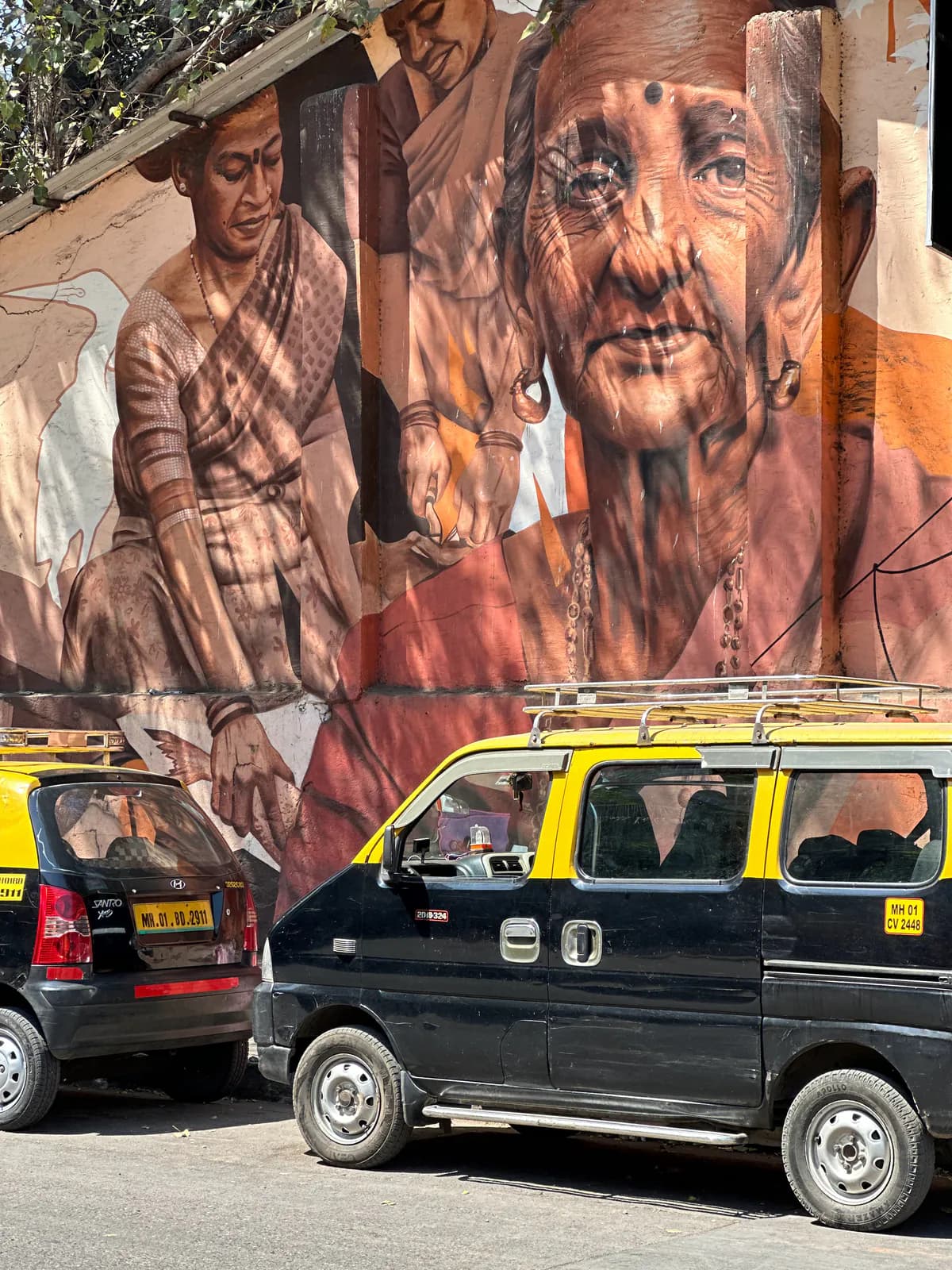
Black-and-yellow Mumbai taxis parked beneath a large street mural of two women
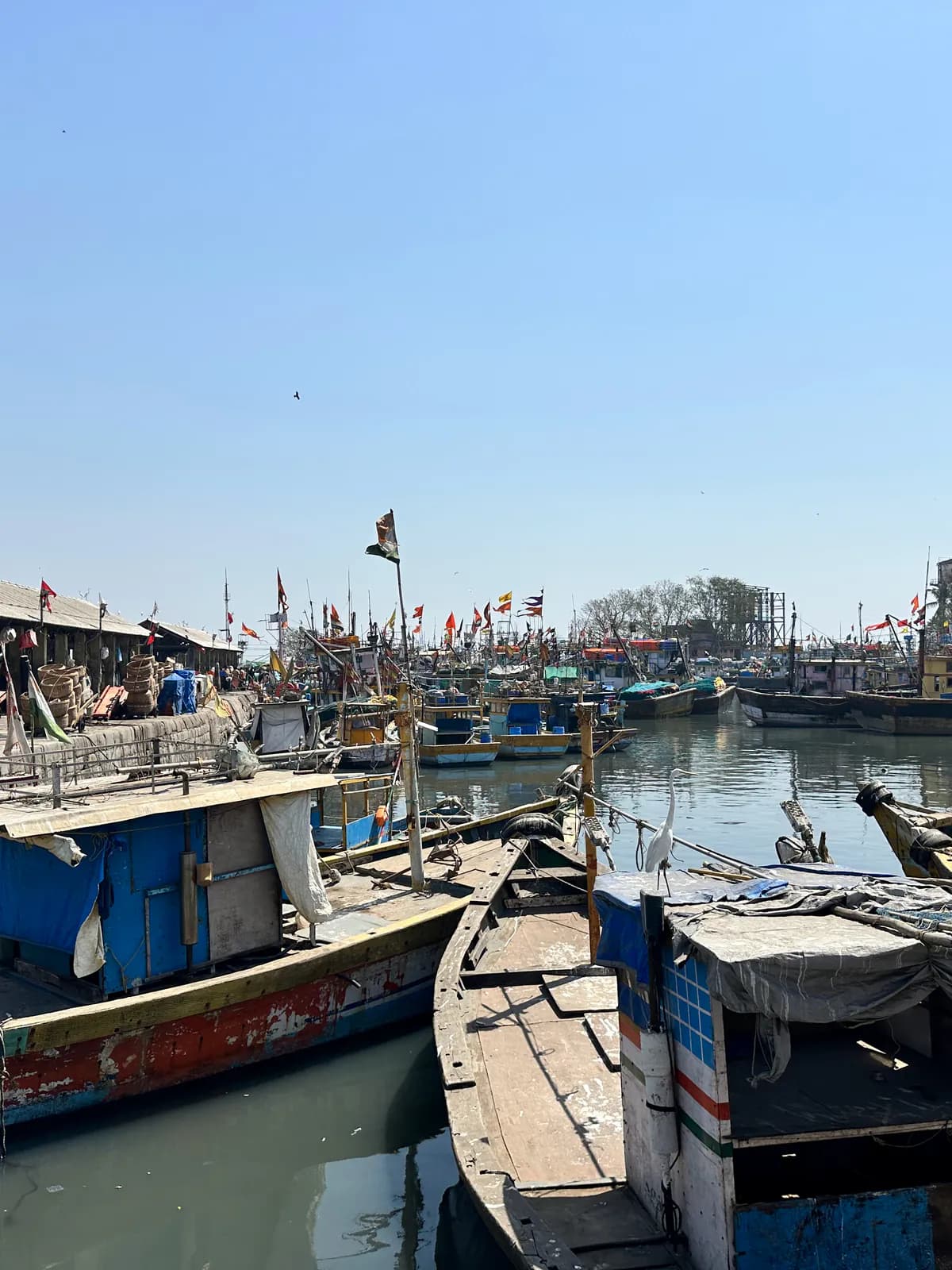
Wooden fishing boats moored in a Mumbai harbour under a clear sky

Where I Would Stay

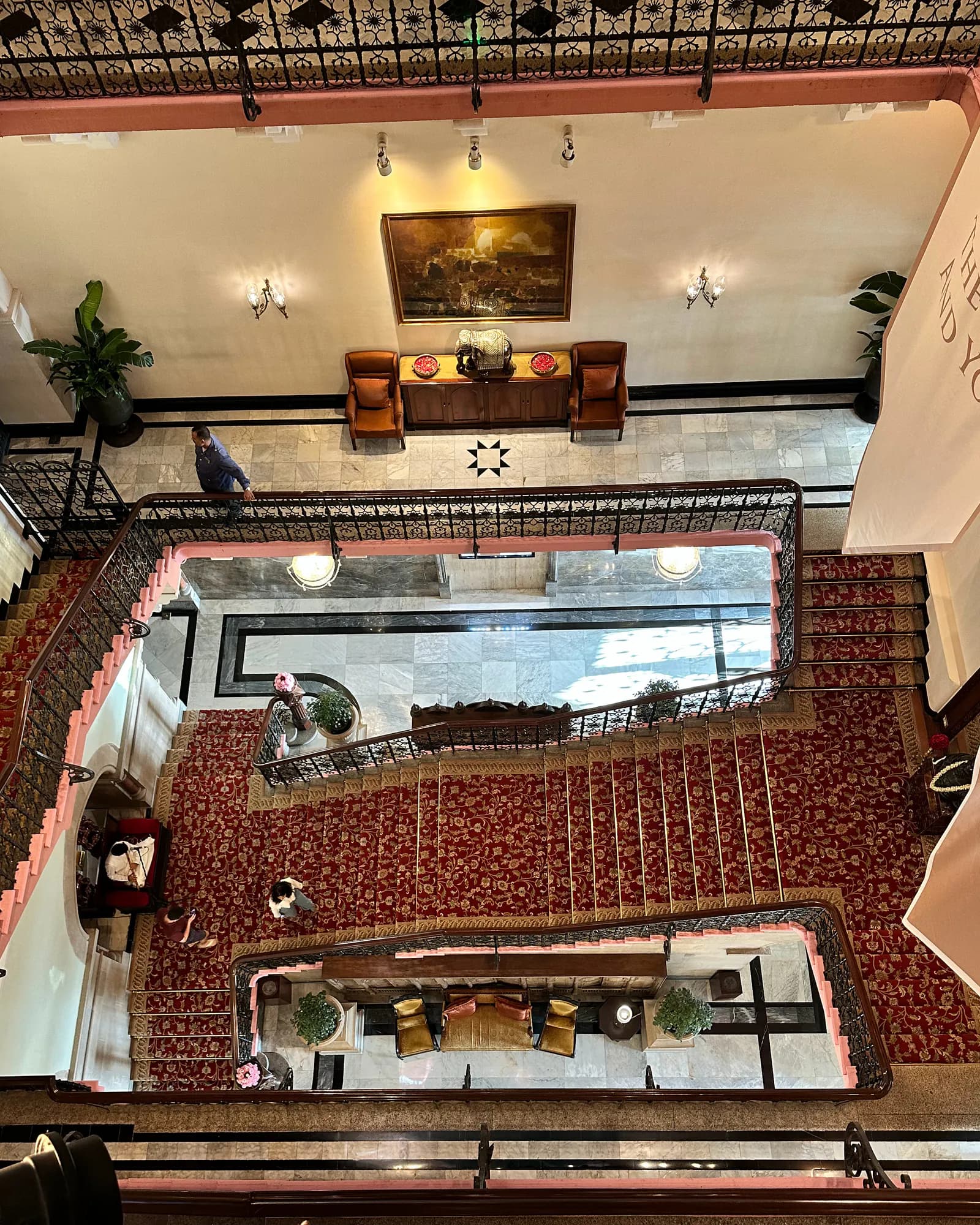
Looking down the grand staircase of The Taj Mahal Palace from an upper landing: red carpet, wrought-iron balustrades and the marble hall below
The Taj Mahal Palace

Where we stayed

The Taj Mahal Palace is one of the great hotels of the world and the natural place to end a journey through India. It opened in 1903, before the Gateway of India existed, and its history runs through the original Palace Wing, where we stayed, in a room with a bay window over the harbour.

The service was the strongest part of our stay: exceptional, and all the more striking in a hotel of this size. The rooms are kept in excellent condition, impressive for a building of its age. The one trade-off is the location that makes it famous: the Gateway of India is among Mumbai's busiest attractions, and the crowds begin almost immediately outside the hotel's doors.

Room to book
A Luxury Grande Room Sea View in the Palace Wing, or a Taj Club Room for more space and lounge access.
Best for
Heritage-hotel lovers, couples, first-time visitors to Mumbai, and anyone ending a journey through India.
Location
Apollo Bunder in Colaba, beside the Gateway of India, in the old heart of south Mumbai. The international airport is roughly an hour away by car, depending on traffic.
Read our full review
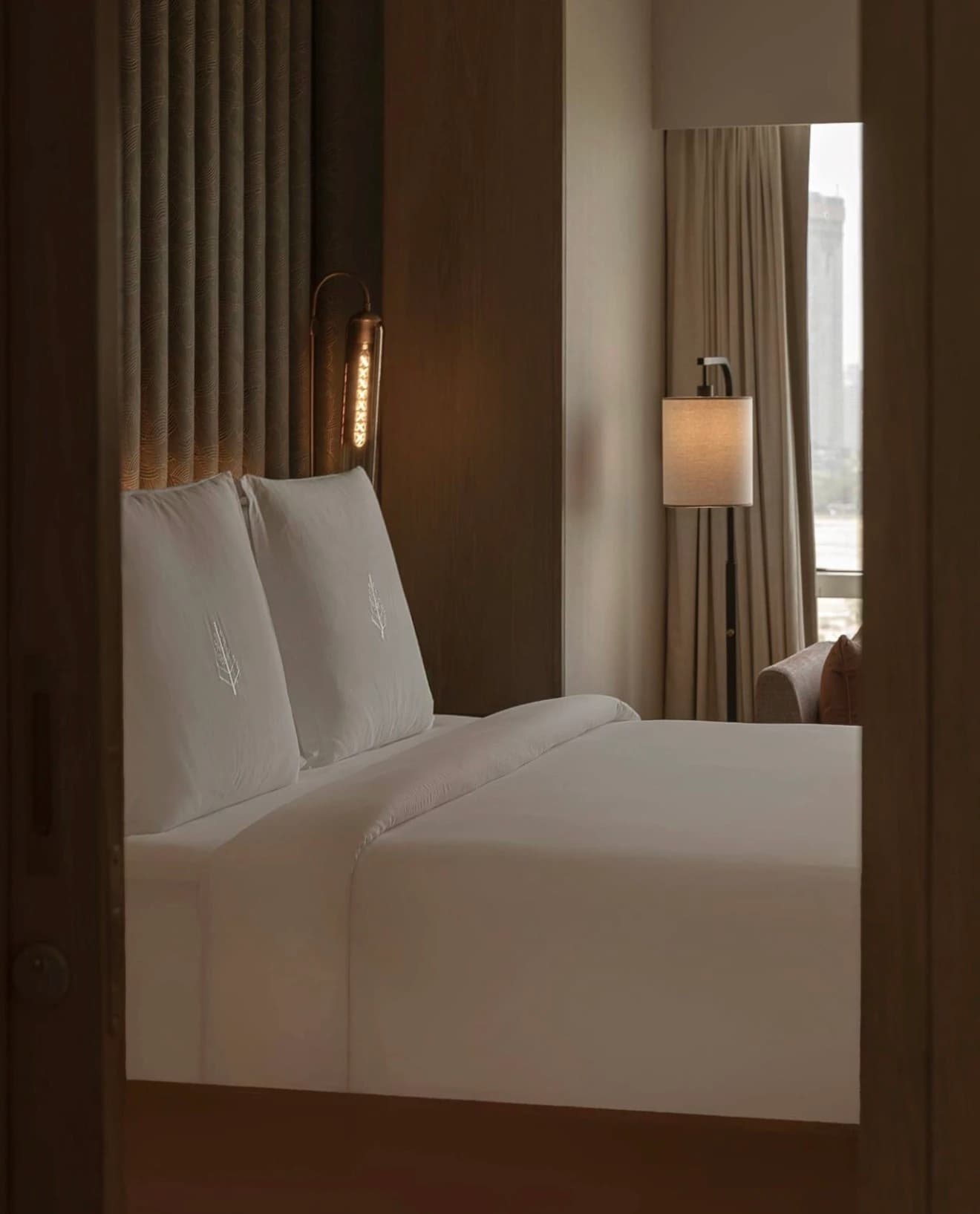
A guest room at Four Seasons Hotel Mumbai seen through a doorway: a white bed with embroidered pillows, a lamp and a window onto the city

Photo: Four Seasons Hotel Mumbai

Four Seasons Hotel Mumbai

Also worth considering

Four Seasons Hotel Mumbai is the contemporary counterpoint: a high-rise in Worli, halfway between the old south of the city and the airport, with views over the Arabian Sea and AER, its rooftop bar, where the city comes for sunset. It holds a MICHELIN Key. When you book Four Seasons through our host agency, Fora Travel, you will enjoy exclusive Four Seasons Preferred Partner benefits; your advisor will be pleased to give you more details.

Best for
Travellers who prefer a modern hotel with quieter surroundings, and anyone whose Mumbai includes Worli, Lower Parel or Bandra as much as Colaba.
Location
Worli, about 45 minutes and 24 kilometres from the airport by the hotel's own figure; the Gateway of India and the Fort district are a drive away rather than a walk.

When to visit India

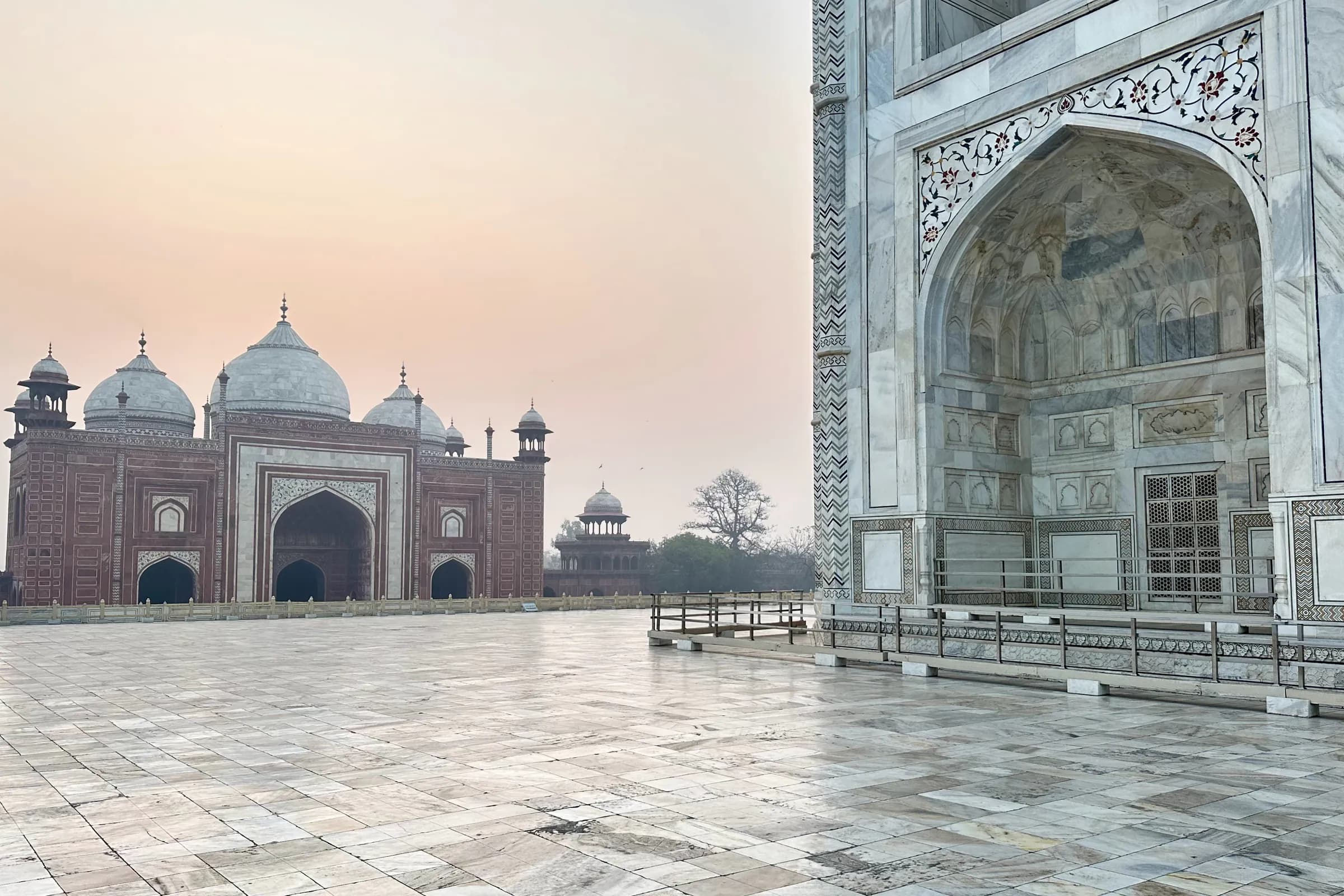
The red sandstone mosque beside the Taj Mahal and the marble flank of the mausoleum in pink early-morning light
The mosque beside the Taj Mahal, just after sunrise in February

October to March is the season for this route, and inside it there is no single perfect month, only trade-offs. We travelled in February, which sits comfortably inside the best window for every stop on the way: dry days, cool mornings and evenings in Delhi, Agra and Rajasthan, and Mumbai long before its monsoon.

Swipe to compare→

MonthsDelhi and AgraAmanbagh and UdaipurMumbai
October and NovemberThe season begins: warm, dry days and cooler nightsWarm, dry days and cooler nightsDry after the monsoon, warm and humid
December and JanuaryThe coolest months, about 20 to 24°C by day and 7 to 8°C at night; dense morning fog is commonSunny days around 25°C, cold nightsThe most comfortable months, about 32°C by day and 18°C at night
February and MarchAbout 24 to 26°C by day in February, warming quickly through MarchAbout 26 to 28°C by day in February, warming through MarchDry and warm, about 32°C by day
April to JuneHot: April averages 36 to 38°C by day, May about 40°C or moreHot: about 38°C by day in AprilHumid, about 33°C; the monsoon arrives in June
July to SeptemberMonsoon from early July: heat, humidity and heavy showersMonsoon: green landscapes and heavy showersHeavy monsoon: July alone averages more than 900 mm of rain
Average daily highs and lows from India Meteorological Department climate normals for 1991 to 2020 (Delhi, Agra, Jaipur, Udaipur and Mumbai Santacruz); Jaipur stands in for the Amanbagh area.

Dates worth knowing for 2026 and 2027

  • Diwali falls on 8 November 2026: beautiful in the cities, and one of the busiest travel weeks of the year in India.
  • Christmas and New Year are the peak of the season, and the best rooms on this route go first.
  • Republic Day is 26 January 2027. In the days before it, parade rehearsals have closed the roads around Kartavya Path and India Gate on several mornings, so I keep that stretch for the evening in mid to late January.
  • Holi, the festival of colours, falls around 22 and 23 March 2027. It is joyful and very crowded; plan for it deliberately or travel around it.

The logistics that make it work

Book in this order

The hotels first, then the guides and the driver around them. The rooms that make this route are few, and they go first in the peak weeks.

Plan around closing days

The Taj Mahal closes on Fridays and the Lotus Temple on Mondays. The Red Fort, which used to close on Mondays, has opened every day since February 2026, but it has closed for several weeks around Independence Day in August.

Entry and arrival

Most nationalities travel on an e-Tourist Visa, issued for 30 days, one year or five years; apply on the Government of India's own site at least four days before you arrive. Since April 2026, foreign visitors also complete an online e-Arrival Card in the 72 hours before landing.

Money

Foreign cards are widely accepted in hotels and restaurants of this standard. Keep some rupees for tips and small purchases along the road.

Pacing

One major sight a morning, the afternoon at the hotel, and no dinner plans that matter after a long drive. The hotels on this route are part of the journey; leave time to enjoy them.

Where I would spend the money

On this route, money matters most where it buys comfort on the road and time at the right hotels.

One driver for the whole road

It costs more than separate transfers, and it is worth more than any upgrade.

A local guide in each city, for half days

Delhi, Agra, Udaipur and Mumbai each call for their own guide, but a guide does not need to fill every hour.

The right room at three hotels

At Amarvilas, Udaivilas and Amanbagh, the room category changes the stay more than anywhere else on the route: the balcony facing the Taj Mahal, the semi-private pool facing the City Palace, the Pool Pavilion with its own garden.

Where I would not spend

On extra domestic flights the route does not need, on a guide at Amanbagh, where the resort's own experiences are the point, or on a crowded schedule in Mumbai.

My verdict

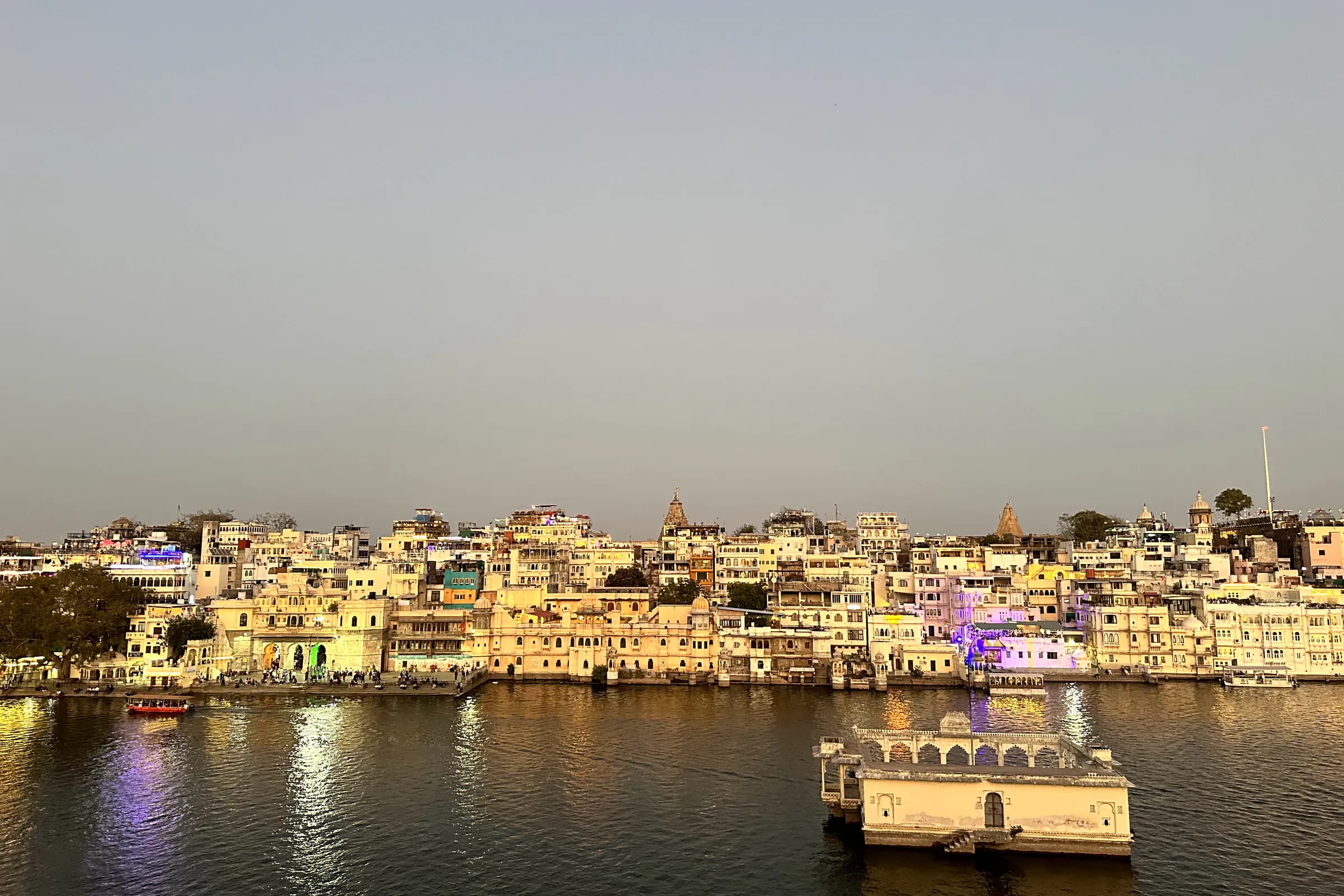
Udaipur's old city along Lake Pichola at dusk, lights coming on along the shore and a lit boat on the water
Udaipur's old city across Lake Pichola at dusk

For a first luxury journey through India, this is the route I would build: thirteen nights, one driver, a guide in every city, a single flight and the five hotels above.

Delhi gives you the history. Agra gives you the Taj Mahal from your room. Amanbagh gives you your breath back. Udaipur is the romance, and Mumbai is the modern India the rest of the journey leads to.

India rewards people who plan it properly. Done right, it is one of the most romantic journeys I know.

Via Privata Advantage

Insider Access

  • +

    Reservations at The Oberoi, New Delhi, The Oberoi Amarvilas, Amanbagh, The Oberoi Udaivilas and The Taj Mahal Palace at each hotel's own rate, with preferred-partner benefits wherever the hotel offers them

  • +

    One dedicated private driver for the whole road journey from Delhi to Udaipur, with private transfers at both ends

  • +

    Knowledgeable local guides in Delhi, Agra, Udaipur and Mumbai, booked for the hours that suit each monument

  • +

    Chand Baori built into the drive to Amanbagh, and the cultural experiences that fit your interests along the way

  • +

    A complete itinerary planned around your dates, the Taj Mahal's Friday closure and the rooms with the right views

  • +

    Planning and hotel bookings are complimentary: you pay each hotel directly, at the hotel's own rate

Timing

When to Book

October to March is the season for this route, and the rooms that make it are few: the balcony rooms at Amarvilas, ten City Palace View rooms with semi-private pools at Udaivilas and fifteen Pool Pavilions at Amanbagh. For Christmas, New Year, Diwali or Holi, I would book four to six months ahead; otherwise three to four months is usually enough.

FAQ

Questions, Answered

How many days do you need for a luxury India itinerary from Delhi to Mumbai?

Thirteen nights is comfortable: two or three in each of Delhi, Agra, Amanbagh, Udaipur and Mumbai. Twelve works if you shorten Delhi; add a fourteenth night in Agra to see Fatehpur Sikri without rushing.

Is it better to drive or fly between Delhi, Agra and Udaipur?

Drive, with one private driver for the whole road journey: your luggage, timing and stops stay in your hands. The longest leg, Amanbagh to Udaipur, is a full day; if that is too much, drive to Jaipur and take the short nonstop flight to Udaipur. Fly only the last leg, Udaipur to Mumbai.

How long is the drive from Agra to Amanbagh?

About four and a half hours for 221 kilometres, by Aman's own figure. With an hour at the Chand Baori stepwell, plan on most of the day.

When is the Taj Mahal closed, and what does it cost?

It is closed every Friday and otherwise open from 30 minutes before sunrise to 30 minutes before sunset. Foreign visitors pay INR 1,100, plus an optional INR 200 for the main mausoleum.

What is the best time of year for this itinerary?

October to March. December and January bring morning fog around Delhi and Agra; February is dry and warm across the route. From April the north is hot, and the monsoon reaches Mumbai in June.

Which hotel in Agra has views of the Taj Mahal?

The Oberoi Amarvilas sells every room and suite with a view of the Taj Mahal, 600 metres away. ITC Mughal, a garden resort about four kilometres from the monument, does not sell its rooms with Taj views.

Do you need a private guide in India?

Not by law, but I recommend a local guide in each city, for the history, the places beyond the usual routes, and the tickets and timing. No guide can skip the security checks, but a good one makes busy places far easier to enjoy.

Can visitors take Mumbai's local trains?

Yes, ideally with a guide and outside the rush hours. Trains have first-class carriages and carriages reserved for women, and tickets are sold at stations and through Indian Railways' RailOne app.

Weekly Offers

At most one email a week with the hotel offers and new openings Albina is booking now.

Unsubscribe in one click, any time.

Planning India?

Send me your dates, who is travelling and what matters most to you. I will shape the route around you and arrange the hotels, the private guides, the driver and the experiences along the way. Planning and hotel bookings are complimentary: you pay each hotel directly, at its own rate, with partner benefits wherever they apply.

Plan My India Journey